

New Tata boss to face formidable challenges
Corporate India's most coveted top job is open. But finding a new leader for Tata Sons is no easy task.
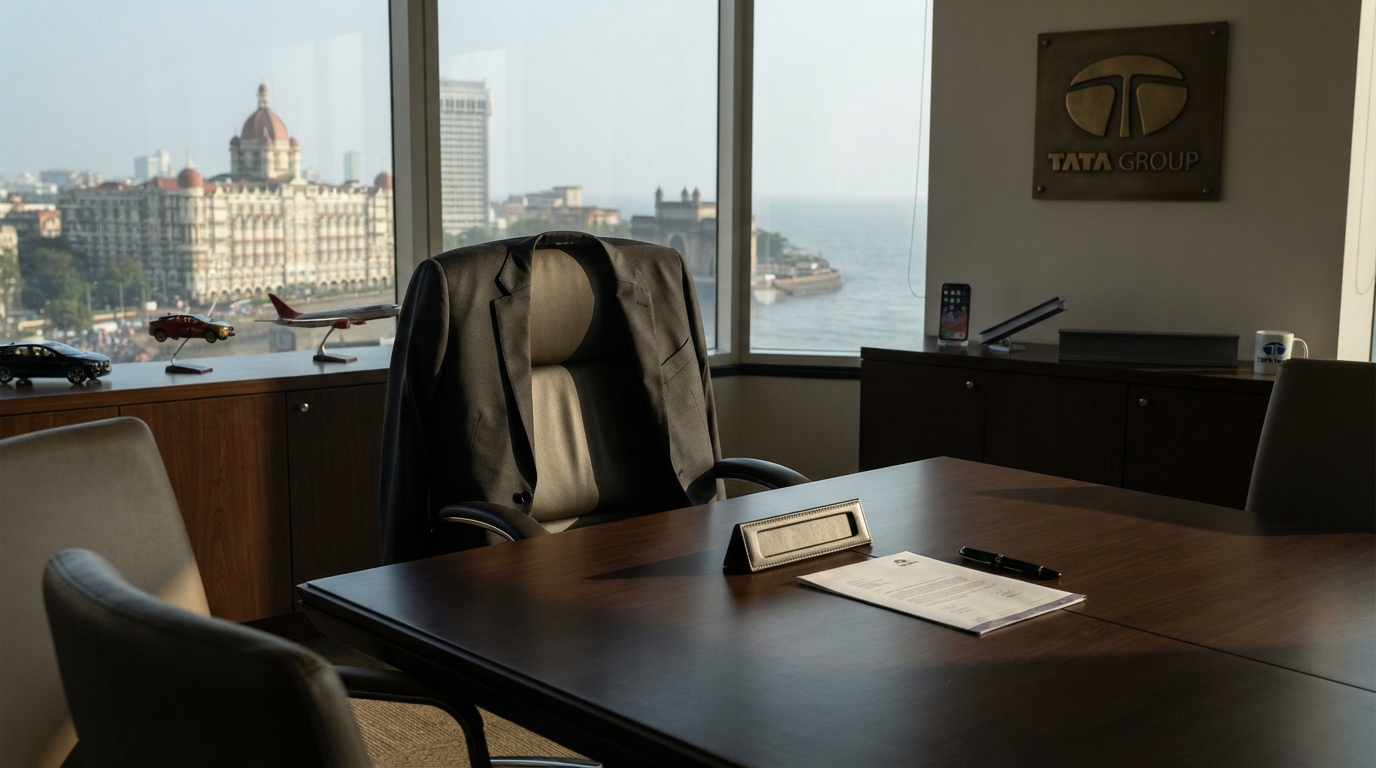
The recent departure of Tata Sons chairman N Chandrasekaran on August 12th has created a significant vacancy at the helm of corporate India's most esteemed conglomerate. His successor will face considerable challenges in leading the sprawling $300 billion empire, which encompasses diverse businesses from Jaguar Land Rover and Air India to manufacturing iPhones for Apple.
Chandrasekaran's resignation stemmed from an impasse regarding his reappointment and an escalating disagreement with Tata Trusts, the philanthropic arm holding controlling shares in the unlisted commercial holding company. The core of these disagreements reportedly revolved around a potential public listing of Tata Sons and the allocation of capital for the group's various new unlisted ventures, including semiconductors, e-commerce, and aviation, all of which are currently operating at a loss.
The group has been engaged in its most extensive capital investment cycle to date, deploying tens of billions of dollars across a range of initiatives. These include establishing India's inaugural chip fabrication plant, producing EV batteries, and revitalizing Air India, which the Tatas acquired from the government in 2022.
Hetal Dalal, from the governance advisory firm Institutional Investor Advisor Services (IiAS), informed the BBC that the incoming leader will need to possess the capacity to evaluate and manage the risks associated with this rapid expansion, in addition to addressing numerous other hurdles. Dalal emphasized the immense difficulty of the role, not only for the individual appointed but also for the selection committee tasked with finding them. The position demands a broad spectrum of skills and experience, encompassing the management of Tata Trusts and the Tata Sons board, a deep understanding of various new businesses, and the ability to cultivate strong relationships with regulators and the government. Dalal questioned the availability of suitable candidates, noting, "There aren't many people running such large, diversified conglomerates. And will they leave their current roles to join the Tata Group?"
Nirmalya Kumar, who previously served as head of strategy at Tata Sons, told the BBC that the complexity of the role has intensified in recent years. He highlighted that "the collective losses of the new businesses are more than the cashflow generated by older companies like TCS, the group's software arm whose business model has been challenged by AI.” TCS, once the group's primary cash generator, contributing approximately 85% of cash flows, no longer provides the same level of support.
Despite mounting losses in privately held companies, Dalal noted the strong performance of publicly traded, CEO-led Tata companies. While the group possesses a robust pool of internal candidates, finding a "plug and play fit" will be challenging, she believes. "I think any person who comes in will have a set of skills and experience, but must be also groomed for the role."
Kumar, however, expressed skepticism about the suitability of the internal candidates currently being discussed. He stated, "The people internally are good executors of existing business models. Companies like Tata Steel and Tata Motors are almost running on auto-pilot with a CEO in charge. The new chairman will have to understand new business models of the four unlisted businesses that are losing money."
For investors, Chandrasekaran's resignation is likely to usher in a period of prolonged uncertainty. Experts anticipate that new leadership will bring a shift in the group's strategic direction, particularly concerning the ambitious expansion initiatives undertaken by Chandrasekaran. Dalal suggested that "Some of the bleeding businesses will need a strategic plan to be made profitable. [The new person] will need to decide whether to scale back or exit some investments." Kumar added that the new leader will also need to communicate a clear plan to the market regarding further investment requirements and the expected break-even point for these ambitious ventures.
Crucially, Kumar stressed that the primary focus must be on "driving alignment between the Trusts [the dominant shareholder] and Tata Sons." The group's most successful periods, under JRD Tata and Ratan Tata, were characterized by a harmonious relationship between the largest shareholder and the operating company, as they led both entities. This dynamic fractured under Cyrus Mistry when the roles were separated. Chandrasekaran's exit marks the second instance of a chairman resigning due to a strained relationship with the Trusts.
Mukund Rajan, former brand custodian at Tata Sons, told the BBC that the lack of alignment on business strategy between the principal shareholder and the company was a fundamental issue in the breakdown of the relationship. Rajan asserted, "You cannot have companies being run where the majority shareholder is either feeling ignored or not aligned with the way the company will be run going forward." Repairing this relationship will be a key priority for the next leader.
The ongoing turmoil, marked by a revolving door at the top due to disagreements over public listing and business strategy, has reportedly damaged the group's brand image, according to experts. Dalal highlighted that clear communication has been a significant challenge for the Tatas, which is unfavorable for public markets. While the holding company is not publicly traded, events within it directly impact shareholders of the listed Tata entities.
Minari Shah, a communications advisor who previously worked with Tata Motors, told the BBC that the priority should be "not the volume of communication but about reducing uncertainty." She emphasized the need to demonstrate that governance mechanisms are functioning, reassure stakeholders of business continuity, and provide clarity on the leadership transition process. Shah added that it is acceptable not to have all answers immediately, provided stakeholders are confident that the disagreeing parties are in dialogue.
As of now, nearly two weeks after Chandrasekaran's resignation, neither Tata Sons nor Tata Trusts has issued detailed public statements regarding a succession roadmap or the path forward. The former's annual general meeting was also adjourned due to a lack of quorum, leaving several governance and succession-related decisions in limbo precisely when shareholders of India's most iconic company are seeking maximum clarity.