

Neck pain: why it occurs and how to relieve it
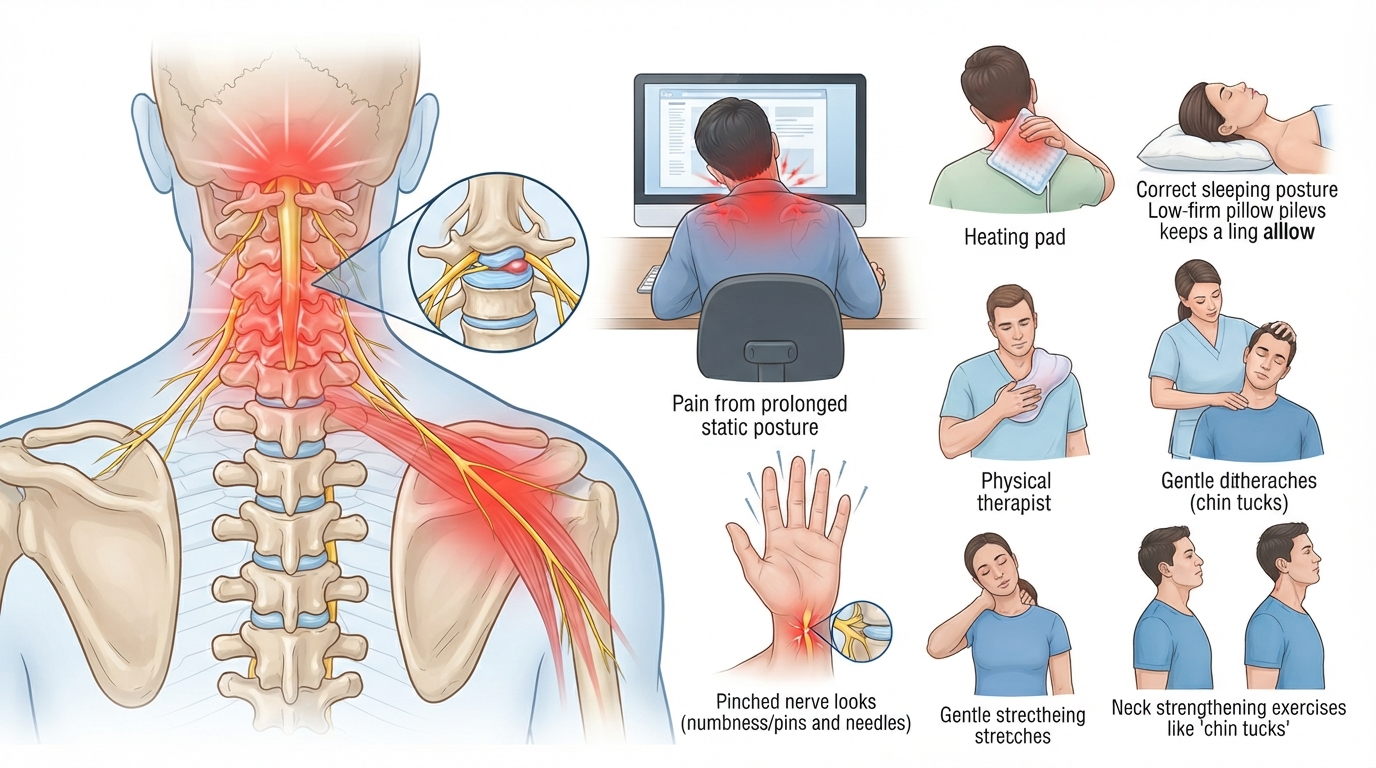
**Neck Pain: Causes and Treatment**
Pain in the back or side of the neck, whether it radiates to the shoulders or other areas, is always unpleasant. It is especially annoying when it becomes difficult to move the neck. So, why does neck pain occur and are there any ways to relieve it?
**Anatomical Structure of the Neck**
The neck and lower back are made up of small vertebrae that are stacked on top of each other to form the vertebral column. This structure not only supports the head but also protects the spinal cord. The spinal cord is the main structure that connects the nervous system in our body and transmits signals from the entire body, including pain, to the brain.
The seven upper bones of the lumbar spine make up the neck and are called the cervical vertebrae. The bones are connected to each other by facet joints, which allow the head to move in any direction with the help of muscles. Between the bones of the spine are discs that act as shock absorbers and provide flexibility to the spine.
**Symptoms**
* **Pain and stiffness in the neck:** Pain occurs on the left or right side of the neck and may spread to the shoulder or upper chest area. Sometimes this condition is accompanied by pain or weakness in the arm.
* **Tension headache:** It begins with a headache and discomfort spreads to the back of the head, sometimes to the ear or behind the eye.
* **Pain on movement:** Pain is felt when moving the neck, muscles tighten, especially if you have been sitting or sleeping in one position for a long time.
* **Neck stiffness:** You may notice that your neck is not turning as it normally does. If you notice stiffness in your neck and shoulders, or if you suddenly feel pain or have difficulty raising both arms, this could be a sign of a condition called polymyalgia rheumatica (PMR). This is an inflammation of the muscles and is more common in people over 65. It is recommended to see a doctor immediately if you have these symptoms.
* **Neck stiffness or cramps:** Nerves can become pinched due to excessive pressure from the muscles, bones, or tissues around your neck. This can cause numbness or tingling in your fingers. The discomfort will go away on its own once the problem goes away. However, if these symptoms persist for a long time, or if your neck and arms hurt for several days, see a doctor. He or she may prescribe medications that activate the activity of the pinched nerve fibers.
* **Cracking noises in the neck:** You may hear or feel a clicking or snapping sound when you move your head. This is called crepitus and is caused by air bubbles or tissue rubbing against bone in the joint. It often happens in other joints, but the noises coming from the neck are louder because they are closer to the ear. This is a common symptom and is not something to worry about.
* **Neck muscle spasms:** Spasms are sudden tightening of a muscle or group of muscles, and it is often difficult to find the exact cause, but they are extremely unpleasant. When a spasm occurs in the neck, it usually causes pain and stiffness on only one side. It can last for a few hours or days, or in rare cases, a few weeks. The pain can be relieved with gentle massage, painkillers, and warm or cold compresses. People with muscle spasms say they like heat.
**Causes of neck pain**
Neck pain is very common and has many causes. Most often, the pain occurs when the neck is held in the same position for a long time. However, other factors can also cause it:
* Anxiety or stress that interferes with sleep.
* Accidents that can lead to cervical spondylosis, which can occur as a result of dysfunction of the spinal discs and joints.
* For many, the discomfort occurs for no apparent reason. It is observed when walking in a place with air circulation or working in the garden. This is called atypical pain, and this type is common. It usually goes away after a few days.
**When should you see a doctor?**
If the discomfort lasts for more than a few days, you should see a doctor. Also:
* When you feel pain, tingling, numbness or weakness in the arm or leg.
* Severe pain after a fall or injury.
* Stiffness, difficulty raising both arms.
* And if other symptoms occur: fever, chills, dizziness, nausea, a doctor's consultation is necessary.
**What to do if you have neck pain?**
Often we get confused, not knowing what to do when we have neck pain. Indeed, simple treatments and a day or two of rest are enough to relieve the attack. However, if the problem persists for a long time, you should seek medical help. Because in this case, not only compresses will help, but also various methods:
* **Physiotherapy:** They can be different. It is necessary to make sure that any physiotherapy is carried out by qualified doctors and not to do it yourself.
* **Manual therapy:** Before explaining in detail all the symptoms, the level of pain, how long the pain in the arm is in the neck or vice versa, it is necessary to entrust this work to a professional. Also, these methods have side effects and it is very important to learn them.
**How to get rid of neck pain?**
* Take painkillers.
* Apply hot or cold compresses.
* Change the pillow for sleeping to a low and firm one.
* Try to do flexibility exercises (but gently).
* Do not injure your neck by driving or riding a bike.
**Preventing neck pain**
To avoid neck pain, especially if you are prone to it, follow these rules:
* Your head should be at the same height as your body while sleeping. Therefore, choose a low and firm pillow. The bed should also be firm.
* Don't sleep on your stomach.
* Don't keep your neck in the same position for long periods of time – for example, when sitting at a desk, do simple exercises.
* Exercise regularly to strengthen your muscles.