

Nearly two-thirds of Uzbeks are overweight — statistics
**Almost two-thirds of Uzbekistan’s population is overweight or obese – statistics**
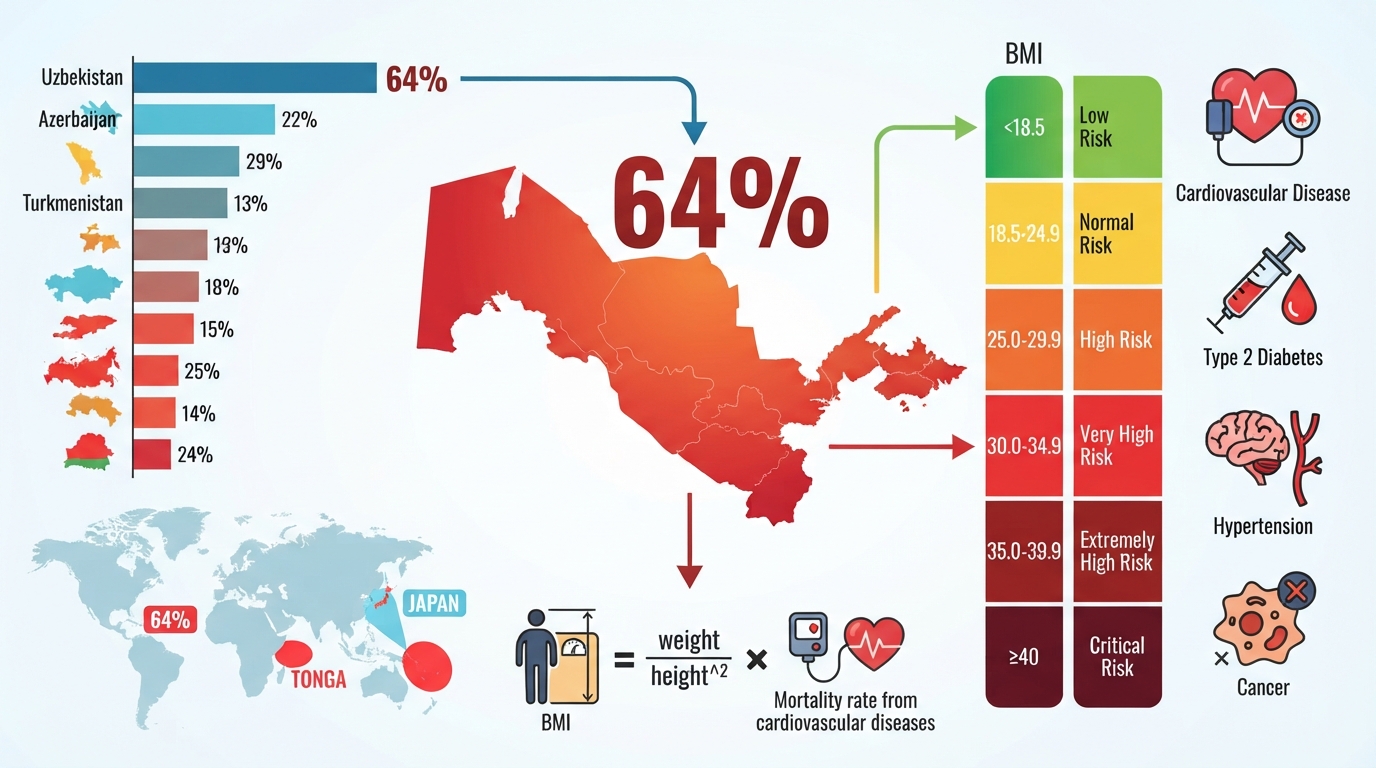
It has been determined that approximately 64% of the adult population in Uzbekistan is overweight or obese. This figure indicates a growing need to promote healthy eating and physical activity in the country.
Statistics for 2024 published by the Our World in Data platform based on data from the WHO Global Health Observatory show that 64% of the population over 18 years of age in Uzbekistan are overweight. This indicator includes both overweight and obesity.
According to WHO criteria, individuals with a body mass index (BMI) of 25 or higher are considered overweight, and those with a body mass index (BMI) of 30 or higher are considered obese.
Body mass index is an indicator that assesses the ratio between a person's height and weight, and is used to determine whether they are underweight, normal weight, or overweight. To calculate it, you need to divide the body weight in kilograms by the square of the height in meters. For example, the BMI of a person weighing 72 kg and 190 cm tall is calculated as follows: BMI = 72 kg : (1.90)² = 25.9.
Uzbekistan is leading among the CIS countries in terms of the body mass index of its population. According to OWID/WHO, this indicator in Uzbekistan is 64%. In other CIS countries, the figures are as follows:
* Azerbaijan — 63%
* Moldova — 61%
* Turkmenistan — 58%
* Tajikistan — 58%
* Kazakhstan — 56%
* Kyrgyzstan — 56%
* Russia — 56%
* Armenia — 56%
* Belarus — 55%
Around the world, about 45% of the adult population is overweight or obese. One of the highest rates is recorded in Tonga, which is 91%. In Japan, this figure is about 24%.
The WHO considers overweight and obesity to be a chronic disease. They can increase the risk of cardiovascular disease, type 2 diabetes, hypertension and some types of cancer.
Cardiovascular disease is also one of the leading causes of death in Uzbekistan. According to the IHME Global Burden of Disease, the mortality rate from these diseases in 2023 was 522.4 per 100,000 population. Cardiovascular diseases accounted for 52.8% of all deaths in the country. The risk of developing cardiovascular diseases is assessed based on the TMI indicator as follows:
* If TMI < 18.5, the risk is low (other diseases may develop);
* If TMI 18.5–24.9, the risk is normal;
* If TMI 25.0–29.9, the risk is high;
* If TMI 30.0–34.9, the risk is high;
* If TMI 35.0–39.9, the risk is very high;
* If TMI >= 40, the risk is considered extremely high.