

Nearly 2 thousand people need help: What is happening in Aleshki?
The European Commission has called for the delivery of humanitarian aid to the Russian-controlled Ukrainian city of Oleshky and for allowing civilians to leave the city. According to Ukrainian officials, nearly 2,000 people, including about 50 children, remain in the city. They are deprived of a stable supply of food, clean water, medicine, and medical assistance.
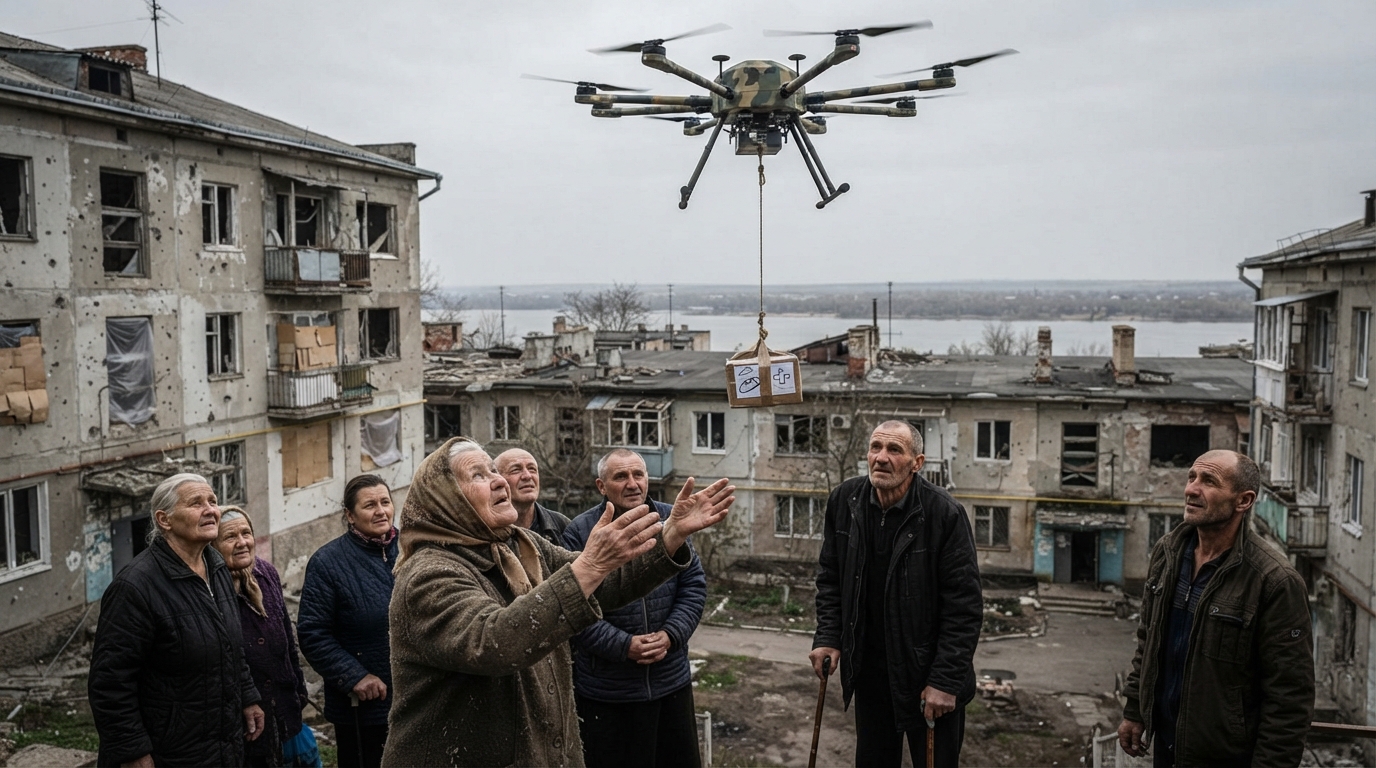
Nearly 2,000 people need help: What is happening in the city of Oleshky?
European Commissioner for Preparedness, Crisis Management and Equality Hadja Lahbib, in a statement on October 2, described the situation in the city of Oleshky in the Kherson region as dire.
She said that civilians are trapped under siege by Russian forces and lack access to food, medicine, clean water, and basic assistance.
"This is unacceptable," said the European Commissioner.
Lahbib stressed that humanitarian aid must reach those in need, and civilians must be allowed to leave the city.
According to her, the European Union, together with its partners, is using all available opportunities to provide assistance. These efforts also cover residents trapped in the temporarily occupied territories.
"EU humanitarian partners stand ready to deliver aid. They need safe, sustained, and effective humanitarian access on the ground," the statement said.
The European Commissioner also reminded that Russia, as an occupying power, has clear obligations under international humanitarian law.
"Civilians must be protected, and the delivery of humanitarian aid must be facilitated," Lahbib said.
She noted that food, medicine, water, and essential aid must be regularly delivered to the residents of Oleshky.
Oleshky is located on the left bank of the Dnipro River, opposite Kherson. The city has been under the control of Russian forces since 2022.
According to Ukrainian officials, the situation regarding food, water, electricity, and medical care in the city has deteriorated sharply in recent months.
The report states that food deliveries stopped at the end of May. At the end of September, the Ukrainian military began delivering food and medicine to the city using heavy-duty drones.