

Myths about private education: to be or not to be?
Every new school year, many families once again ask themselves the question: which school to choose for their child — public or private?
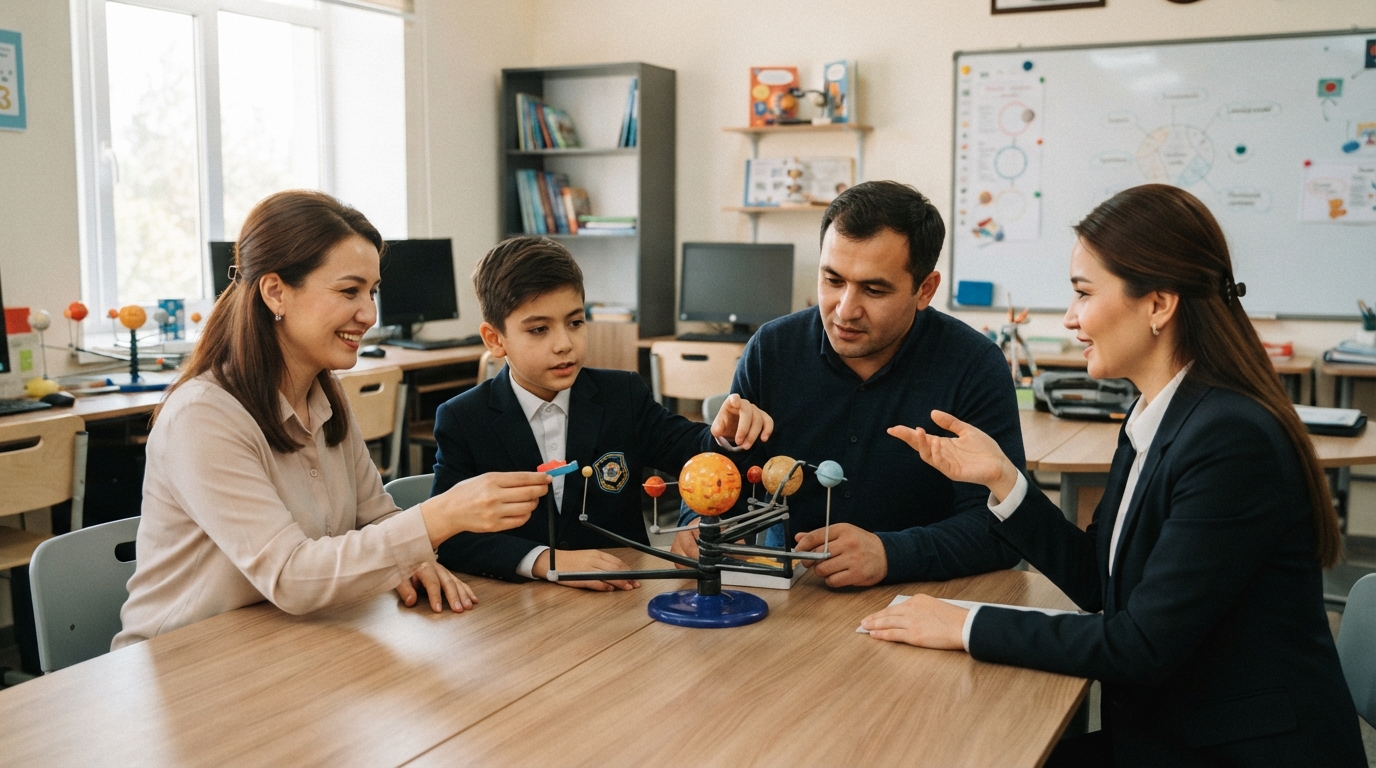
Myths about Private Education: To Be or Not to Be?
In recent years, private education in Uzbekistan has become a prominent part of the educational system. Parents count on more modern approaches, strong English language skills, additional subjects, small classes, a variety of extracurricular activities, and closer communication with the school. And this is natural: if a family invests significant resources in a child's education, they have the right to expect quality.
However, along with the development of private schools, another opinion has emerged: as if paying tuition automatically changes the very principles of education. Requirements allegedly become optional, grades guaranteed, and all responsibility for the result shifts entirely to the school.
In reality, a good private school is distinguished not by the absence of requirements, but by the quality of the educational environment and the abundance of opportunities it provides to the child.
Myth 1. "I pay for tuition — therefore, only the school is fully responsible for my child. I can spend my free time idly, because my child's education is paid for."
Reality: Education is always a two-way process and a partnership. The school indeed bears serious responsibility: it organizes the process, ensures safety, selects professionals, and tracks progress. But education cannot be fully delegated. There is a wise Uzbek proverb: "Qars ikki qo‘ldan chiqadi" (It takes two hands to clap). It is important to understand that one hand cannot tie a knot. It is the same with learning. A teacher can remind about punctuality daily, but if being late is the norm at home, it is difficult to change the habit. One can provide the best laboratories and libraries, but it is impossible to learn the subject instead of the student.
A private school is not a service for "transferring responsibility," but the family's main partner in upbringing and education.
Myth 2. "In the private sector, rules can be tailored to oneself."
Reality: School rules are sometimes perceived as a set of prohibitions invented by the administration: no phone use during class, the need to arrive on time, adhere to the schedule, dress code, standards of behavior, and established procedures.
But school rules are not the personal whim of a single principal, teacher, or a single cohort of educators.
State educational standards and regulatory requirements define the general framework for organizing education, while internal school regulations translate these requirements, the long-term experience of educators, and the specifics of a particular school into a daily system of operation.