

Mushroom killer must stay in jail forever for 'truly dreadful' crime, appeal court told
Prosecutors say Erin Patterson's sentence was "manifestly inadequate" as it allows for the possibility of parole.
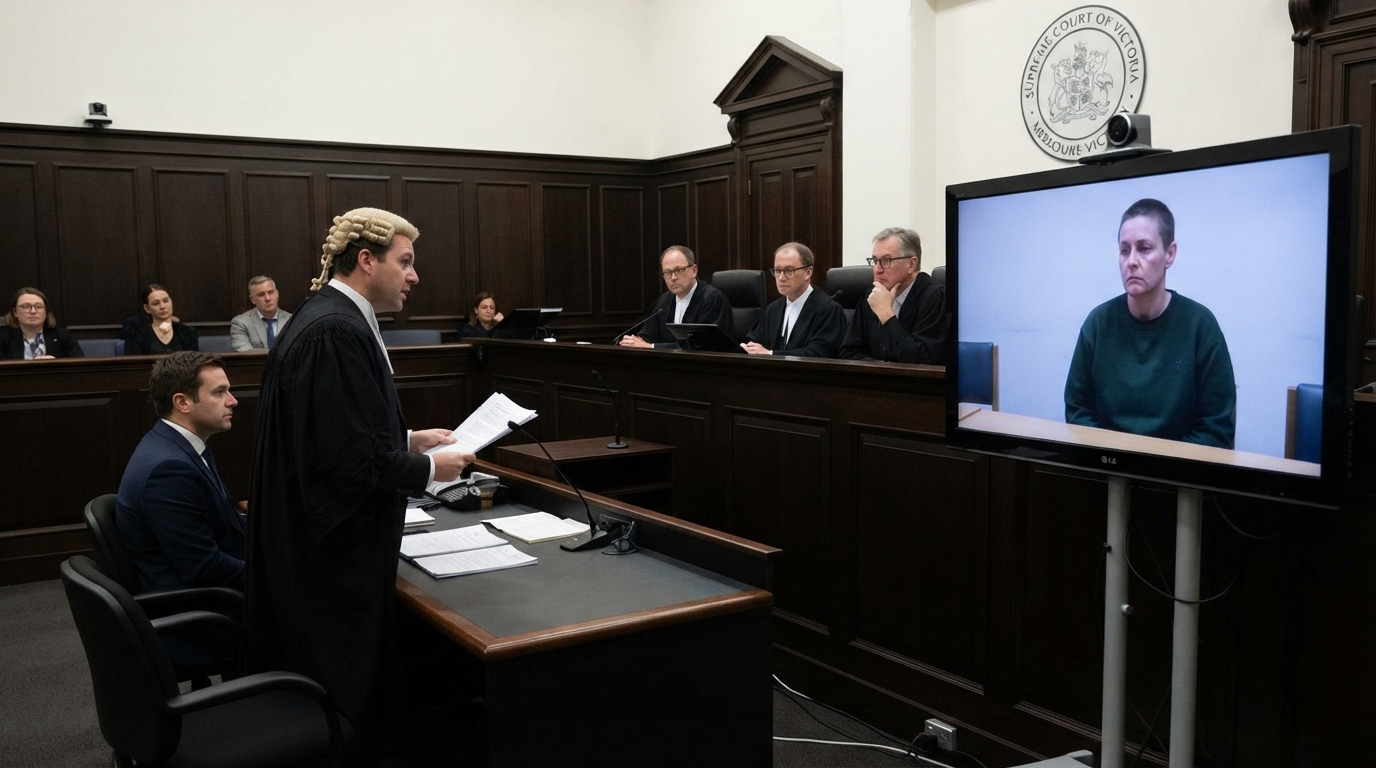
An Australian appeals court has been informed that Erin Patterson, convicted of mushroom poisoning, committed "truly dreadful" crimes and should remain incarcerated indefinitely.
Crown prosecutors are challenging her current sentence, deeming it "manifestly inadequate" because it includes the possibility of parole. Patterson received a life sentence after fatally poisoning three relatives and attempting to poison a fourth by serving them a beef Wellington containing death cap mushrooms at her Victoria residence in 2023. The 51-year-old, who appeared at the Court of Appeal via video link from prison, is currently eligible for release after 33 years.
The Melbourne Court of Appeal also heard arguments from Patterson's legal team, who are seeking to overturn her convictions. The judges have reserved their decisions, indicating that the outcomes of both appeals will likely be announced in several weeks or months.
Patterson's victims were her in-laws, Don and Gail Patterson, both 70, and Gail's sister, Heather Wilkinson, 66. All three died after experiencing what prosecutors described as "shocking illnesses" due to the poisoning. Heather's husband, Ian Wilkinson, the sole survivor, has never fully recovered from the ordeal.
Prosecutors emphasized the "dreadful" nature of Patterson's crime, highlighting the "betrayal of trust" of family members she had invited for lunch. They asserted that the act was the culmination of a months-long "orchestrated" plan, which included locating and preparing a sufficient quantity of death caps and "concocting a fantastic lie" to explain the lunch.
"The lunch guests had been good to the respondent and her children over many years," prosecutors stated. "Not only did the respondent sit by and watch her victims consume the deadly meal over chit-chat and banter, but the meal ended with a prayer for her, following her lie about having been diagnosed with cancer."
Even as her guests became critically ill, Patterson did not admit to using foraged mushrooms, instead choosing to mislead police and health workers. "Even when she knew that some of the victims were on life support, she maintained her lies," the prosecutors added.
During sentencing in September of last year, Justice Christopher Beale offered Patterson a "glimmer of hope" for release, solely due to her "harsh" prison conditions. He told her, "there is a substantial chance that, for your protection, you will continue to be held in solitary confinement for years to come."
However, prosecutors contend that this assessment was "overstated," arguing that her conditions would improve over time, particularly as her notoriety diminishes. Prosecutor Brendan Kissane detailed the activities available to Patterson in prison, including an exercise yard and access to hobbies such as crocheting. According to reporters present in court, the triple murderer closed her eyes and shook her head at this point.
While prosecutors advocate for Patterson to remain imprisoned indefinitely, they argue that if the appeal court disagrees, the minimum sentence should at least be increased, calling 33 years "manifestly inadequate." The minimum term available to the judge for the offenses was 30 years. In written arguments, they stated that an additional three years "utterly fails to reflect the gravity of the offending or vindicate the dignity of each of the four victims."
Patterson's lawyers, arguing for the sentence to remain unchanged, asserted that the judge's reasoning was "impeccable" and had "clearly taken into account all relevant considerations" and "made appropriate findings about how serious this matter was."
Patterson's legal team had also argued that last year's trial was compromised by a "catastrophic" mix-up where the jury stayed at the same hotel as prosecutors and a key witness. They further claimed that some evidence presented at trial was too speculative to have been put before the jury, leading to a miscarriage of justice.