

Mother demands answers, weeks after black woman found hanging from Mississippi tree
Her demands for information about what happened to Tasia Fortune have been echoed by shocked locals.
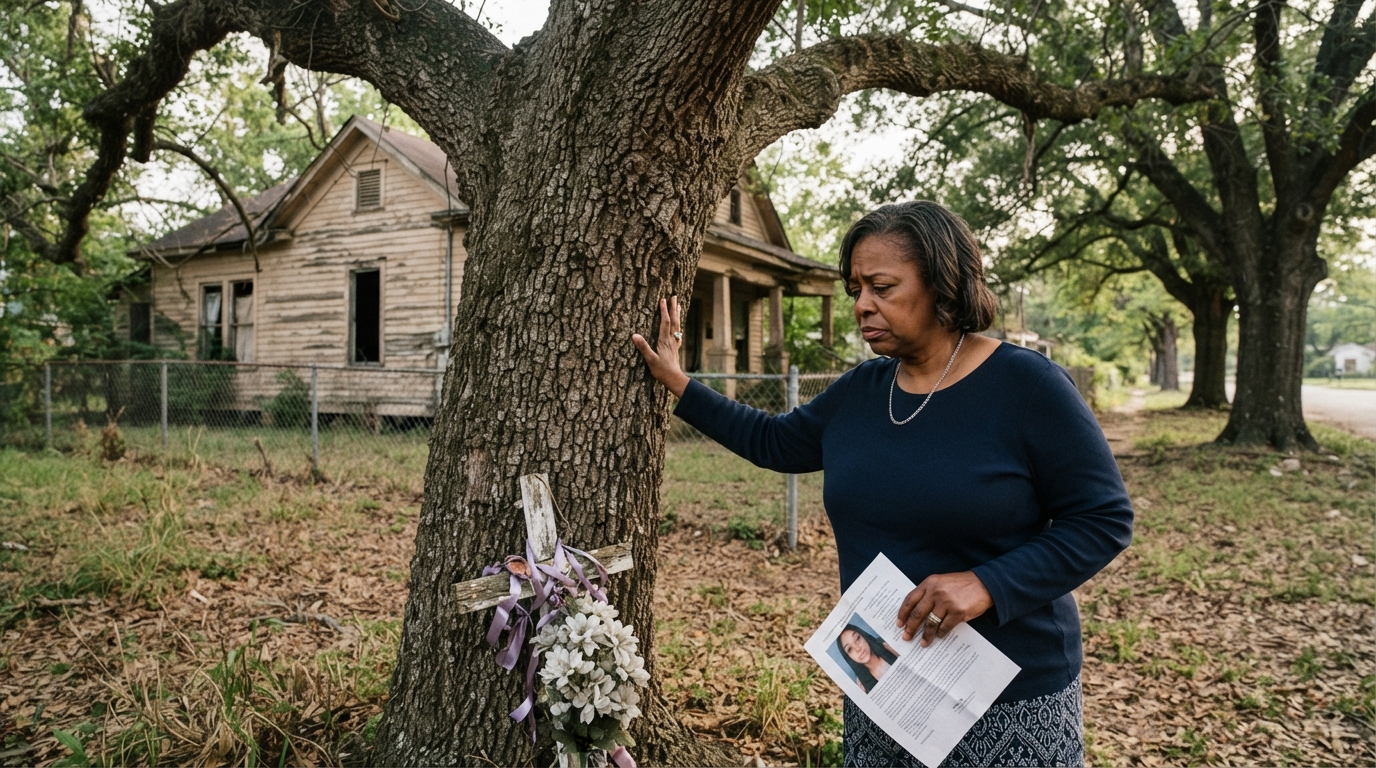
**Mother seeks answers weeks after black woman was found hanging from Mississippi tree**
The mother of a black woman whose body was discovered hanging from a tree in Jackson, Mississippi, told the BBC she is still waiting for answers from officials more than a month later.
Her calls for clarity have been matched by a community in the southern US state that has been left shocked and angry.
After weeks without comment, police on Tuesday said for the first time that they were investigating the death of Tasia Fortune, 29, as a possible homicide, while stressing that her official cause of death has not yet been confirmed.
Fortune’s body was found on 3 August, hanging from a tree in the yard of an abandoned house.
Concern in the local area has been intensified by Mississippi’s long and painful history of racial violence and lynchings.
The majority-black city has been left uneasy. As questions remain over how Fortune died, online petitions signed by tens of thousands have demanded greater transparency, and members of US Congress have called for federal involvement.
“It’s making me angry,” Fortune’s mother, Christy Spivey, said. “What is the hold up?”
Spivey said she had made repeated efforts to learn the status of the investigation, but multiple inquiries to police had gone unanswered.
Her first update from authorities in weeks came at a public city meeting on Tuesday evening, when Jackson Police Chief RaShall Brackney discussed the case and said the department “has been investigating this case from day one as a homicide”.
In a statement to the BBC, Brackney explained that the department always handles any pending death case as a “potential homicide” so important evidence is not lost while police await autopsy results.
Until then, the department had only described the matter as a death investigation.
In Tuesday’s statement, Brackney said “we are conducting the investigation at the highest appropriate level while we await the medical examiner’s findings”, which will include an official cause and manner of death.
The medical examiner’s office said it would not comment on the pending case.
Spivey last saw her daughter alive on 26 July, when Fortune had traveled from Mississippi, where she had lived for about the past decade, to Kentucky, where Spivey lives, for a family reunion.
The next time she saw her daughter — in a funeral home, days before the burial — she could hardly bear to look at her body.
“I didn’t look straight at her. Her daddy did,” she said. “I kind of looked from the side.”
Spivey recalled their final conversation. “She was talking about, you know, maybe even coming home,” she said.
Fortune’s death has fueled fears in the community that racial violence in Mississippi may be rising again. And without firm details about the case, those suspicions continue to grow.
Her death was the third case in Mississippi in less than a year in which police found someone dead and hanging from a tree.
The other two bodies — one black male, one white — were found in September 2025, on the very same day.
Both deaths were ruled suicides, although the mother of one of the deceased, Trey Reed, disputes those conclusions.
Frustrated residents have started an online petition, which has collected more than 50,000 signatures, calling for an independent investigation into the state’s chief medical examiner, Dr Staci Turner, over the handling of a recent series of cases involving people of colour. Another petition is urging the FBI to investigate Fortune’s death.
The BBC has asked Turner for comment.
Jackson City Councilman Kenneth Stokes has also raised concerns about the police investigation, saying he had been outside the home where Fortune was believed to have lived several times and had never seen officers there.
“All cases are important, but this one - a hanging in Mississippi - should rise to the top of the food chain,” Stokes said.
He told the BBC he sent letters weeks ago to federal prosecutors at the Mississippi US attorney’s office and to the FBI, saying the investigation was “in dire need of assistance”. He has not yet heard back from either.
“Nothing from nobody,” Stokes said. “It’s like nobody cares.”
The BBC has contacted the Mississippi US attorney’s office and the local FBI office for comment.
US Congresswoman Jasmine Crockett has also sought federal intervention. In a letter to the US Department of Justice, she requested an investigation into recent deaths in Mississippi — including Tasia Fortune’s — describing them as “possible cases of modern-day lynchings”. She pointed to the state’s “appalling historical reputation of violent terrorism against black Americans”.
Beyond Mississippi, there have been several other cases nationwide of black Americans found hanging from trees, including four in North Carolina this year alone. Three were ruled suicides. An autopsy is still pending in the fourth case.
The BBC has reached out to the justice department for comment.
Stokes said clearly that he does not know whether Fortune’s death was a lynching, or whether race played any role at all. He said that does not matter to him. He simply wants answers.
Brandon King, president of the student National Association for the Advancement of Colored People (NAACP) chapter at nearby Jackson State University, said the mystery surrounding Fortune’s death, along with the lack of updates from police, has made him and others “extra cautious” around campus.
The feeling, King said, was that “hey, you could be next. This is in Jackson. This is in your backyard”.
That is especially troubling, he added, because “this is supposed to be the capital. This is where I’m supposed to feel the most safe”.
As for Spivey, she cried before going to a funeral home for her daughter, dreading the need to complete a death certificate and decide whether to cremate or bury her firstborn child.
She wanted to cremate her daughter but ultimately chose burial. She said she was still hoping for updates in the investigation, which could mean having to exhume her body.