

More than 40 countries warn of danger of secret missile tests
More than 40 countries, including the United States, South Korea and Japan, have said that unannounced ballistic missile tests pose a threat to international peace and security. They are calling for mechanisms to be put in place to provide at least 24 hours' notice of such launches.
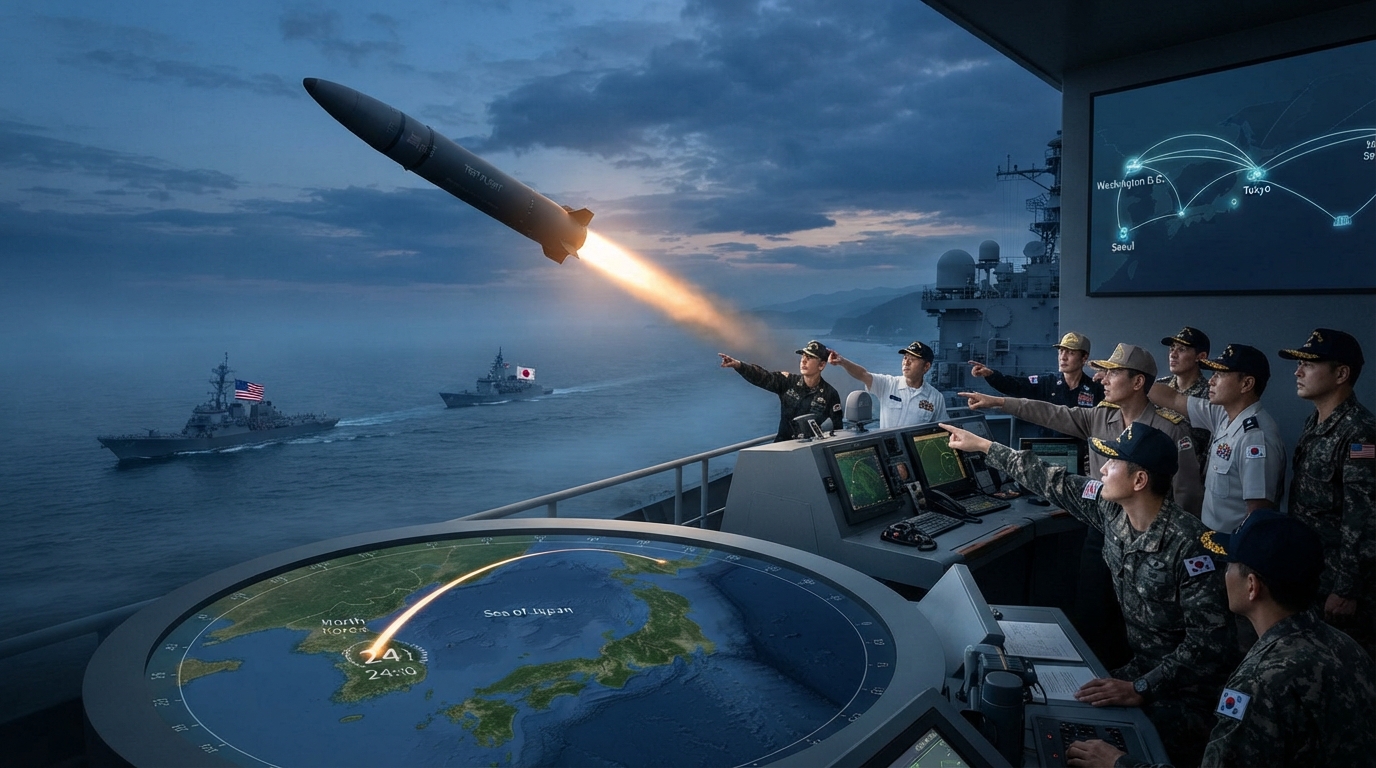
More than 40 countries warn of dangers of secret missile tests
More than 40 countries have issued a joint statement calling for greater transparency in the testing of ballistic missiles and their carriers. The United States, South Korea and Japan are among the countries that supported the document, which was published on August 11.
The statement emphasizes that countries testing intercontinental ballistic missiles, submarine-launched ballistic missiles and missile carriers must notify other countries at least 24 hours in advance of a planned launch. This requirement is especially important for nuclear-weapon states, it is noted.
According to the authors of the document, the existence of regulated and transparent warning mechanisms for missile tests does not limit the development of military capabilities or operational needs of states. On the contrary, such mechanisms reduce the risk of miscalculations, misinterpretations of missile launches and accidental escalation of tensions between states.
It was also noted that advance warning would strengthen mutual trust and demonstrate the countries' desire to ensure common security.
According to the proposal, the announcement of a missile launch should indicate basic information such as its general category, launch area and planned flight path.
The joint statement also drew attention to the fact that some recent missile tests in the Pacific Ocean did not comply with such standards. The document did not mention China by name directly.
However, in early July, China test-fired a "strategic missile" from a nuclear submarine in the Pacific Ocean. The missile was equipped with a warhead simulator. According to reports, Beijing only informed a few countries about the test very shortly before the missile launch.
Meanwhile, the DPRK also conducted another ballistic missile test. According to Tokyo and Seoul, North Korea launched at least one ballistic missile on the night of August 12. This was the eleventh missile launch by the country since the beginning of 2026.
According to the South Korean agency "Ryonghap", the missile was launched from the Wonsan area on the east coast of the DPRK and moved eastward.
South Korea's Armed Forces announced that they have strengthened surveillance and control measures to be ready for possible new missile launches.
According to estimates by the Japanese Ministry of Defense, the missile rose to a maximum altitude of about 90 kilometers during its flight. It fell about 10 minutes after launch and traveled a total distance of less than 700 kilometers.
The joint initiative by more than 40 countries aims to reduce the risk of misinterpretation and unexpected tensions between militarized states amid the increasing number of missile tests. The authors of the statement see advance notification of missile launches as an important means of strengthening international security and mutual trust.