

MoH: Out of 238 children infected with SSPE, 133 were not vaccinated against measles
The Ministry of Health commented on the vaccination status of children suffering from SSPE. Out of 238 patients under the ministry's supervision, 95.8 percent contracted measles before reaching one year of age. Of these, 133 were not vaccinated against measles, and another 83 contracted measles before receiving the vaccine.
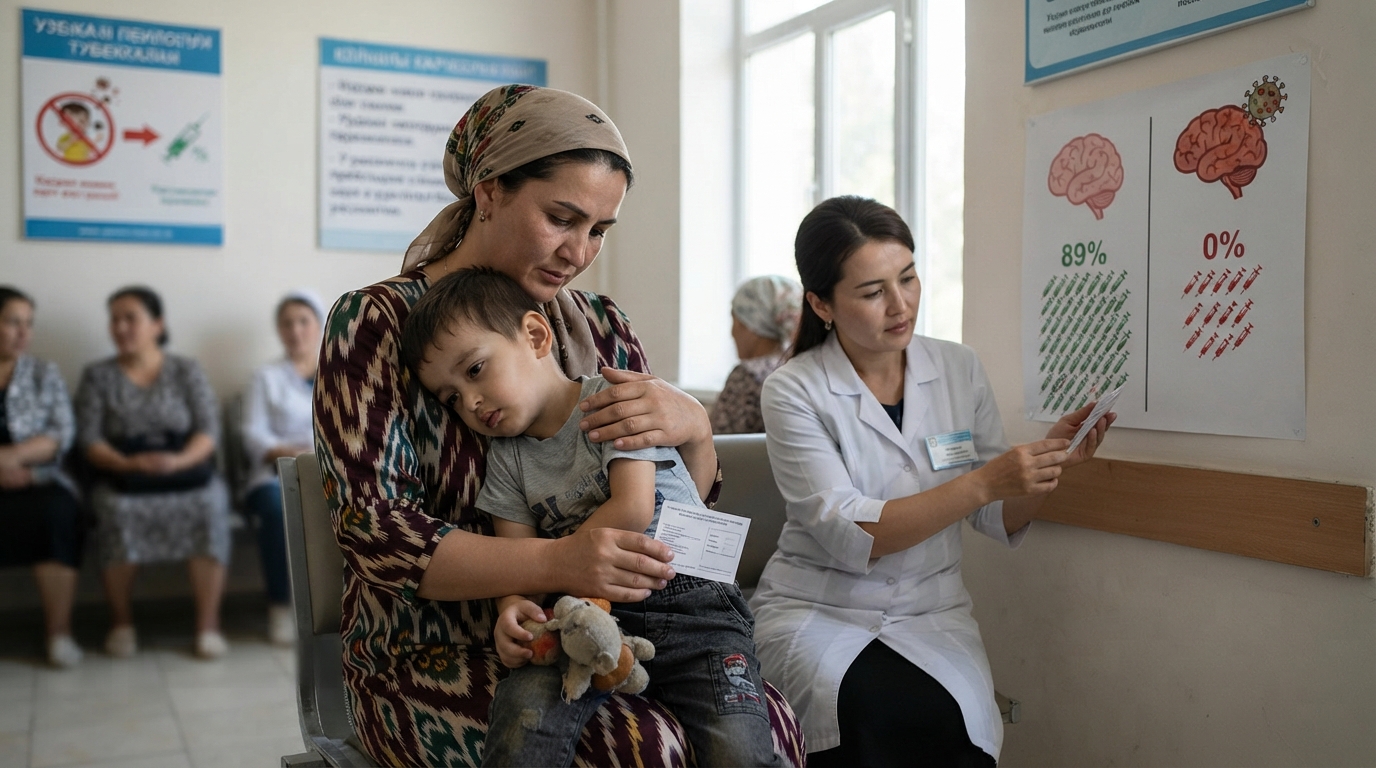
Ministry of Health: Out of 238 children diagnosed with SSPE, 133 were not vaccinated against measles
On September 9, a group of citizens from various regions of the republic gathered in front of the building of the Ministry of Health (MoH). Among them were parents of children suffering from Subacute Sclerosing Panencephalitis (SSPE), a rare and extremely severe disease. They requested the government to allocate necessary medicines, medical assistance, and financial support.
Following this, the Ministry of Health provided a comment to Gazeta regarding the vaccination status of children diagnosed with SSPE. According to the ministry, 238 children with SSPE are currently under supervision across the republic. Out of these, 133 (55.8 percent) did not receive the measles vaccine in accordance with the national vaccination calendar.
Subacute sclerosing panencephalitis is a fatal disease caused by the measles virus, characterized by irreversible destruction of the brain. After infection, the virus enters brain cells and remains in a "sleeping" latent state for 5–10 years. Then, it suddenly "awakens" and begins to destroy the brain from within. In almost 100 percent of cases, the outcome is death or lifelong profound disability.
The central nervous system and immunity of infants under 1 year of age are not yet fully formed. If the virus enters the body during this period, it easily settles in brain tissues and remains latent. According to statistics, the risk of subsequently developing SSPE (brain destruction) in children who contracted measles before the age of 1 is several times higher compared to older children.
The Ministry of Health reported that the majority of unvaccinated children contracted measles at a very early age.
According to the ministry's data, out of the 238 children under supervision with SSPE, 228 (95.8 percent) contracted measles before reaching one year of age. In 2019, the national vaccination calendar stipulated that measles vaccination be administered at one year of age.
Additionally, children born in 2019 were scheduled to be vaccinated a year later, in 2020. However, the quarantine measures introduced due to the coronavirus pandemic negatively affected the full coverage of the population with vaccination programs.
According to statistical analysis by the Ministry of Health, an average of 10 percent of parents take an irresponsible approach to vaccination programs or are against vaccination.
It was noted that starting from 2023, taking into account the epidemiological situation, measles vaccination has been initiated from 6 months of age.
The Ministry of Health stated that in the 1980s and 1990s, there was no practice of covering the entire population with measles vaccination. During that period, mainly organized groups of children, including those in educational institutions, were compulsorily vaccinated against measles.
For this reason, determining whether a specific citizen was vaccinated or not based on general statistical data on population vaccination coverage during those years requires a lot of time and resources.
According to the Ministry of Health, out of the 238 supervised patients with SSPE, 185, or 77.7 percent, were born in 2019. Another 21 (8.8 percent) were born in 2023, and 18 (7.5 percent) in 2018. The remaining years between 2015 and 2024 account for 1–2 cases each.
Therefore, the information that 90 percent of children diagnosed with SSPE were born in 2019 was not confirmed, the Ministry of Health's report emphasizes.
According to the Ministry of Health, 105 (44.1 percent) of the 238 supervised SSPE patients were vaccinated against measles. However, 83 of them, or 80 percent, contracted measles before receiving the vaccine.
Relying on scientific literature, the ministry stated that in approximately 3 percent of those who received two doses of the measles vaccine, immunity may not form or may weaken over time, leading to cases of measles. For those who received one dose, this figure stands at 7 percent.
According to WHO data, the effectiveness of the measles vaccine is approximately 93 percent after one dose, and reaches up to 97 percent after two doses.
According to the current national vaccination calendar in Uzbekistan, children are vaccinated against measles twice: at 6 months and at 6 years of age.
According to the Ministry of Health, incorrect administration of the vaccine can lead to inflammation in the skin or subcutaneous tissue. Additionally, violation of requirements regarding the time the vaccine vial was opened and storage temperatures can result in insufficient immunity forming in the vaccinated individual.
However, the ministry did not confirm the claim that poor vaccine quality causes SSPE.
The Ministry of Health stated that all 13 types of vaccines included in the national vaccination calendar in Uzbekistan are WHO-prequalified vaccines. Prequalification is a process of assessing whether the quality, safety, and efficacy of a vaccine meet international standards.
The ministry also noted that scientific articles have been published indicating that wild measles virus strains were detected in patients with SSPE. Approximately 18 SSPE cases can occur for every 100,000 children who contract measles before the age of 5. The disease usually manifests 7–10 years after measles.
The Ministry of Health also pointed out that in 2019, 2020, as well as in 2023–2024, measles cases increased in Uzbekistan and neighboring countries.
The Ministry of Health reported that the child held in the arms of the Minister of Health when parents approached with their appeal on September 9 — a minor citizen Kh.E., residing in the Jarkurgan district of the Surxondaryo region — was born in 2019. It was noted that he contracted measles at 6 months of age and was not vaccinated against measles. SSPE was diagnosed in the child in September 2022.
According to the ministry's conclusion, the main portion of SSPE cases was observed in children who had contracted measles. 95.8 percent of the supervised patients contracted measles before reaching one year of age.
The Ministry of Health also stated that SSPE cases were mainly recorded among children born in years when measles cases had increased.