

Lindsay Clancy is back in court - where will her case go next?
The Massachusetts mother, accused of murdering her three children, is expected back in court as she awaits a decision on whether her case will be retried.
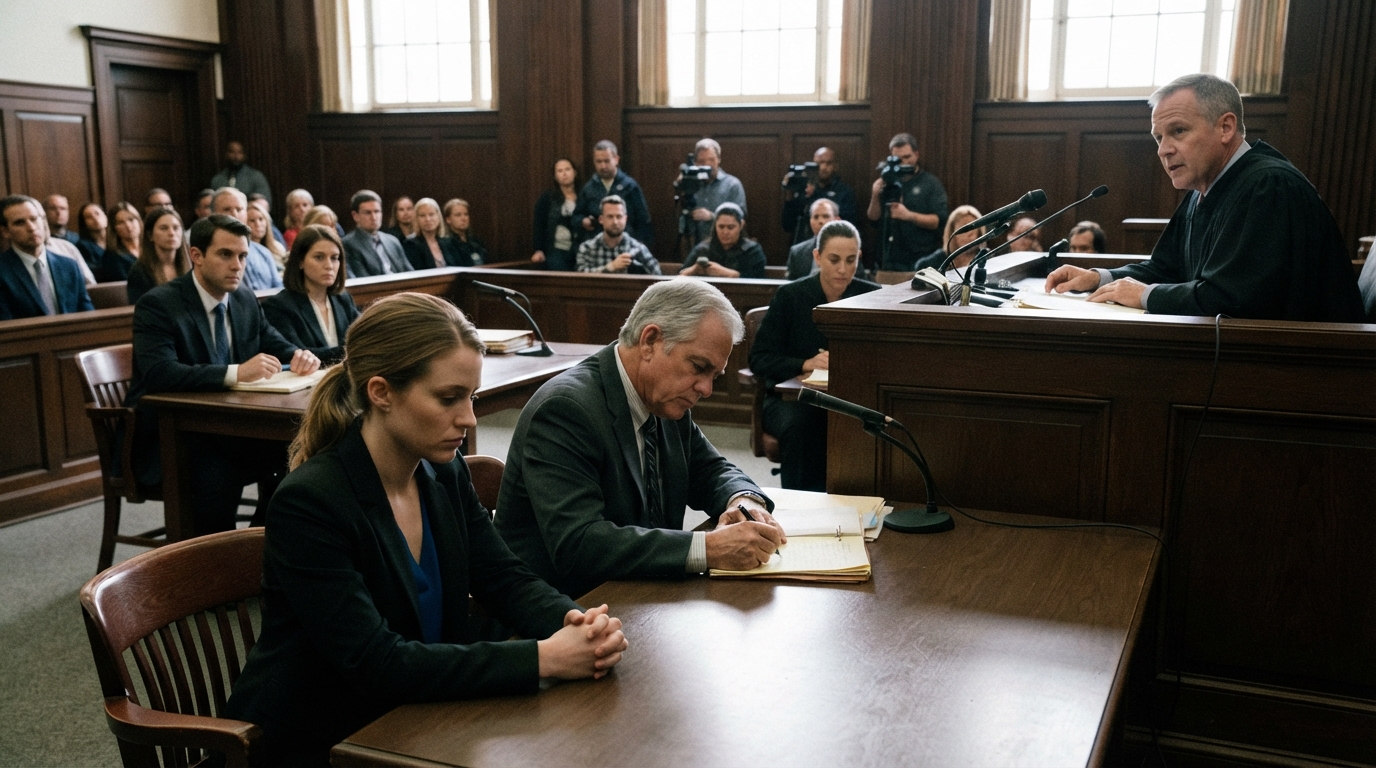
Lindsay Clancy is back in court - what happens to her case next?
Clancy, who is accused of murdering her three children, is due back in court on Monday
Lindsay Clancy, the US woman accused of murdering her three children, is set to return to a Massachusetts court on Monday as lawyers debate whether the case should be retried.
Her defence team and Massachusetts prosecutors are expected to discuss the next steps, with each side pushing for a different result.
Last week, in reply to a defence request to dismiss the trial, prosecutors gave their clearest indication yet that they want a new trial before a different jury. "The Commonwealth [Massachusetts] should be permitted to continue to pursue justice for Cora, Dawson and Callan Clancy," prosecutors said, referring to her three children.
Prosecutors could also choose to lower the charges in a possible second trial, or drop them entirely.
Clancy's first trial ended in a mistrial after the 12-member jury could not reach a decision.
The 36-year-old has not denied killing her children in 2023, but her defence says she was experiencing severe postpartum psychosis at the time. Prosecutors maintain the killings were deliberate.
A jury first heard Clancy's case in August 2026, but could not unanimously agree on whether the prosecution had proved she was guilty "beyond a reasonable doubt" as required under US law.
A judge declared a mistrial in early September.
At a court hearing later that month, Clancy's lawyer, Kevin Reddington, argued that the judge should dismiss the case. Prosecutors, meanwhile, said the state had "met its burden" in proving her guilt.
But the hours-long exchange did not produce a clearer picture of what comes next for Clancy - dismissal of the charges, a retrial on the same charges, or a retrial on lesser charges. Those discussions will continue on Monday.
Judge William Sullivan appeared confident the case would be retried, saying in September that he wanted to "get this thing moving".
He asked both sides to be ready to discuss possible trial dates at the November hearing.
Reddington said he would not be able to go to trial until at least June 2027 if the case were retried.
District Attorney Timothy Cruz said at the time that prosecutors had not yet decided whether to retry Clancy.
"We're doing our due diligence; we're going to continue doing that," he said. "We're going to do what we can for the children. That's what this case is about."
At its core, Clancy's legal team - led by Reddington - is seeking to have the charges dismissed or dropped. They have pursued several legal routes.
In September, he asked for her to be found not guilty under Rule 25 - a Massachusetts rule stating that a defendant should be found not guilty if prosecutors fail to present enough evidence at trial.
That request was denied.
Judge Sullivan will hear arguments on several motions on Monday, but Heather Cucolo, a New York Law School professor and mental health law expert, told the BBC that the hearing will probably centre on one narrow issue: whether this was a standard deadlocked-jury mistrial - where the jury truly could not agree - or an improperly ended trial.
She said Reddington may argue that a retrial would breach Clancy's Constitutional protection against double jeopardy - the legal principle that a person cannot be tried twice for the same crime.
But legal experts agree that result is unlikely.
"The public attention that's been put on this trial and the need to have some conclusion in the near future, I think that the judge is going to say that this mistrial was appropriate, was legally accurate, and that they need to now look to set a date for a retrial," Cucolo said.
Although the state's legal team has not explicitly said it will seek a retrial, Cruz and the prosecutors who handled the case have repeatedly said they want justice for Clancy's children.
Last week, prosecutors asked Judge Sullivan to reject the motion to dismiss the charges against Clancy on double jeopardy grounds.
They say the mistrial procedures were properly followed by the court, and therefore they have the right to seek justice again for the children.
"Because a mistrial was properly declared due to the manifest necessity of a deadlocked jury, the defendant's motion to dismiss should be denied," prosecutors wrote in the motion.
Judge Sullivan could decide on Monday whether the case can move forward, or he could issue a written ruling later, criminal defence lawyer Elyse Hershon told the BBC.
And the District Attorney's office's next move could be decided before Monday's hearing, during it, or even days afterward, she said.
"The three charges of first-degree murder are still pending; they are still hanging over Lindsay Clancy's head unless and until the DA announces otherwise," Hershon said.
Historically, Cruz, the district attorney, has made comments and announcements about the case at press conferences after court ends. Hershon predicted that could happen again this week.
She also said it is likely Judge Sullivan will press both sides to set a trial date during Monday's hearing.
"It does not mean it's definitely going to be a jury trial, but [they will want to] put something in the books, hold those dates. It's a big chunk of time. It's four, five, six weeks of the court calendar; that's hard to fit in at the last minute," she said.
"I would anticipate they block off the time while they go through all these motions and the DA's office figures out what it wants to do."