

Light dopamine: why are we losing interest in social media?
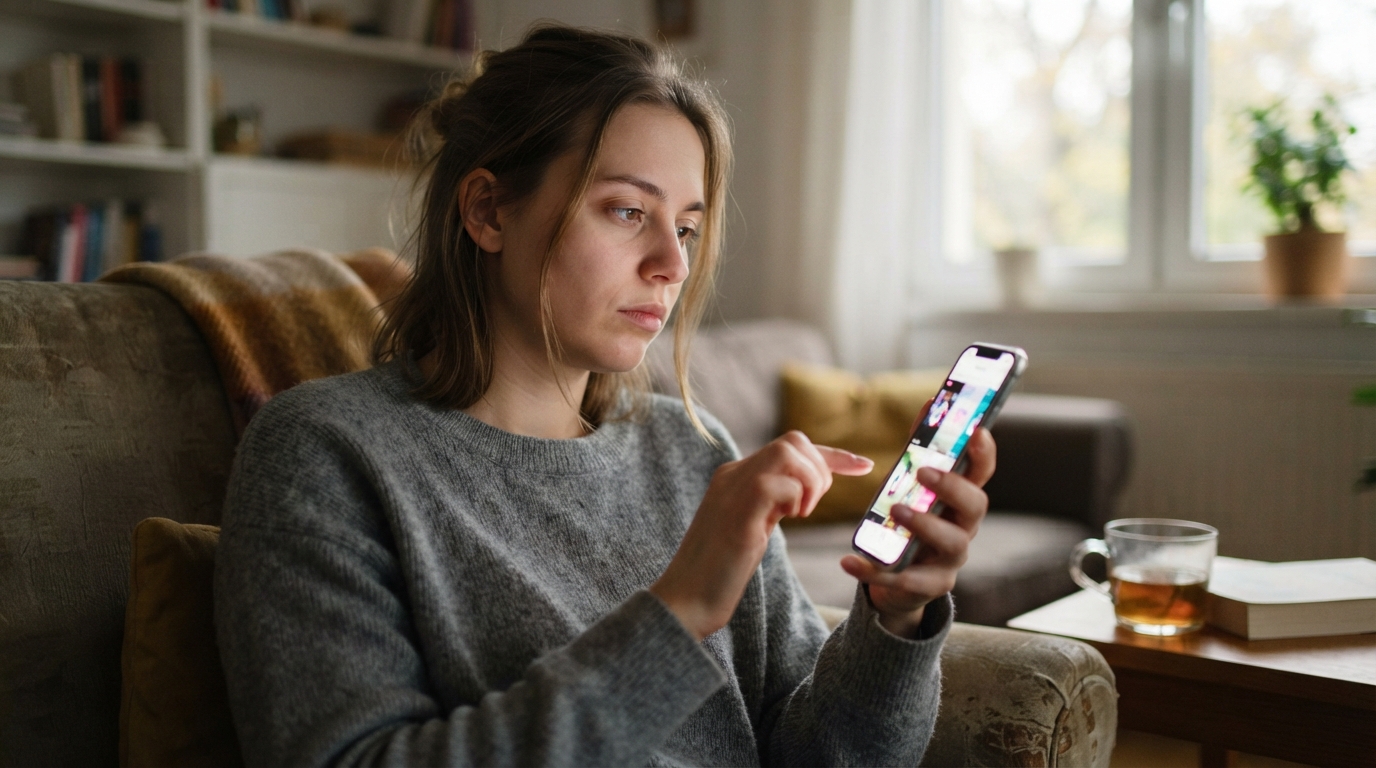
Low dopamine: why is our interest in social media decreasing?
Humans are naturally quick to satiate, and once-favorite activities can seem boring and meaningless over time. Things that once brought joy can now become tiring and depressing. This applies not only to work and hobbies, but also to the environment, living space, and even leisure activities such as browsing social media feeds.
Hundreds of new funny videos are released every day, and TikTok is creating increasingly complex and attractive trends. Do even funny videos no longer bring joy? Did you know that this is the peak of fast dopamine addiction?
**How did mobile phones become an integral part of our hands?**
In the past, in the era of push-button phones, it was common to forget them at home. Now, when we leave the house, we involuntarily take our keys, wallet, and phone with us. The phone has become a part of our body; If we accidentally forget it at home, we are left with such worrying questions as “What if someone calls me on an urgent matter?”, “What if someone can’t find me?”
**Phone and dopamine**
The first mobile phone was created in 1973. At that time, only very wealthy people could use it. And in 1992, the first touchscreen phone appeared. Today, the phone is not only a means of calling, but also a camera, a notebook, a calculator, a music collection, and most importantly, a source of communication and entertainment.
Due to the great stress and fatigue of modern life, many people have developed a habit of reaching for their phone and checking messages, social networks, and instant messengers. This is a kind of signal for the brain: “everything is in order, under control.” As scientists have proven, if a person is deprived of his phone, the stress hormone cortisol increases. On the contrary, just knowing that no one is writing to him gives a person relief. Thus, a simple connection is formed in our brain: action (scrolling) → result (relaxation).
**Fast food for the brain**
Getting likes on social networks is like a small reward. Each like gives a person joy, so he strives to post again the next time. The most powerful and fastest source of dopamine is short videos like reels or TikTok. With just one finger movement, the network releases content that you like. The brain chooses this easy way over real communication or activity.
**Why do we get bored so quickly?**
However, when dopamine is released more often, the brain receives it less, which means that it needs stronger content to get the same pleasure as before. As a result, real life begins to seem boring, colorless. Then the person turns to the phone again, but this time not for pleasure, but to get rid of depression.
This is how a typical addiction develops: tolerance increases → more intense content is sought → dopamine is released → life outside seems boring → new content is needed → tolerance increases again.
**Conclusion**
Phones and social networks have become an integral part of our lives. Although they give us convenience, instant communication and relaxation, they can also make a person addicted to them through a quick dopamine rush. Scrolling, getting likes, watching short videos temporarily calm our brain, but gradually blur the meaning of real life. Therefore, the important question is: are we using the phone or is it controlling us?
In fact, the solution is simple: we need to be aware of our actions, stop using the phone automatically and pay attention to filling the void in our lives with real communication and meaningful activities, not the virtual world.