

Liechtenstein MPs vote to legalise abortion despite threat of veto
Organisers of the citizens' initiative say they have popular support, even though the all-powerful monarch has said he will veto the legislation.
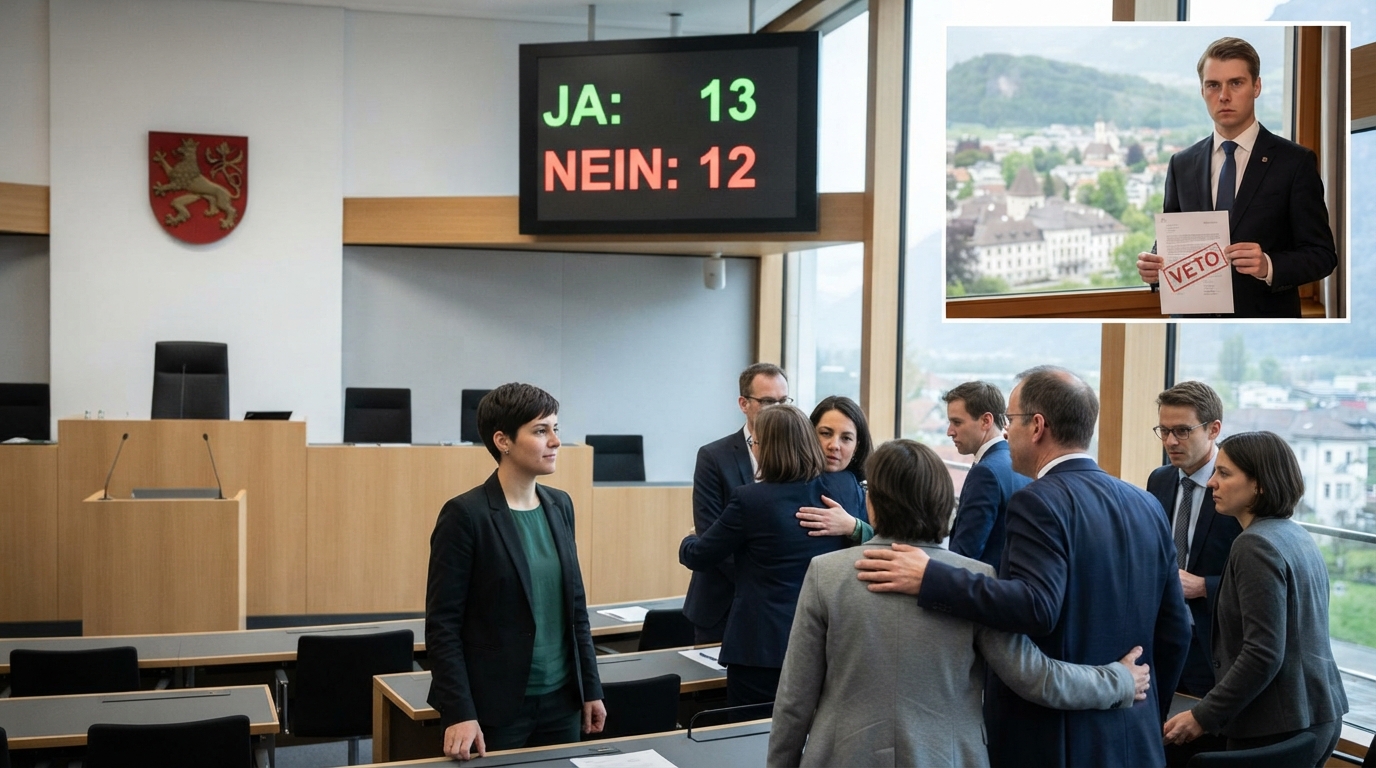
**Liechtenstein MPs vote to legalise abortion despite threat of veto**
The vote went ahead despite the threat of veto from the country's all-powerful ruler
Liechtenstein's parliament has narrowly supported a citizens' initiative to legalise abortion in the first 12 weeks of pregnancy.
The initiative, backed by a group of women, would also end a nationwide ban on giving information about abortions and would make the procedure eligible for health insurance.
It passed by 13 votes to 12 in the 25-seat parliament. But it is unlikely to become law because the country's all-powerful ruler, Hereditary Prince Alois, has already said he would veto the legislation.
Backers of the bill say there is broad support in Liechtenstein for legalising abortion. Even so, MPs turned down a separate proposal to hold a public vote on the issue.
Almost 80% of Liechtenstein's population of about 41,000 people belong to the Roman Catholic Church, which opposes abortion.
The country last held a referendum on legalising abortion in 2011, when the proposal was rejected by 52% of voters. At the time, Hereditary Prince Alois had signalled that he would have opposed the change.
Abortion is legal in most EU countries.
In Liechtenstein, it is permitted only in limited circumstances, including when a woman's life is at risk or when a pregnancy is the result of rape.
Anyone who performs an abortion outside those exceptions can face up to three years in prison, while a woman having the procedure can be jailed for up to a year.
The current rules mean women must travel to other countries - mainly neighbouring Austria and Switzerland - to have an abortion. Since 2015, they have been able to do so without penalty, but the cost is not covered by health insurance.
The effort to change the law was led by 28-year-old Tatjana As'Ad of the small left-wing Free List party. Supporters gathered 4,970 signatures, nearly five times the threshold needed to bring the proposal before parliament.
The proposed 12-week limit is already used in many European countries. In England, Scotland and Wales, it is legally available up to 23 weeks and six days under most circumstances.
However, some lawmakers argued there was little point in taking the initiative any further because of the monarch's opposition.
The Princely House has said its main concern with the initiative is that it does not offer enough protection for unborn life.
Hereditary Prince Alois has, however, suggested that changes could be made to the current rules, including lifting restrictions on public information and clarifying existing regulations.
He carries out public duties on behalf of his father, Prince Hans-Adam, and has unusually wide powers for a Western European monarch - including dismissing the government or individual ministers, appointing judges and proposing changes to the law, in addition to vetoing legislation.