

Liability for extremism has been amended
Participation in and creation of extremist organizations are now punished differently, and administrative liability is introduced for the first-time manufacture and possession of extremist materials. The Ministry of Justice will maintain an Electronic Register of extremist organizations and materials.
**Responsibility for Extremism Modified**
Law No. ZRU-1185 dated November 2, 2026, introduced amendments and additions to the Criminal Code, the Code of Administrative Responsibility, and a number of laws aimed at increasing the effectiveness of the fight against extremism.
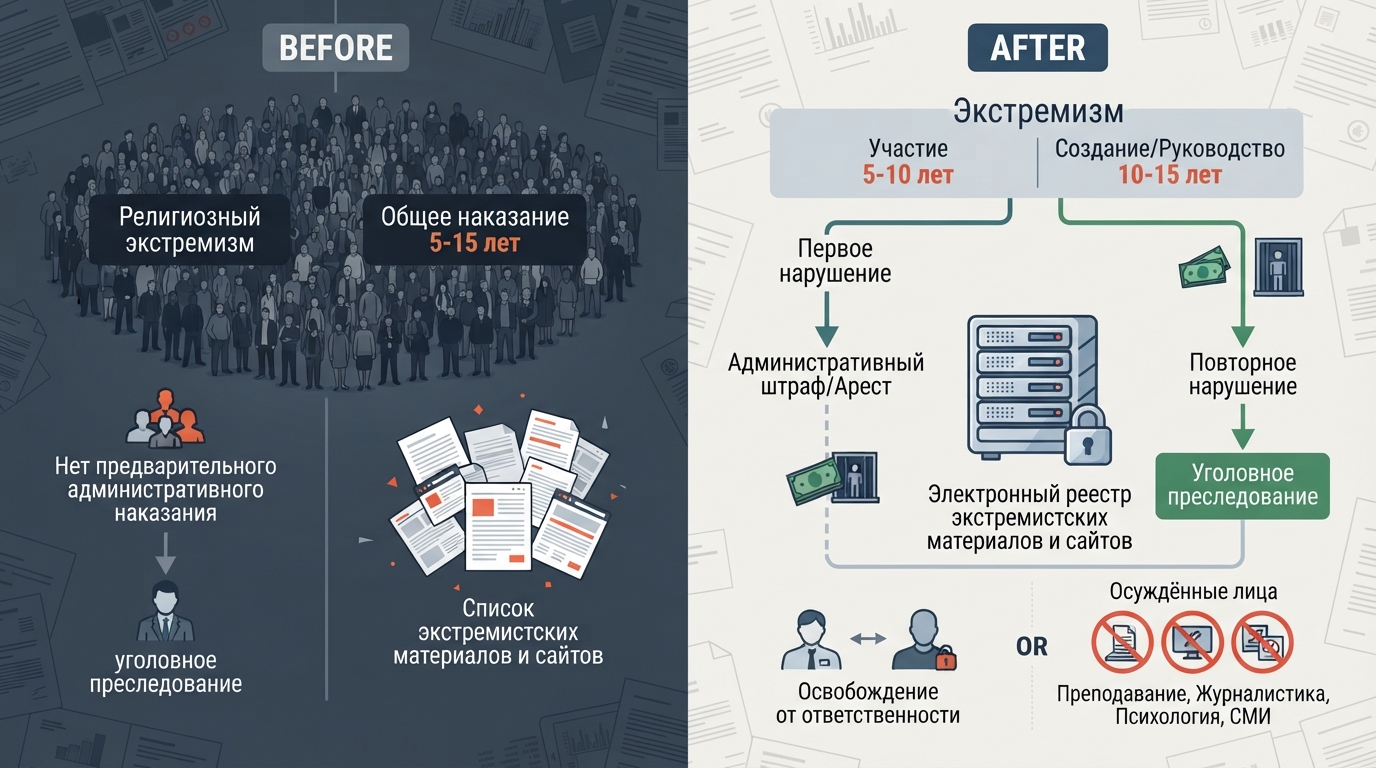
In the Criminal Code, the words "religious extremism" have been replaced with "extremism". Previously, the creation, leadership of, and participation in extremist, separatist, fundamentalist, or other prohibited organizations were punished equally—with imprisonment from 5 to 15 years; now, participation carries a penalty of 5 to 10 years, while creation and leadership carry 10 to 15 years.
A person who participated in the storage, distribution, or demonstration of extremist materials is exempted from liability if they reported it to the authorities in a timely manner or otherwise helped prevent grave consequences.
Previously, the production and storage of extremist materials for the purpose of distribution entailed criminal liability, including a fine ranging from 200 to 400 BHM (Base Calculation Amount). Now, an administrative fine is established for an offense committed for the first time: for citizens—from 50 to 100 BHM, for officials—from 100 to 150 BHM with confiscation, or administrative arrest up to 15 days (Article 184⁵ of the Code of Administrative Responsibility). Criminal liability applies if the act is committed after the imposition of an administrative penalty.
The Law "On Countering Extremism" has been significantly supplemented. Previously, lists of prohibited organizations and legal entities whose activities were suspended were published on the websites of the Ministry of Justice and the Supreme Court. Now, the Ministry of Justice will maintain an open Electronic Register, which will also include extremist materials and internet sources that systematically distribute them.
Previously, the law did not define who recognizes materials as extremist and did not limit the period for suspending the activities of a legal entity by court decision. Now, this is done by the Supreme Court upon application by the Prosecutor General, and the activities of a legal entity are suspended for a period of up to one year. An appeal against the decision must be filed within 72 hours and does not suspend its execution.
Persons convicted of extremist crimes cannot engage in educational or journalistic activities, provide psychological assistance, or establish media outlets until their criminal record is expunged or set aside. Persons who report facts of extremist activity are under state protection and may be rewarded.
The document was published in the National Database of Legislation in the state language and entered into force on November 3, 2026.