

**Letter to my father**
Dear father!
It has been three years since you left this mortal world. During these years, I have sometimes remembered you, sometimes forgotten you. Some days I prayed for you, sometimes I did not find time for it, or rather, I forgot or was disappointed. In the early days, I visited your grave almost every day and shed tears, but now when I go to the village, there are times when I cannot visit you, whether due to laziness, sadness or some other reason.
Your absence has taught me a lot. In fact, I knew this before, but I did not pay attention. Because you thought about us, cared, and worried. In addition to us, the worries of our children were also your responsibility. And all that was required of us was to live.
Father! The day you died, I didn’t cry out loud, as is customary in our village. I did what you told me to do. Do you remember, when on the day of someone’s funeral, the relatives of the deceased were shouting and tearing their collars, I said wisely:
“Dad, what’s the point of all this crying? After all, the holy books have repeatedly emphasized that crying is not allowed,” and you said nervously:
“Don’t interfere in people’s affairs, don’t go against their customs. Otherwise, you will not be able to cry when I die,” you said...
I did what you told me. Even your death benefited me. How can you say that? Did you know that I didn’t know how to pray until that day. Or rather, I didn’t know it at all. On that fateful day, I was forced to memorize the prayers recited during the Fatiha. An interesting incident happened in those days.
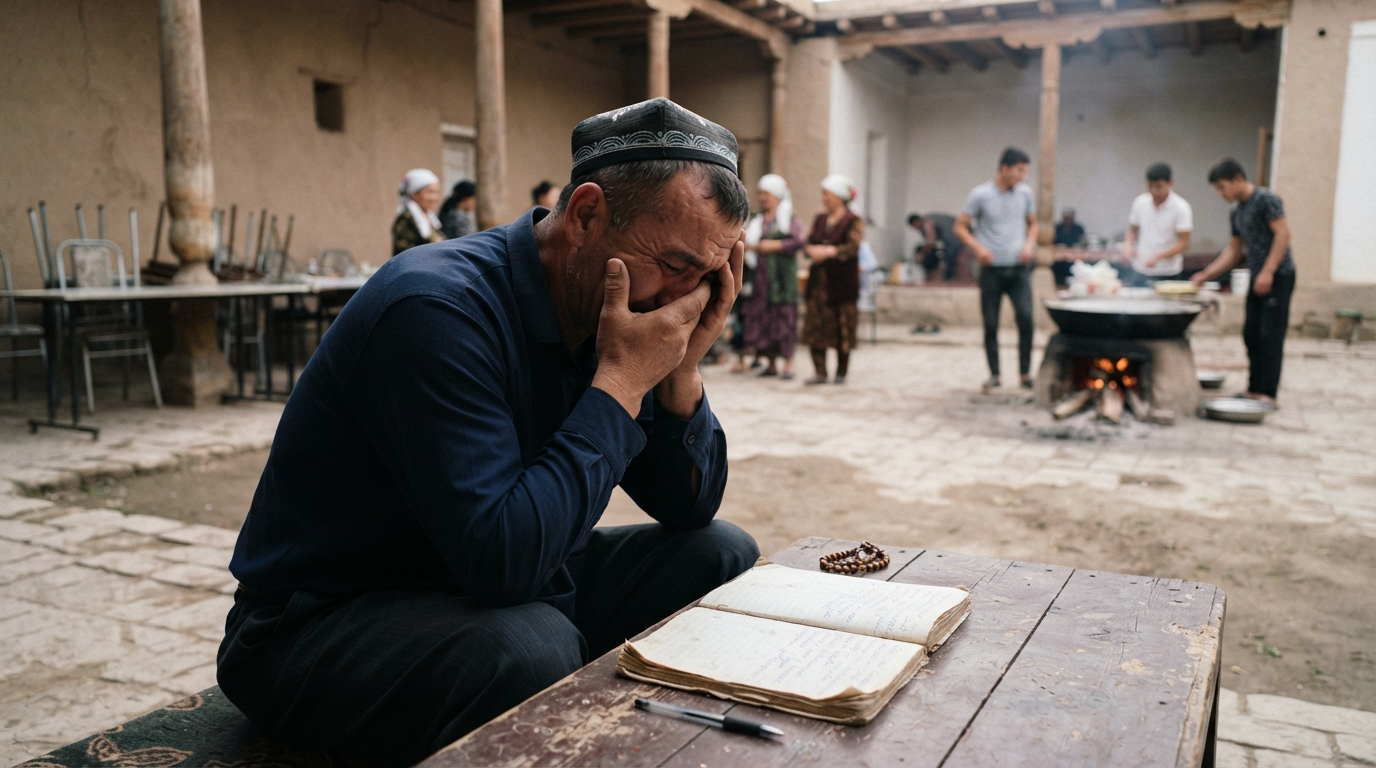
As usual, when I went to the village, I visited your grave, recited the prayers as best I could, and sat for a while with my hands pressed to my face. Then, as I was leaving the cemetery, a young woman was sitting with her daughter at the head of a new grave near the gate. She was buried young. As I passed by them with pity for them, I heard the voice of the young woman saying:
“Recite for us too,” and I turned back and recited. I ignored the young woman’s words of gratitude and left the cemetery. I got into a car parked outside, and believe me, it felt like ice water had been poured over me. I sat there for five or ten minutes, feeling humiliated and crying.
“Oh, you foolish man, imagine how embarrassed you would be if you hadn’t done this. Maybe you don’t know this girl, but what if she knows you? What if she tells the whole village that you don’t know? Wouldn’t all your years of studying and all the years you’ve worked in various organizations and positions be worth nothing?” I scolded myself.
As I said, I didn’t cry on the day of the funeral, but my tears wouldn’t stop flowing. When my heart was full, I went into a room where no one was and cried. For some reason, I was ashamed to cry in front of people. Yes, I was ashamed to cry in a crowd as a child who had lost his father. I didn't know if I was ashamed or embarrassed, in short, I didn't cry, I couldn't cry. Later, when I told my mother about this:
- Oh, my child, my child... You can see how you are burning inside from your face. Even though you are dark-skinned, you have turned dark, you have burned, - she consoled me.
When the time comes, I must say one more thing. I took you to Tashkent to get treatment, to find a cure for your illness, if I may say so, to ensure that your life will be longer, but a thousand regrets that my intention did not come true. The man who left on his own two feet returned lying in a strange car, his eyes closed forever.
Do you know what I was afraid of then? I was afraid that my brothers and sisters would throw themselves at me, saying, "You killed our father." As I walked along the road, entering our district, our village, this thought was gnawing at the back of my mind. When I entered the courtyard, I looked for my brothers and sisters among the crowd of people. Their eyes were red from crying, and they clung to your cold body. Then, thinking that they would attack me now, I sat quietly with my head down without getting out of the car. But at first, that is, until they took you home, no one bothered me. Only after you “entered” did someone open the car door and tell me to get out. I got out of the market. Even then, my anxiety did not subside. As soon as I got out, I saw my brothers and sisters coming towards me, and I could not control myself. Even if I did not scream, tears would come out of my eyes. They came and hugged me, and I hugged them. No one spoke. We could not speak. We cried silently, patted each other's shoulders, hugged each other. Then my uncles separated us. My siblings' hugs were a cure for me, and I was finally free from this. They didn't scold me, they didn't say, "You killed our father"...
We had never had a ceremony like this in our yard before. Even when it was, you were the leader. I quickly told my brothers and sisters about your passing. As I was walking towards the village, I stared at your face, lying silently beside me, and on the other hand, I kept thinking, "How much work is still to be done at home, when will we have time to do it?". Every now and then, I would call home and let them know where I was, or the people at home would ask.
Finally, our village, even the roof of our house, could be seen from afar. Seeing the people huddled around the house, my heart sank once again. As I got closer to the house, I tried to hold back my tears, to stop them from flowing out of me.
When we turned onto our street, I wiped my tears away once more and told the car to drive straight into the yard. I couldn't help but cry as soon as I entered the yard. I started to cry as my lungs filled up. We had already loaded your body into the ambulance at the hospital, and now I was wondering how to get it off. But there was no need for that. My uncles, aunts, neighbors, and relatives, ignoring me as I sat there crying, quickly tried to get me into the house, and they did it in one go.
I got out of the car, pulled myself together a little, and looked around. Since our yard was large, there were iron tables and chairs set up at one end, usually for about 300-400 people, and a little further away, there were pots and pans, and someone was about to light them. I was still not able to come to my senses, but I was watching what was happening around me.
The children from the neighborhood would run around carrying teapots, cups, blankets, and basically whatever was needed for the feast. With the adults' order, "Hey, so-and-so, there's not enough of this stuff left, so hurry up and collect it from the neighbors," two or three children would run out and soon bring the things they had been told. In the meantime, I had time to talk to my brother about the market.
As someone who had lost a father, I stood at the head of the line. Those who came and went expressed their sympathy for me. I recognized some, and I did not recognize some. The reason I did not recognize them was not that they were strangers, but that I had become distant from village life, from the people of the village, from the place where I was born and raised, from my neighbors, in a word, from myself. I asked about those I did not know. As I sat there, lost in thought, I paid attention to who was coming and who was going without realizing it. Later, when we had family gatherings, I asked about some people.
Your departure was hard for all of us. It was unexpected. Especially in the following days, your place became very clear. For some reason, it seemed as if everyone was crossing their fingers and saying, “Now we will see how you live.” I thought of families whose fathers had passed away and were torn apart. I would be deceiving you if I said that I didn't think about whether we would be like that now. That's when your teachings, what you did and said to your brothers and sisters came to the rescue. I remembered these things. I made a promise to myself. We will never be separated. We will always be together. We will not tarnish our father's name. We will overcome all difficulties together.
After you, I started going to the village more often. I participate in weddings and celebrations as much as possible. I have to go to the circles you went to. We can't take your place, but what can we do, we have to go in your place. Last year, a person died in "Beshbulok". The day I went to the village coincided with God, and I went with my older brother. It's clear that those people don't know me. But as we were praying and eating the soup that had been brought to us, the man sitting across from us said:
- You must be Erkin's son from Tashkent, - it made me feel how much I resembled you. If only you knew how happy we were when people who saw me and my brothers at events told us that we resembled you.
By the way, do you remember that when you were in Tashkent, you set the wedding date for my uncle's son. When I talked to him on the phone and pretended that I didn't have money for the wedding, you arranged for him to give me the yard that he had planned to sell in advance and told me to bring the money. When I said that I couldn't find that much money:
- I don't know, you can at least find half of it. If you can't find that much money in a city like Tashkent... I promised, if I don't bring the money, how will we have the wedding, - you said firmly.
I bought that yard for the price you said. But I haven't had the chance to build it yet. If I'm lucky, I want to build a house for myself and live in that house when I'm old and retire. I'm in love, and may God help me to reach those days.
Father, the wedding you planned didn't happen that day. The wedding was held later. It was a very beautiful event. But you weren't there. My brothers and sisters, our eyes were watering as we hugged each other at the wedding and cried again. My uncles barely managed to get up and comforted us. They encouraged us by saying that you dreamed of these days, that you were watching over us now and that you were happy.
You planned several times and did things that we couldn't do. That is, we demolished the house in the courtyard where we grew up, every brick of which was laid by hand, but which had become unsafe to live in in recent years. We even removed the soil. In its place, we built a house of baked bricks based on the plan that my brother wanted and prepared in consultation. We repaired part of it, and now my brother and his family live in that house safely and peacefully. We transferred this courtyard to my brother's name without any quarrels, arguments, and by mutual consent. The words of the notary girl still ring in my ears:
- You still have time to think and change your mind. After you sign this document, everything that was in your father's name will pass to your brother, and you will have no rights to these things. Your every action and word is being recorded. So think carefully, then there is no turning back.
My younger brother and I are sitting at the notary's. As I was reading the document to be signed, the notary repeated these words not once, but several times. I looked up from the document and said:
- I just read this for formality, in fact, there is no hesitation, we will sign it, - I looked at my brother. I signed. My brother did not even read the document, he signed it conditionally. As soon as we left the notary's, I congratulated my brother on his marriage.
Nine months after you "left", your youngest daughter married her two sons. We tried not to show your position, not to disappoint our sister, and to keep the expenses as low as possible. The wedding day arrived. Everyone was happy. And we cried again with my brothers and sisters. We repeated that everything would be different if you were here. We understood that your place would not be filled anyway.
We bought land on the side of the highway from Zamin to Jizzakh to build a shop. The brothers and sisters got together and built a shop there. When we started construction a little later, some people seemed to laugh at us, and some mockingly hinted that we would not be able to finish, that our unity would not last long, and that this shop would be a problem for us. But we did not back down. True, there were sometimes disagreements and arguments, but we immediately came to an agreement. We listened to the words of one elder and one younger. Today, that shop is open. It's not running smoothly yet, but if the money from the sale is helping my brothers and sisters to make a living, we hope that the shop, which is far from the village center, will be useful to the people around here. There are still many shortcomings, and we will gradually fix them.
Another piece of news. I got a car. Now I have my own car. As they say, if you give, you will get one after another, my company also gave me a company car. It's a pity that you didn't see these days. Sometimes, out of necessity, we had to go to the village in both cars. Then, seeing the cars lined up in front of our house, we thought of you again and cried again. Seeing this scene, we thought about how happy you must be, how proud you must be.
- My father passed away without seeing these days, - we said.
Father, I don’t know how you managed my uncles, but I’m really struggling with this issue. Don’t worry, my brothers and I haven’t gone to you or stolen any property yet. We covered most of the expenses for the aforementioned weddings and my brother’s house with the sheep you left behind. According to my eldest brother’s suggestion, these sheep will remain as common property and anyone who has any financial problems will be solved with their help. In other words, we are still living off your account, father. The sheep you left behind are still useful to us. When they are old, they will be a place to live and stay for life.
It’s true that my brothers and I don’t always agree on certain issues. As the elder, I make my suggestion. They say so. Then we think about it and come to a conclusion, or sometimes we have to put a conditional end to it. Sometimes I shout at them, trying to show my greatness. I don't know if I'm doing it right or wrong yet. My intention is not to tarnish your name. I don't want people to say:
- So-and-so's sons are fighting over property, brothers are fighting.
I saw that you came into this life and did nothing for yourself, you did everything for your own sake. Some time after your death, I decided:
- One day I will also pass away. My father passed away without seeing anything. From now on, I will live for myself. But it didn't last long. Life's worries didn't allow it. I am trying to be like you, I am trying my best, but whether I will succeed or not is still unknown.
There is always a part of me that is embarrassed. We don't hear from your friends or we don't disappoint them. Sometimes we feel like we are doing injustice to your brothers. That is, we don't love them either. After all, they are your relics... You live in their image... But we haven't appreciated it. You know that one of them has left you. Especially that uncle of mine, who used to say a lot, "My brother's value is now being realized." He got sick and took him to you.
For some reason, lately I have been thinking about death a lot. This thought strikes fear in my heart. When you are over fifty-five, you would say:
- I have passed my father's age, and now I don't have a dream, - you are not without worries about whether I will reach your age, to be honest. If I tell my mother about this, she will beat me up.
This year, we have decided to build a house for your youngest son. We have now laid the foundation and raised it. All that remains is to put the roof on. If we are lucky, we will be able to do this too, the brothers and sisters will be able to do this together. God willing, we have good intentions and plans. We hope that they will come true. If we work together, we will be able to do it.
I always teach my brothers something. If we are good, if we are in harmony, if we achieve success, our father will be happy. He will be pleased with the upbringing he has given us, with his bread and salt. I say, do good to your relatives, neighbors, neighborhood, and village people as much as you can and ask them to bless our father.
Father, I have asked you a question. Maybe the readers will write that they have taken what they say at home outside, but everyone knows this. I just revealed a few details.
Actually, I have a lot to say. These are the ones I remember for now. Maybe there will be a second or third part of this letter. But for now, goodbye, may your place be in heaven...
Your son, who really wants to be like you, but can't.
Nurulla Abdullayev