

Kazakhstan expands digital healthcare with 88% of services now electronic
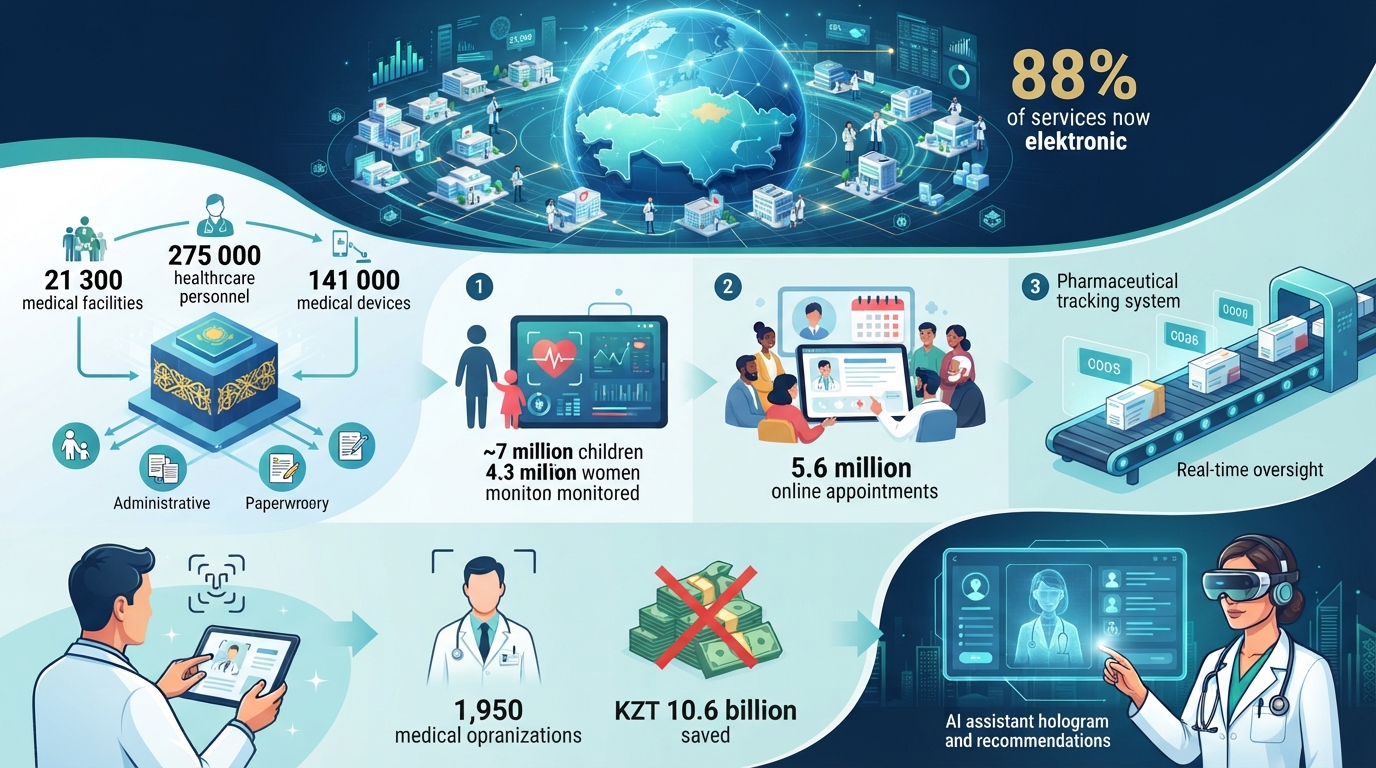
Kazakhstan's healthcare system has undergone significant digital expansion, with the government reporting that 88% of its services are now electronic. This shift to digital patient monitoring, electronic services, and data integration has reportedly decreased the workload for medical professionals by 30–40%.
A unified digital platform now consolidates data from over 21,300 medical facilities, 275,000 healthcare personnel, and 141,000 medical devices. This integration of information systems has streamlined administrative tasks and reduced the necessity for manual data input by medical staff.
In 2025, out of more than 215 million public healthcare services, 190.8 million were delivered electronically. Additionally, over 8.5 million electronic medical certificates were issued, and 5.6 million individuals utilized online appointments for doctor visits.
Currently, digital health monitoring encompasses approximately 7 million children and 4.3 million women, totaling over 11 million people. An additional 3.6 million patients are under dynamic medical monitoring.
A digital pharmaceutical tracking system has also been implemented to provide real-time oversight of medications. This system employs marking codes to monitor drug inventory and movement, detect irregularities, and prevent unauthorized write-offs.
The government also stated that digital controls have prevented KZT 10.6 billion ($23.24 million) in unjustified medical services. Digital identification has been rolled out in 1,950 medical organizations, with nearly 73% of medical appointments now using Face ID and electronic documents.
The subsequent phase will involve integrating over 1,900 medical organizations into a Unified State Medical Information System. This platform is designed to offer doctors a single working interface and an AI assistant.
According to the government, this transition signifies a move beyond isolated digital services towards a comprehensive, data-driven healthcare management system. The objective is to support patients throughout their medical care journey, lessen the administrative burden on healthcare workers, and enhance service accessibility for citizens.