

Job losses as glass company enters administration
Clayton Glass is to close three sites, resulting in the redundancy of 189 workers in County Durham.
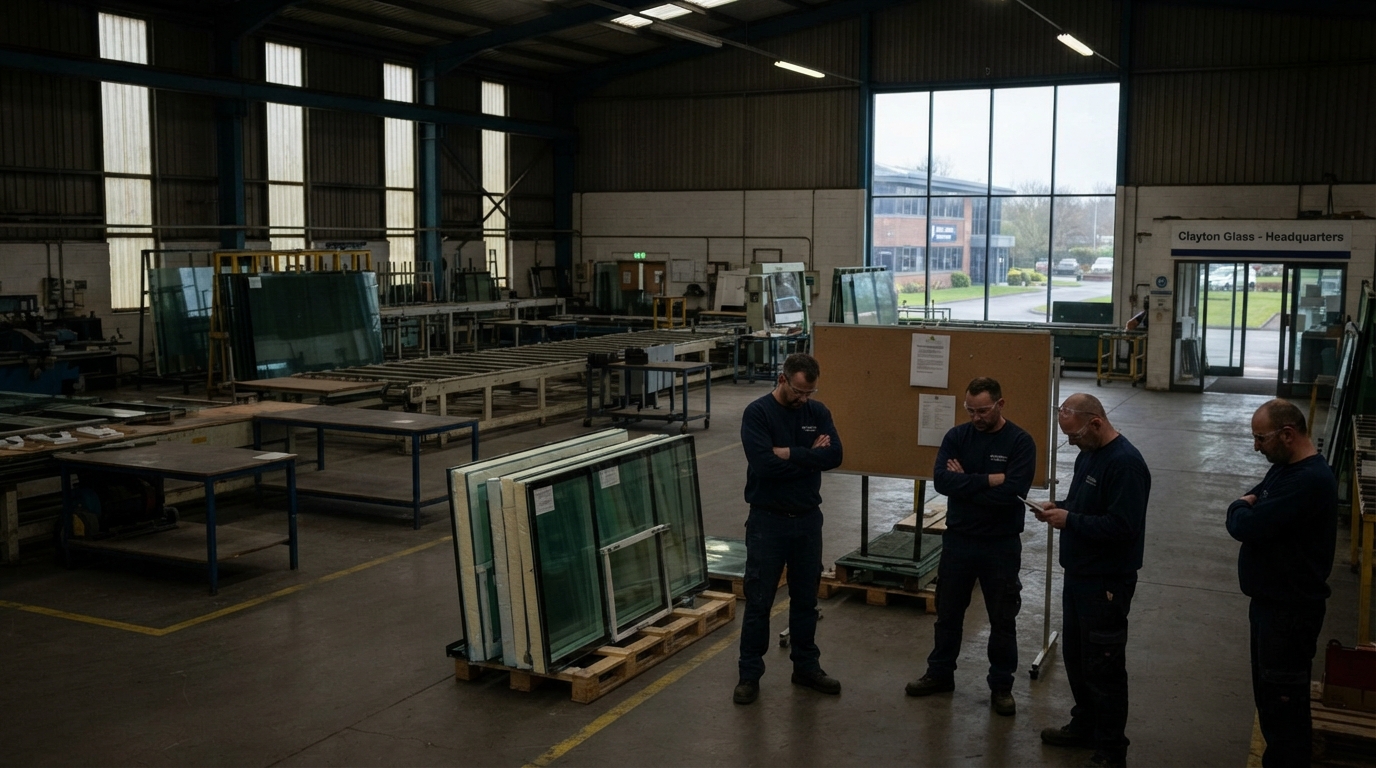
**Job losses as glass company enters administration**
Clayton Glass makes insulated glass units for window, conservatory, door and glazing contractors.
Almost 300 jobs are set to go after a major glass manufacturer went into administration.
Clayton Glass will shut its headquarters in Harelaw, County Durham, with 189 employees made redundant.
Another 101 jobs will be lost at the firm’s sites in Blackburn and North Lanarkshire.
The company, which has 573 staff across seven UK sites, entered administration on 18 September after it was unable to meet its financial obligations.
Administrators Interpath said the business had been affected by high energy and raw material costs, along with a prolonged period of weak demand.
Clayton Glass was established in 1956 and produces insulated glass units for window, conservatory, door and glazing contractors.
Attempts were made to preserve the whole business, with backing from external capital, but administrators said no viable solvent solution could be identified.
Instead, the company’s business and some of its assets have been sold to Clayton Glass Group Ltd, an entity supported by the former management team.
The deal protects 283 jobs and covers sites in Nottingham, Swindon, Canterbury and Dewsbury.
However, the County Durham, Blackburn and North Lanarkshire sites will close, leading to a total of 290 redundancies.
Harelaw is the company’s headquarters and biggest site.
James Lumb, managing director at Interpath and joint administrator of Clayton Glass, said: "Clayton Glass has a proud history, having established itself at the heart of the British glass industry, and this transaction gives the business a platform to continue, secures some of its operations and, crucially, preserves a significant number of jobs.
"Unfortunately, we are seeing a similar story across a range of businesses supplying the housing market. The economics of the industry are incredibly challenging with high and rising fixed costs and soft demand which makes good businesses like Clayton unsustainable on a normal operating base.
"The directors have fought hard to find a solvent solution, but regrettably not all of the business could be rescued in this market.
"We have a dedicated team on site supporting impacted staff through this difficult time with making representations to the Redundancy Payments Service."