

Japan raises interest rate to new 31-year high to curb rising prices
Central banks around the world have hiked rates as high energy prices are pushing up inflation.
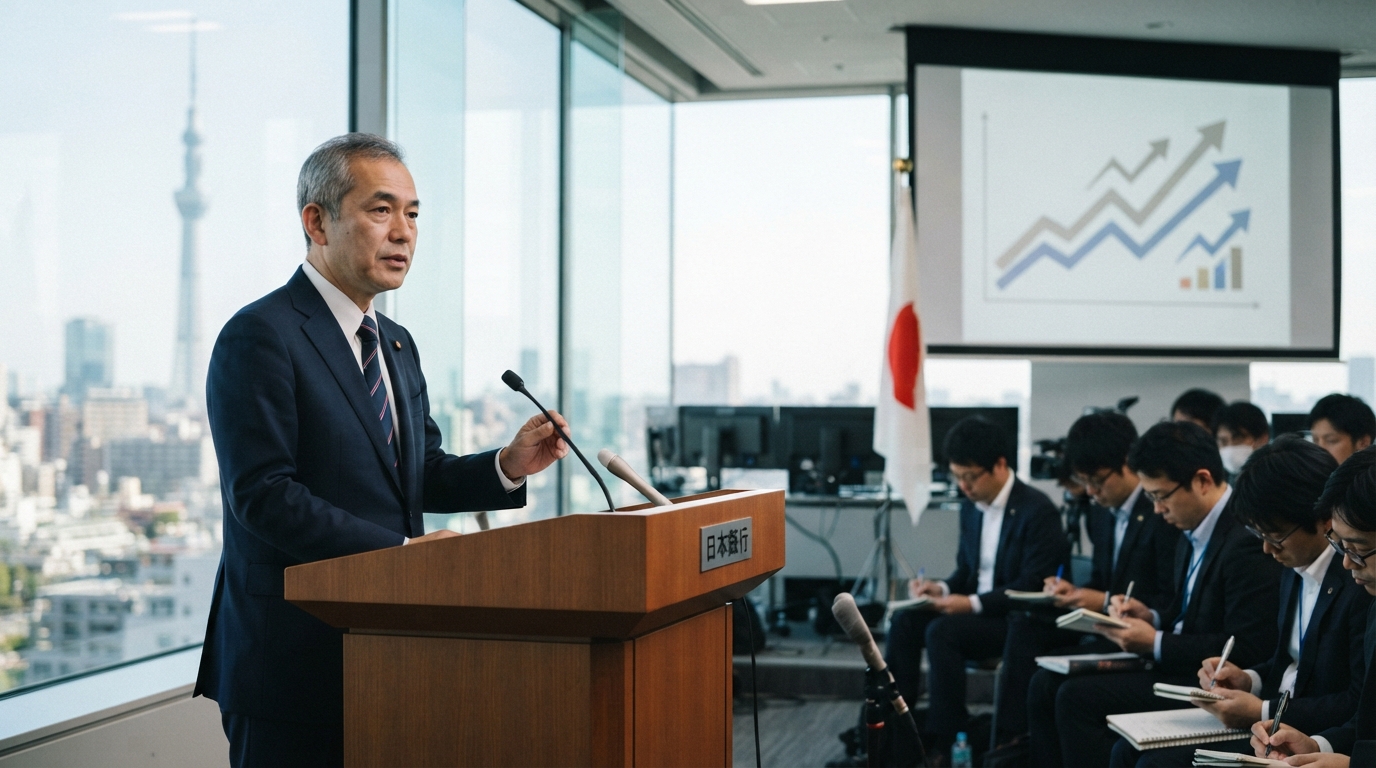
Japan lifts interest rate to a new 31-year peak to rein in rising prices
The Bank of Japan has been increasing the rate since 2024, when it was minus 0.1%
Japan’s central bank has raised its key interest rate to a new 31-year high as it keeps moving away from decades of ultra-low borrowing costs and as the country confronts growing economic strain.
In a move that was widely anticipated on Friday, the Bank of Japan (BOJ) lifted the rate from 1% to 1.25% - a level last seen in 1995.
The decision comes as major central banks worldwide are raising rates, with higher energy prices driven by the Iran war helping to fuel inflation.
On Wednesday, the US Federal Reserve increased its benchmark interest rate for the first time in more than three years, while the European Central Bank also raised borrowing costs earlier this month.
The BOJ has been raising the rate since 2024, when it stood at minus 0.1%.
It has now increased rates six times in the past two and a half years.
Since then, the bank has been gradually lifting the rate as it seeks to reach a level closer to those of other major economies.
When a central bank raises rates, the country’s currency typically strengthens because it becomes more appealing to traders.
Japan is dealing with a number of economic difficulties, including a persistently weak yen, rising prices and a shrinking workforce.
Official data released on Friday before the BOJ announcement showed inflation eased slightly last month.
Core inflation dropped to 1.7% in August from 1.8% the previous month, but it remains near the bank’s 2% target.
Although Japan’s inflation rate is not high by global standards, rising prices are a relatively recent development in the economy.
Until recently, the country had seen very low inflation or deflation - falling prices - for about three decades.
Global oil and gas prices have climbed this year after the Iran war caused major disruptions to shipments through the vital Strait of Hormuz shipping route.
Japan is especially exposed to those supply disruptions because it depends heavily on energy from the Middle East.
The country’s currency has also come under pressure in recent months.
In August, Tokyo and Washington confirmed they had jointly intervened to stop a slide in the yen after it fell to a new 40-year low.
The coordinated intervention was the first since 2011, when both countries acted together to weaken the yen after the devastating earthquake and tsunami that struck eastern Japan.
At the time, both Japan’s Ministry of Finance and US Treasury Secretary Scott Bessent said they would not hesitate to carry out more joint interventions in the future.
Bessent has also been increasing pressure on the BOJ to raise interest rates to support the yen, urging its Governor Kazuo Ueda to "do the right thing".