

Italian cuisine: Why don't Italians get fat even though they eat pizza and pasta every day?
**Italian Cuisine: Why Don't Italians Get Fat Even If They Eat Pizza and Pasta Every Day?**
Despite being high in calories, Italian cuisine is considered one of the healthiest in the world. Why don't Italians get fat even though they eat pizza and pasta all the time?
**The Art of Making Do Out of Nothing**
Most Italian cuisine is based on making the most of a small amount of ingredients. This is called "cucina povera" - "poor cuisine". Minestrone soup is a prime example of this. It is not made according to a specific recipe, but from seasonal ingredients found in the kitchen. Italians can add greens, beans, pasta or other products to this soup. To turn yesterday's minestrone into a nutritious meal the next day, just add stale bread to it.
**Use garlic in moderation**
There is a misconception that Italian cuisine requires tons of garlic. In fact, famous chefs say that it is almost impossible to detect garlic on a restaurant menu or in home-cooked dishes. In Italian cuisine, the taste characteristics are more subtle, and garlic is not always necessary. Everything should be in moderation.
**The secret to constantly stirring rice**
The rice that Italians cook is different from other rice dishes in the world - it is in grains in a creamy sauce. The secret is the use of rice starch. Traditionally, the process of preparing risotto begins with short-grain rice fried in vegetable oil or butter, with a small amount of chopped onion for flavor. Then the broth is gradually added to the rice, while the chef constantly stirs the rice so that it does not boil too quickly. The constant movement ensures that the rice cooks evenly in a small amount of liquid.
**A different type of pasta for each sauce**
People usually have a small list of pasta shapes: spaghetti, penne, rigatoni, linguini. In Italy, there is a world of pasta, and each type is suitable for a specific sauce.
**Don't break the spaghetti**
Another favorite way to cook long pasta is to cut it into pieces so that it fits completely in the pan. But the original length is very important. When you break the cooked spaghetti with a fork, long pasta absorbs more sauce and the dish is more delicious. To cook the pasta along its entire length, you need to put the spaghetti in boiling water and, when the bottom is soft, turn it over with tongs, dry side down.
**Mozzarella cheese for pizza**
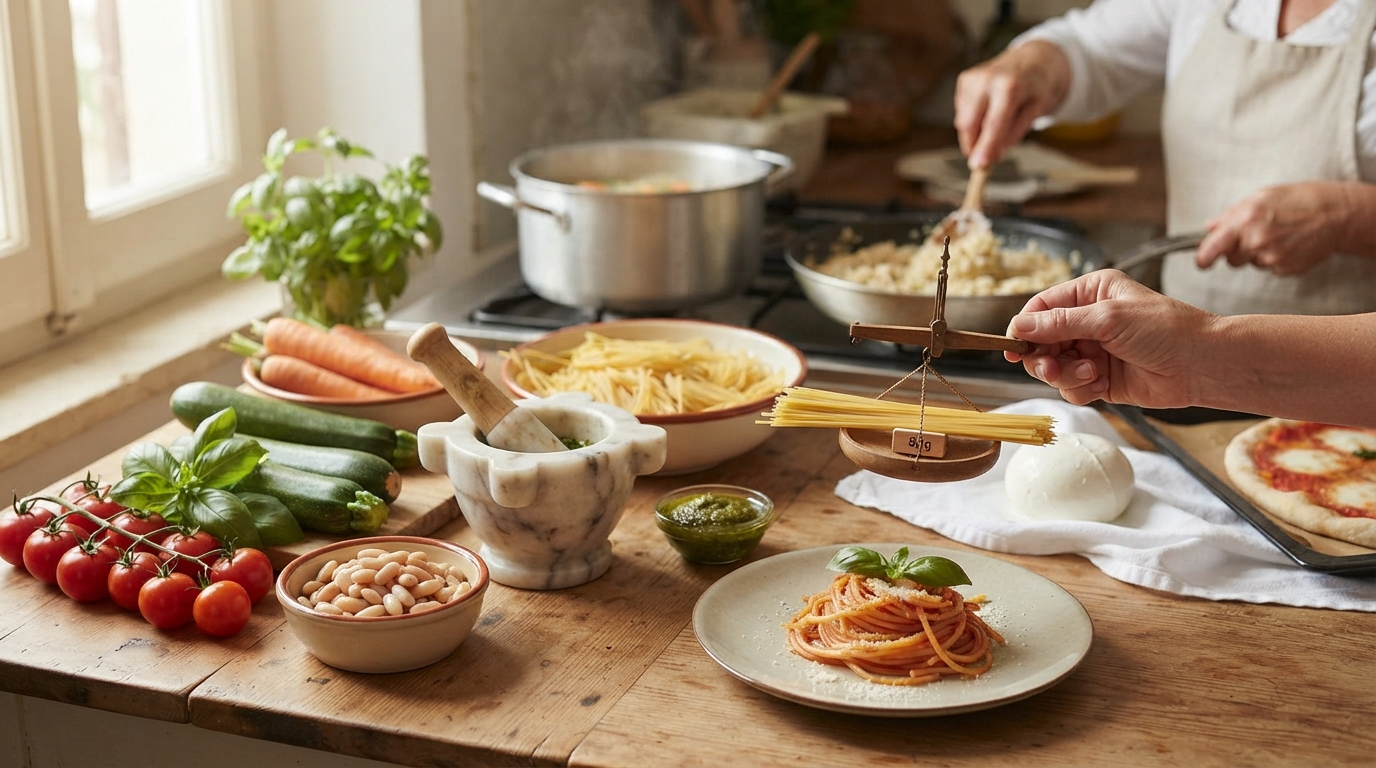
Mozzarella cheese is fatty, rich and melts easily. That's why Italians mainly use it to make pizza. Fresh mozzarella is the best option because it has a creamy taste and a soft texture, so it melts well in the dough.
**Sauces are made in a mortar**
We are used to convenient kitchen appliances that make our work in the culinary field much easier. With the advent of food processors and blenders, they replace outdated sauce-making methods such as mortars. But pasta and sauces turn out to be tastier than when cooked in a machine. After all, it is not only the result that matters, but also the process.
**Don't reheat yesterday's pasta**
Italians do not reheat leftover pasta. Instead, they prepare another dish from yesterday's pasta. In Italy, leftover pasta is usually ground to make pasticccio, cooked with other ingredients such as mozzarella, boiled eggs and vegetables, or mixed with eggs and turned into a type of tortilla called frittata di maccheroni.
**Eating small portions**
According to Italians, the problem people face is that they cook too large portions. Italians have been eating pasta for hundreds of years, but they don't get fat. The average serving of pasta in Italy is 75-80g, while other people often eat 150-200g. Tip: Always measure your pasta before cooking.
**Seasonal Cooking**
Italians cook according to the season, and each region of Italy uses different ingredients. This means that the products have to change depending on what is fresh in the market at the moment. Freshness has a big impact on the quality of the dish.