

It couldn't be simpler
After criticism from Seoul, the Migration Agency of Uzbekistan has changed the rules for employment in Korea
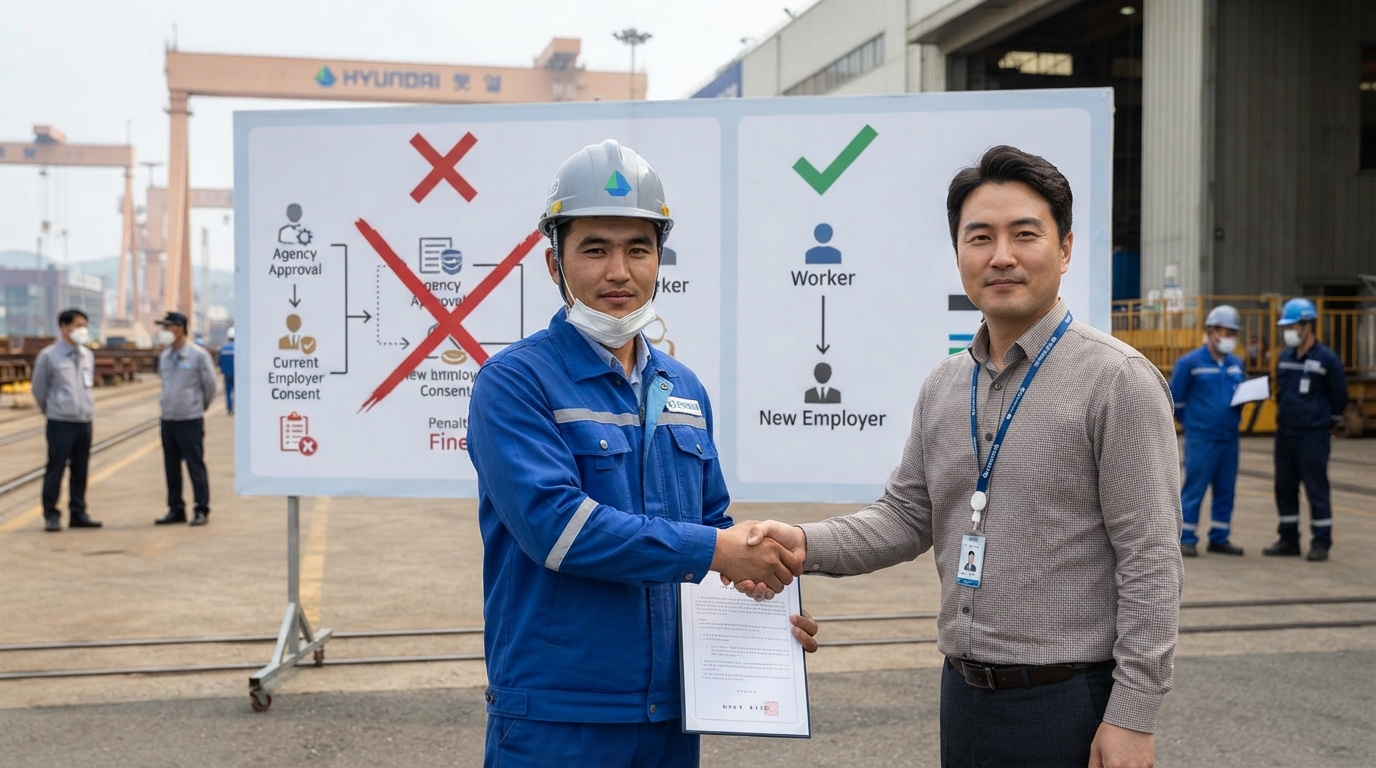
As Simple as It Gets
The Migration Agency of Uzbekistan has revised the terms of tripartite agreements for citizens working in South Korea under the E-9 visa (non-professional employment visa). Now, Uzbek citizens are no longer required to obtain the consent of the agency's representative office in Seoul when transitioning to a new workplace.
The requirement to coordinate a change of employer has been removed from the document, and the fine for violating this condition, which was stipulated in the previous version of the contract, has also been abolished. From now on, Uzbek citizens can independently terminate employment contracts with Korean employers and conclude new agreements with other companies based on current legislation.
The Migration Agency explained that the requirement to coordinate a job change was previously introduced to prevent Uzbek citizens from staying in Korea in an illegal status. In addition, this measure was intended to maintain contact with migrants in order to provide them with legal, social, and financial assistance.
The agency noted that the agreement still retains the clause on fines for illegal stay in South Korea. After resignation, migrants are required to register as job seekers within a month and find a new job within 90 days. If foreigners do not sign a new employment contract and do not leave the country during this time, they will be recognized as illegal migrants. In this case, the legislation provides for fines, deportation, and a ban on re-entry.
The terms of the agreements were revised following negotiations with employers and non-profit organizations, as well as taking into account appeals from the labor migrants themselves. A key event was a meeting in late August in the city of Ulsan involving local authorities, human rights activists, and representatives of the Hyundai company.
The update of the terms was preceded by an intense discussion. In August, South Korea's Ministry of Gender Equality and Family, which is the main body for combating human trafficking, sent an official request to the Korean Ministry of Employment and Labor and the Ministry of Justice to improve the employment system for Uzbek migrants. The agency saw signs of violation of the Act on Prevention of Human Trafficking in the existing practice.
The reason for the intervention was information that starting from 2025, Uzbek labor migrants, upon entering Korea, signed an agreement with the Migration Agency of Uzbekistan, according to which a fine of $2,000 per month was stipulated for changing jobs without the written consent of the employer and the agency's representative office. At the same time, the fine had no upper limit and accrued until the migrant returned to their homeland. Human rights activists pointed out that this practice did not take into account forced cases of dismissal, such as staff reductions, termination at the initiative of the employer, or failure to report to work due to health reasons.
The situation escalated after a tragic incident on July 18 at the Hyundai Heavy Industries shipyard in Ulsan, where a 26-year-old worker from Uzbekistan died. Colleagues of the deceased stated that he had been repeatedly injured and wanted to transfer to another enterprise due to dangerous working conditions, but could not do so because of the threat of paying a large fine.
According to the Migration Agency, in 2024, the number of Uzbek citizens employed in South Korea under the E-9 visa decreased to 3,080 people compared to 4,878 in 2023. The reduction was attributed to problems of unauthorized abandonment of work without valid reasons and bankruptcies of employers. However, as human rights activists noted, one of the reasons was also the system of fines, which virtually deprived migrants of the opportunity to legally change an unscrupulous employer.