

Is your child constantly late for school? The problem might not be laziness
Does your child keep running late for school? The problem might not be laziness
A child's inability to wake up in the morning, reluctance to get dressed, and rushing to get to school on time worry many parents. Especially if the child is frequently late for class, parents may get angry, scold them, or deliberately let them be late with the intention of "letting them feel embarrassed once." However, a child psychologist emphasizes that in such a situation, rather than punishing, it is important to identify the root cause of the problem.
The reason for being late might not be laziness
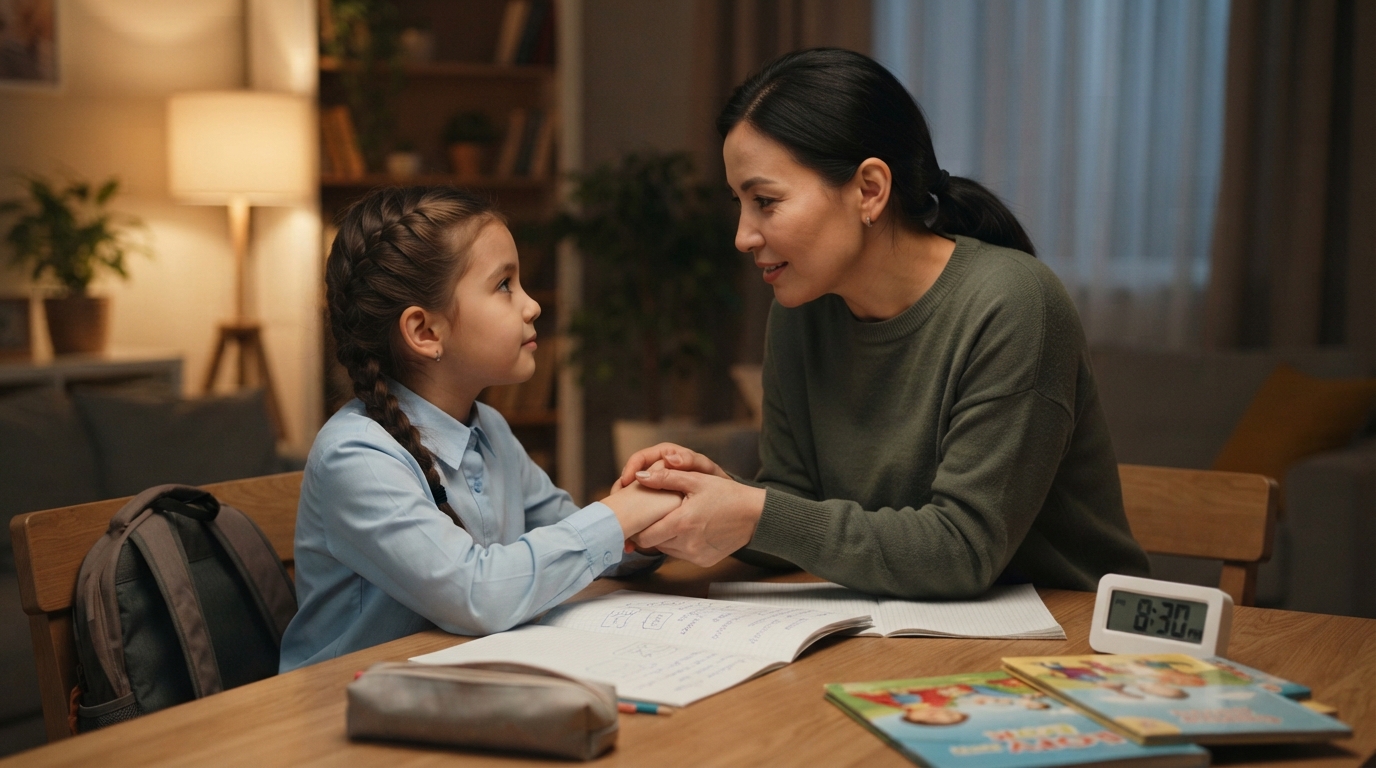
The 9-year-old daughter of a mother who consulted the specialist had difficulty getting up for school in the morning. The girl did her homework in the evening and, because she could not manage some tasks on her own, she would wait for her mother. The mother did not come home from work before 20:00, and as a result, the homework process dragged on until 22:00. The child would go to sleep at around 23:00.
In the morning, it was difficult to wake the girl up; she would be cranky, and as a result, there was a risk of being late for school.
In such a situation, it is natural for parents to lose their patience as well. But according to the psychologist, before scolding the child, one should pay attention to why they are unable to sleep on time.
Because the child might not be finishing their homework in the evening, and as a result, is not getting enough sleep. A lack of sleep makes waking up in the morning even more difficult.
Is it right to say "let them feel embarrassed once"?
Some parents believe that when a child is late for school, they should deliberately let them be late and enter the classroom during the lesson, thinking that "they will feel embarrassed and learn to get up on time next time."
However, the psychologist advises focusing on the cause of the problem rather than on the shame and fear that the child will experience.
The specialist notes that a parent's excessive anger over a child's lateness can sometimes be related to their own emotions. For example, a child's lateness may cause the parent to worry: "I will look like a bad parent in the eyes of others."
Therefore, in such moments, it is important to first control one's own emotions and then start solving the child's problem.
Children need to be praised more
The psychologist also draws attention to the child's emotional connection with the parents. If parents mostly scold their child for mistakes and barely notice their good deeds, the child may try to get the parents' attention this way, even if it is negative.
Therefore, it is important not only to criticize the child for mistakes but also to see their small achievements.
For example, if the child did their homework independently, cleaned their room, or got up on time after the alarm in the morning, this can be specially acknowledged.
How to change the situation?
Review the child's daily routine. A school-aged child needs to get enough sleep. If homework is being left too late, it is necessary to find out the reason and look for a way to move the task completion time forward. There should also be time for walks and rest in the child's daily routine. A night's sleep of 10–11 hours is usually recommended for primary school-aged children.
Do not talk to your child only about schoolwork. Every day, at least half an hour can be dedicated to a pleasant activity together. Listening to the child, showing interest in them, and acknowledging their achievements will have a positive impact on their self-confidence.
Before going to sleep, you can tell the child about a few good things they did that day. This simple habit helps the child feel valued and needed.
Observe your own emotions. If your child's behavior triggers strong anger or other negative feelings in you and they are difficult to control, consult a psychologist.
Explain the school rules. It is necessary to explain to the child in simple terms why arriving at class on time is important. For example, a student who arrives after the lesson has started may miss part of a new topic or distract other children in the class.
Also teach them not to be afraid of being late. Parents can talk about their own lateness during their school years and explain how they felt in that situation. Most importantly, explain to the child that being late can happen to anyone, but it should be avoided as much as possible.
If the child still ends up being late, instead of making them panic, they should be taught how to handle the situation correctly. Two simple rules are enough for this:
notifying as far in advance as possible that they are running late, and apologizing upon arrival.
If a child is regularly struggling with doing homework or mastering the school curriculum, one should not rush to explain the problem simply as "laziness." In such a situation, it is important to consult with a teacher, school psychologist, or relevant specialist to determine exactly what the child is struggling with.