

Irish heritage and culture, as told by the women of the North West
A new exhibition is celebrating the role of women in the rich Irish communities across northern England.
Irish heritage and culture, as told by the women of the North West
The new exhibition is set to examine generations of Irish heritage
North-west England has long had a strong and deep bond with Irish heritage, with Manchester, Lancashire - and Liverpool in particular - known for their historic Irish communities.
Many families settled in the region after mass migration began in the mid-19th century during the Great Famine.
And as heavy industry expanded - from shipbuilding and canal and road building in Liverpool to the mills of Manchester and Lancashire - these areas became, by the 20th century, a stronghold of Irish culture, including social clubs, folk music and the influence of the Catholic church.
Even now, the connection remains, with the region being the most popular choice for Irish university students who decide to study overseas, according to the Department for the Economy.
But while Irish stories are woven into the fabric of the North West, some voices are less often heard - prompting two curators to ask: "Who are the women of Ireland in the North?"
"Women don't get the space to have their voices heard," said Rosarie Walsh, a community interest company director based in Trafford, in Greater Manchester.
Rosarie moved to Manchester 16 years ago to study theatre at university and now runs Emerald LENS - a female-led non-profit organisation focused on uncovering and sharing the untold stories of underrepresented communities.
She and Cheshire-based artist Lydia O'Hara have spent the last two years working to uncover the voices of women across the Irish diaspora.
Now, drawing on the testimony of dozens of women aged from 20 to over 80, Rosarie and Lydia have launched a new exhibition at the University of Liverpool's Victoria Gallery & Museum - highlighting women of Irish heritage in the north of England.
The project is supported by the National Lottery and the University of Liverpool's Institute of Irish Studies
"Women hold up a lot of the community," Rosarie explained.
"Just like all the men that came over from Ireland who came over to work here to build the roads, women came over for nursing and for all sorts of different reasons.
"But the women don't always get the profile for doing that, for helping to support their families and communities.
"I suppose we're always kind of in one way in the background.
"This project has been a deeply personal and emotional journey.
"Listening to the stories of other Irish women in the north of England has opened my eyes to the richness, resilience and complexity of our shared experience.
"It has reinforced how important it is to create space for these voices to be heard, celebrated and preserved."
Workshops were held at the University's Victoria Gallery & Museum, Stretford Public Hall in Manchester and the HEART centre in Headingley, Leeds
The project brought together women from across the region - of all ages and backgrounds - to reflect on their Irish identity through folklore, art, personal objects and family history.
From first-generation migrants to fifth-generation descendants, the women shared their stories and explored their heritage and sense of belonging - asking questions about their mixed-heritage, identity outside of Ireland and the influence of their Irish culture.
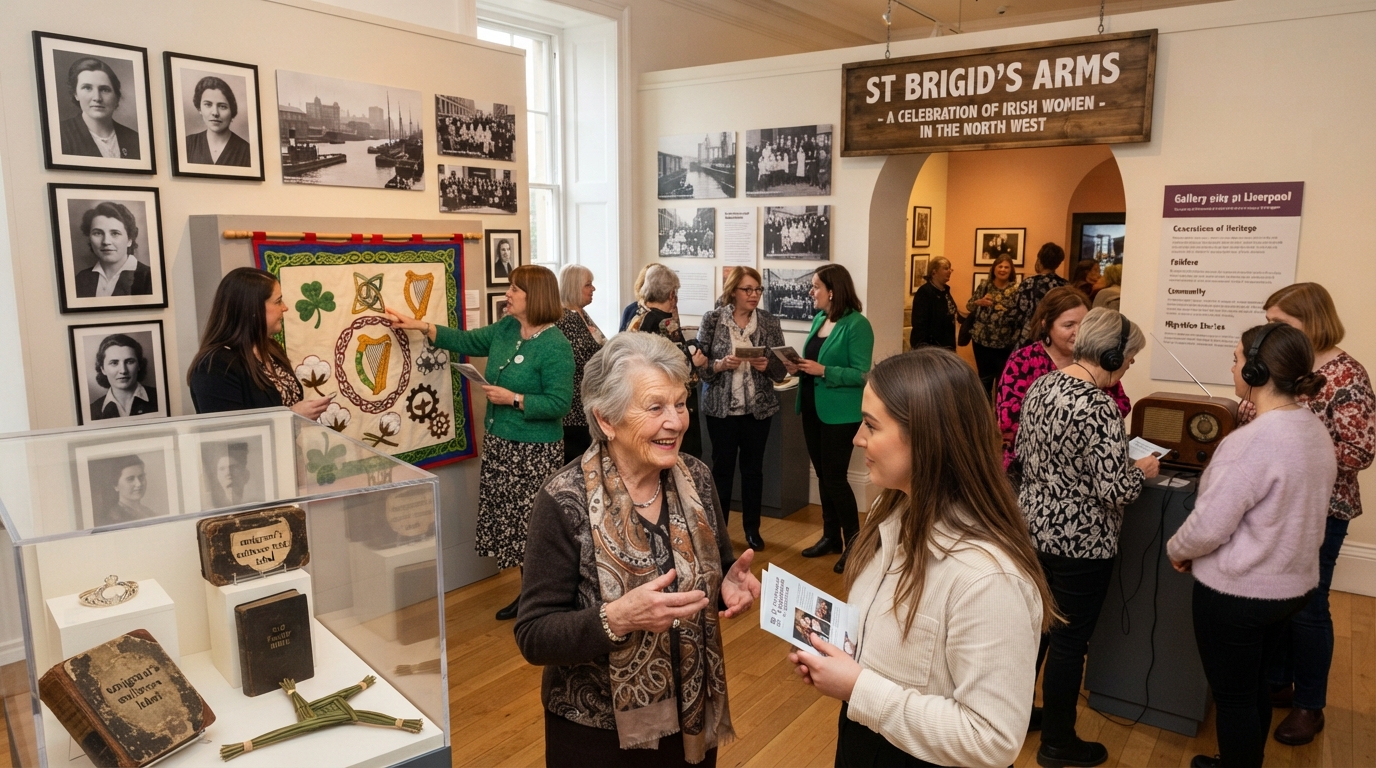
Now the creations and oral testimonies produced by the project have been presented in an exhibition - the St Brigid's Arms - an interactive walk-through set in a fictional pub, named after the lesser-known female patron saint of Ireland.
The free-to-visit exhibition opened on Saturday at at the University of Liverpool's Victoria Gallery & Museum and runs until 17 April 2027.