

Intel shares plunge 23 percent following negative forecast
Shares of the US company Intel fell by 23 percent following a downturn in the computer market and a negative revenue forecast. A shortage of memory chips and rising prices for components are putting pressure on laptop and desktop sales. The company expects these difficulties to continue into 2027.
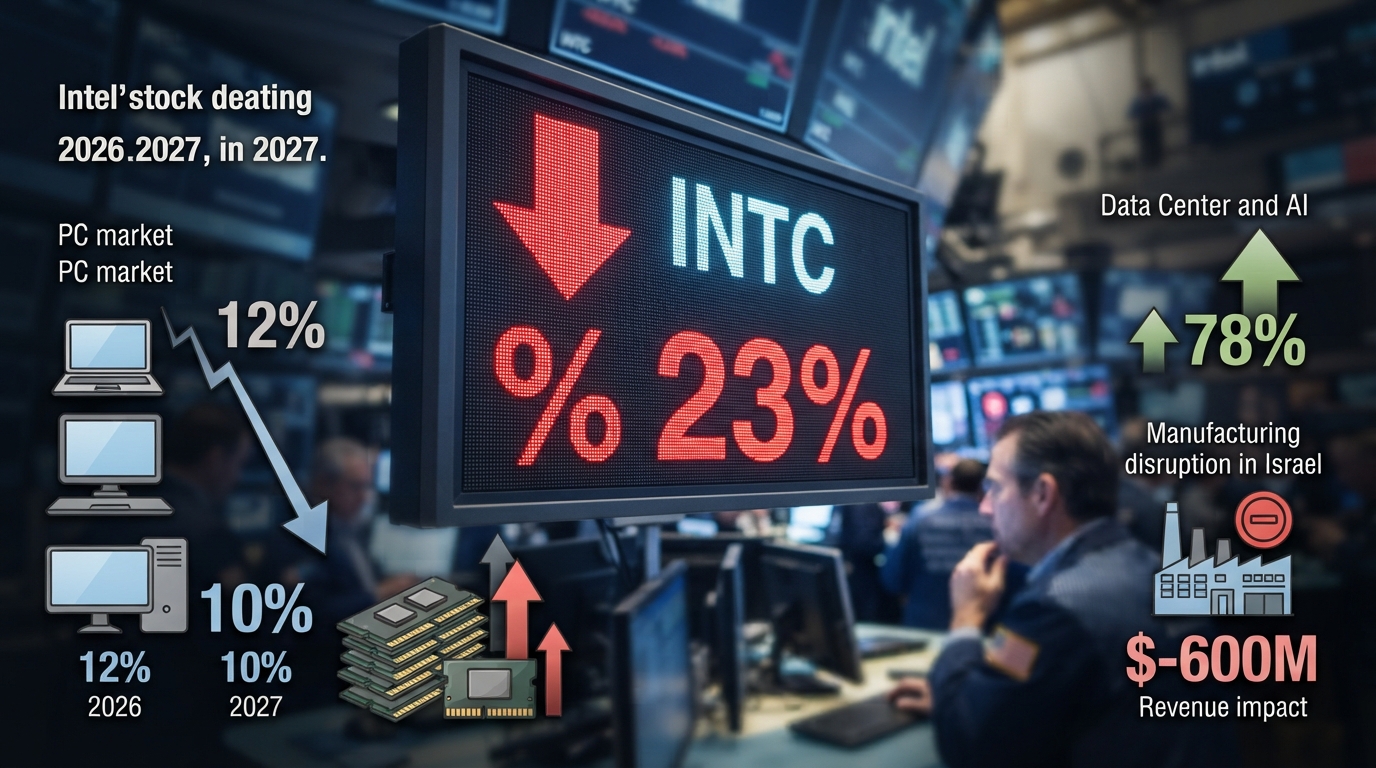
Intel shares fell 23 percent following a negative forecast
According to Intel's estimates, global PC sales could contract by 12 percent in 2026 and by another 10 percent in 2027. The weakness in the market is expected to persist until at least the first half of next year.
One of the main reasons for this is the shortage of memory chips and the sharp rise in their prices. Components are becoming more expensive for laptop and desktop computer manufacturers. This is also driving up the prices of finished devices and reducing consumer demand. As a result, the demand for Intel processors for computers is also decreasing.
The crash in shares was witnessed during after-hours trading following the close of regular market trading on October 29. The company projected fourth-quarter revenue of $15–16 billion. Analysts, on average, had expected $17.07 billion. The forecast for adjusted earnings per share was also below expectations, standing at 25 cents instead of 43 cents.
Despite this, Intel's third-quarter results showed growth. The company's revenue increased by 21 percent compared to the same period last year, reaching nearly $16.5 billion. Adjusted earnings per share came in at 52 cents, higher than analysts had expected.
However, the situation is not uniform across the company's various divisions. Revenue in the data center and artificial intelligence segment rose by 78 percent to $7.3 billion. Meanwhile, revenue in the PC chip division fell by 5 percent to $8.1 billion.
Production disruptions are also complicating the company's situation. In October, an explosion at Intel's Kiryat Gat plant in Israel, which killed two people, left the facility inactive for two weeks. According to the company's estimates, this incident could lead to a total revenue loss of nearly $600 million over two quarters. The disruption is also limiting the capacity to supply chips for artificial intelligence servers.