

India's GDP growth defies oil shock but stirs up controversy
India's 7.8% GDP growth has been met with scepticism over methodology and long-term durability due to a weak monsoon.
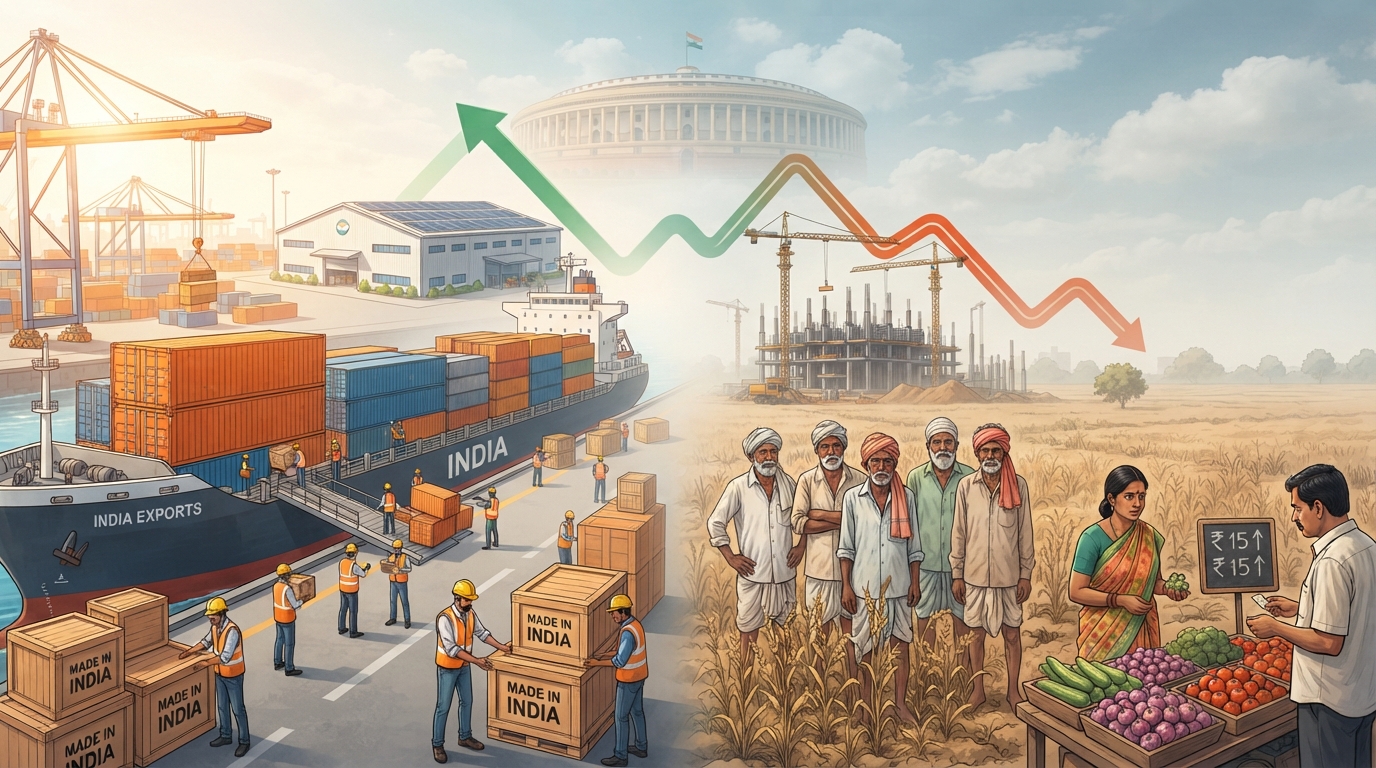
India's economic expansion has defied the impact of oil price surges, yet it has ignited a significant debate. The nation's exports experienced rapid growth despite uncertainties surrounding tariffs.
"Doomsayers were doomed and India bloomed… Yet again," declared Indian Prime Minister Narendra Modi on X, responding to the impressive first-quarter GDP figures released earlier this week. These figures significantly surpassed predictions but also triggered considerable controversy regarding their reliability.
Superficially, the 7.8% growth rate provided a boost for the Prime Minister, who has recently faced intense student backlash over his government's handling of exam paper leaks and increasing youth unemployment. While these persistent concerns remain, the better-than-expected growth suggests that his administration may have skillfully navigated the Middle East oil shock, despite India's substantial reliance on imported crude.
Sajjid Chinoy, Chief India Economist at JP Morgan, noted that India's "cyclical growth recovery" had been evident for the past six months. This recovery was fueled by substantial fiscal stimulus, including direct tax cuts in February of the previous year, a reduction in consumption taxes in September, and interest rates that have decreased by approximately 1.5% since early 2025.
"But the question was, could India insulate that recovery from events in the Middle East, and this is where the government deserves enormous credit," Mr. Chinoy informed India Today. India swiftly diversified its energy sources in response to a blockade in the Strait of Hormuz.
Contributing to Asia's third-largest economy's progress amidst disruptions in global energy markets were a strong acceleration in exports and a surge in private corporate investments, an area that has long been a major concern for economists. Exports saw a sharp 12% increase despite tariff uncertainties, driven by robust global demand and a weak exchange rate. Economists estimate that a 15% depreciation of the Indian rupee against the US dollar may have enhanced the competitiveness of Indian companies, thereby boosting demand for Indian goods.
Meanwhile, Corporate India appears to be finally investing in new buildings and factories. India's gross fixed capital formation, a key indicator of total domestic public and private investment, rose by nearly 12% in the first three months of this year.
"Non-government data also points to the fact that investment intentions of companies have gone up in recent months, with announcements especially concentrated in industries like data centres, renewable energy and metals," Madan Sabnavis, Chief Economist with the state-run Bank of Baroda, told the BBC. "Of course, private investment is not broad-based yet, but these are definitely signs of a pick up."
While these strong figures prompted several private brokerages to revise their full-year growth forecasts upwards, they also ignited a fierce online debate and a war of words among politicians. Opposition leaders, such as those external to the government, dismissed the numbers as "statistical gymnastics," accusing the government of repeatedly altering methodologies to conceal what they termed "India's dire economic reality." A former finance secretary also expressed serious doubts, stating that the GDP received a boost because it was calculated based on newly revised figures and a lower base for the same period last year—a view strongly refuted by the government.
The government's stance was supported by Neelkanth Mishra, the World Bank's executive director for India, who stated that the new GDP series "cleaned up the data and also significantly improved the methodology," thereby enhancing the credibility of the estimates. However, beyond the statistical details, others, like former central bank governor Raghuram Rajan, questioned why, if growth was indeed so rapid, India was not creating more jobs or attracting more foreign direct investment. To compound matters, the stock markets largely disregarded the positive news.
This debate has complicated the situation for authorities, who had likely hoped the numbers would help them counter growing criticism about the uneven nature of India's growth trajectory. Food inflation is on the rise in India due due to poor monsoons, with cumulative rainfall 13% below the long-period average this year.
There are also other more practical reasons why it might be premature to celebrate a growth surge. Firstly, government spending is anticipated to ease in the coming months as the pressure to meet deficit targets intensifies. The stimulating effect of goods and services tax cuts on consumption is also expected to diminish soon, according to HSBC.
Furthermore, a subpar monsoon and El Niño-like weather conditions have adversely affected India's agrarian rural economy, which supports the livelihoods of half the country's population. As of August 27, cumulative rainfall was 13% below the long-period average. This will pose "clear risks to agriculture, rural demand and food inflation [even though] India appears better prepared than in past episodes," noted CareEdge, a rating agency.
Sugar and onion prices have already surged nationwide, compelling the government to operate special trains to cities to meet demand. Meanwhile, India's retail inflation reached a 15-month high of 3.9% in May, with further increases expected. Some economists predict the rate will hit the upper band of the central bank's comfort level amidst a weak monsoon.
Given the scenario of high growth and high inflation, most brokerages are forecasting an increase in borrowing costs. This, combined with expectations of lower global growth (and consequently lower demand for Indian exports), higher input and energy costs due to volatile geopolitics, could all indicate that this growth bonanza—whether credible or not—may well be nearing its peak.