

India's biggest stock exchange launches mega share sale
The National Stock Exchange's listing is expected to raise more than $2bn as it goes public on Thursday.
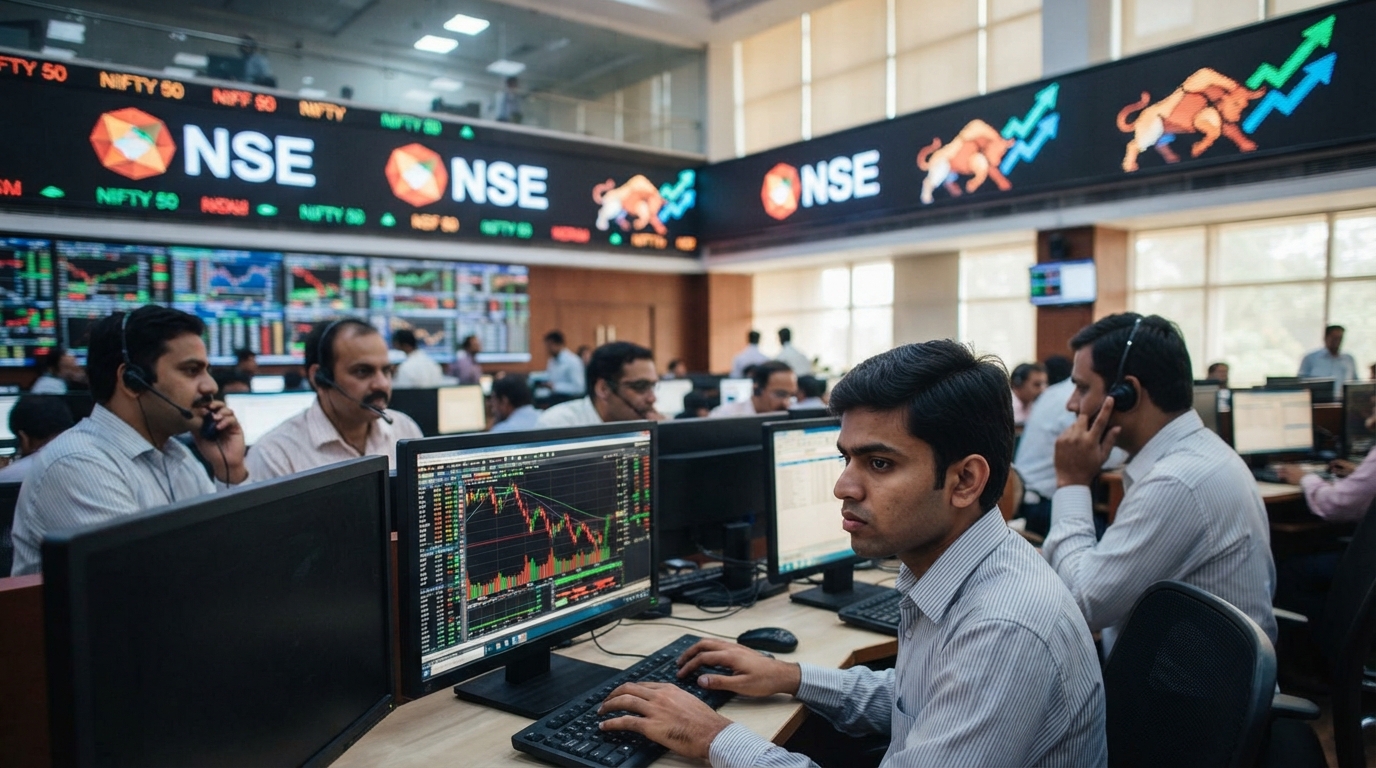
India’s largest stock exchange has launched a major share sale
India’s leading stock exchange is selling shares to the public for the first time, bringing to an end a decade-long wait for one of the country’s most closely watched stock-market listings.
The National Stock Exchange, which runs the market where most Indian shares are traded, is aiming to raise up to 225.69bn rupees ($2.35bn; £1.75bn).
That would make it India’s second-largest share sale, after the 2024 listing of Hyundai’s Indian unit.
The offering gives investors a chance to profit from the fast expansion of India’s financial markets. But it comes at a difficult time, with higher oil prices, a weaker rupee and foreign-investor outflows weighing on Indian shares.
Those headwinds have already had an impact on the sale - the NSE reduced the number of shares on offer by 15% last week after existing owners chose to sell a smaller portion of their holdings, likely because the valuation was lower than expected.
The shares are being priced between 1,700 and 1,785 rupees each. The transaction involves existing investors - including the State Bank of India, insurance companies and investment funds - trimming their stakes. The NSE is not issuing new shares and will not receive any of the proceeds.
Its listing arrives before another highly anticipated Indian IPO. "This is a mega IPO which will be followed by another mega IPO, Jio Platforms," Gaurav Dua of Standard Chartered Securities told the BBC.
He said the big listings could create short-term pressure on the broader market by drawing in money that investors might otherwise put into shares already trading.
They could also help revive India’s IPO market after a sluggish first half of the year, when volatility and geopolitical tensions led some companies to postpone their plans. Analysts think major listings such as the NSE and Jio Platforms could lift this year’s total amount raised above last year’s figure.
The NSE first applied for approval to list in 2016, but its plans were delayed by a controversy over market manipulation and governance failures.
Senior officials were accused of giving some brokers quicker access to its trading system, which may have given them an unfair advantage.
The NSE first sought approval to list in 2016, but its plans were delayed
The listing comes as the Nifty 50, the NSE’s benchmark index of 50 leading Indian companies, has dropped by more than 11% this year.
Even so, analysts expect strong interest in the IPO despite the current market weakness.
Investors may view the NSE IPO as a way to tap into India’s investment boom, as more households have moved beyond traditional assets such as gold and property and started buying shares through trading apps.
"NSE remains a play on the long-term growth potential of India's capital market," brokerage ICICI Direct said, adding that its leading position, profitability and focus on technology made the business more resilient.
Its large market value could also appeal to both active investors seeking individual opportunities and passive funds that invest in the exchange through stock-market indices.
"India's capital markets present significant growth opportunities, supported by rising investor participation, increasing market capitalisation, expanding mutual fund assets and greater adoption of passive investment products," Indian firm Religare Broking said in a report.
But there are risks as well.
The NSE is the world’s largest derivatives exchange by the number of contracts traded. Derivatives let investors bet on future moves in shares, indices and other assets without owning them.
Indian regulators have tightened rules on such trading amid concerns about heavy losses among individual investors. Further restrictions - or a decline in speculative activity - could cut trading volumes and reduce the NSE’s revenue.