

In Uzbekistan, 90 percent of the land tax will be refunded to those who earn high incomes from smallholder and household plots
Starting from 2027 in Uzbekistan, 90 percent of the land tax paid by high-income earners from the sale of agricultural products grown on dehkan farms and household plots will be refunded from the local budget. The procedure will initially be introduced on a pilot basis in Namangan region.
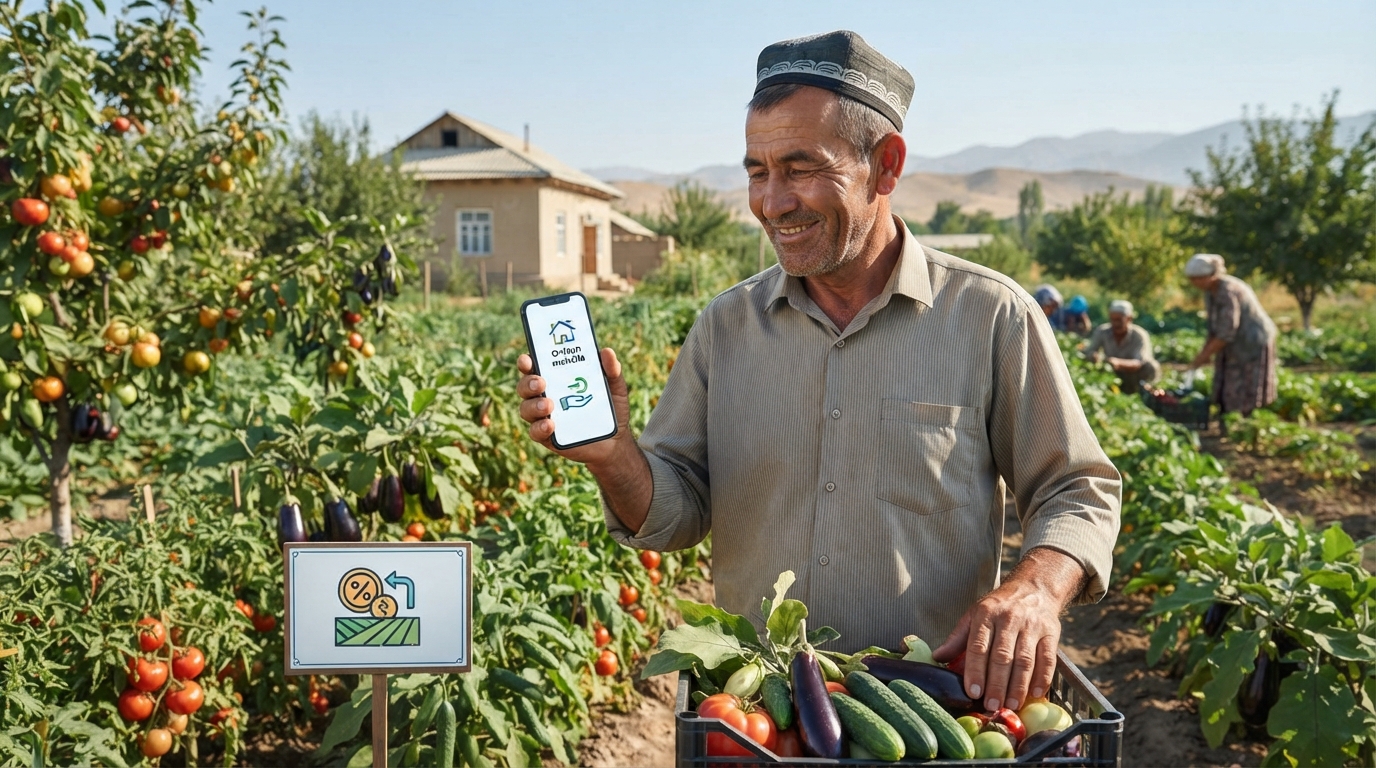
In Uzbekistan, 90 percent of the land tax will be refunded to high earners from peasant farms and household plots
By Resolution No. 547 of the Cabinet of Ministers dated October 9, 2026, the procedure for refunding part of the paid land tax to individuals earning high income from the sale of agricultural products grown on peasant farms and household plots was approved.
According to the resolution, a temporary regulation was approved under which, starting from 2027, 90 percent of the land tax paid to the budget will be refunded to high earners from the sale of agricultural products grown on peasant farms and household plots.
To qualify for this, the income earner must meet the following conditions:
The resolution stipulates the use of electronic data to identify income earners and calculate the refundable portion of the tax.
Information on the volume, type, and cultivated area of products grown on peasant farms and household plots, as well as the income received from their sale, will be entered into the "Onlayn mahalla" platform. This data, along with the average selling prices of products on the "UzexAgro" electronic trading platform, will be used in calculations.
If the cultivation and sale of agricultural products continue after the data is entered into the "Onlayn mahalla" platform, additional information may be entered on an ongoing basis.
The average selling price of products is set at 80 percent of the average price based on transactions executed at the closest dates to the data entered into the platform.
If the income earner's income per single hundredth of a hectare (sotix) of land plot exceeds 25 times the base calculation amount, the relevant data will be sent to an automated program. The refundable tax amount will be calculated based on this data.
The regulation also addresses cases of using a land plot without documents or on an area larger than indicated in the documents confirming the right to the land.
If such a case is identified, the difference between the actual area of land used and the area indicated in the documents will be taken into account when calculating the refundable portion of the tax.
Additionally, the total income received by the earner from the sale of agricultural products, the land area used, and the types of products will serve as the basis for the calculation.
The resolution establishes that the process of refunding a portion of the land tax will be carried out in several stages.
First, peasant farm owners and household landholders enter data regarding the cultivated products, crop area, and income received from sales into the "Onlayn mahalla" platform.
Second, the automated information system of the Tax Committee processes this data and calculates the tax amount to be refunded.
Third, based on the data of the automated program, an order for the refundable tax amount is submitted to the Treasury within three days.
Fourth, the Treasury transfers the funds no later than three working days after the date the order is received. The Tax Committee, within one working day after the receipt of the funds, transfers them to an account opened at an authorized bank and submits a register of income earners.
Fifth, the authorized bank transfers the funds within one working day to the bank cards of the income earners specified in the special mobile application of the tax authorities.
If the data and documents submitted by the income earner for the partial refund of tax do not comply with the established requirements, the refund may be denied. In this case, notification of the reasons for the refusal will be provided. The income earner may appeal to a higher authority or to court in accordance with the procedure established by legislation.
In accordance with the resolution, the new procedure will be implemented in Namangan region in 2027. The Ministry of Poverty Alleviation and Employment must analyze the results of the pilot project and submit proposals to the Cabinet of Ministers by February 1, 2028, on introducing this mechanism in other regions of the republic.
Expenses related to the development and implementation of the necessary software products to execute the resolution will be covered by the special fund of the Ministry of Poverty Alleviation and Employment.
The financing of the refundable portion of the land tax will be carried out at the expense of funds planned for land tax refunds in the revenue part of local budgets.