

'If you started running, they shot you' - inside Nigeria's growing kidnapping crisis
Many communities are living in fear of being kidnapped for ransom as the crisis spreads further south.
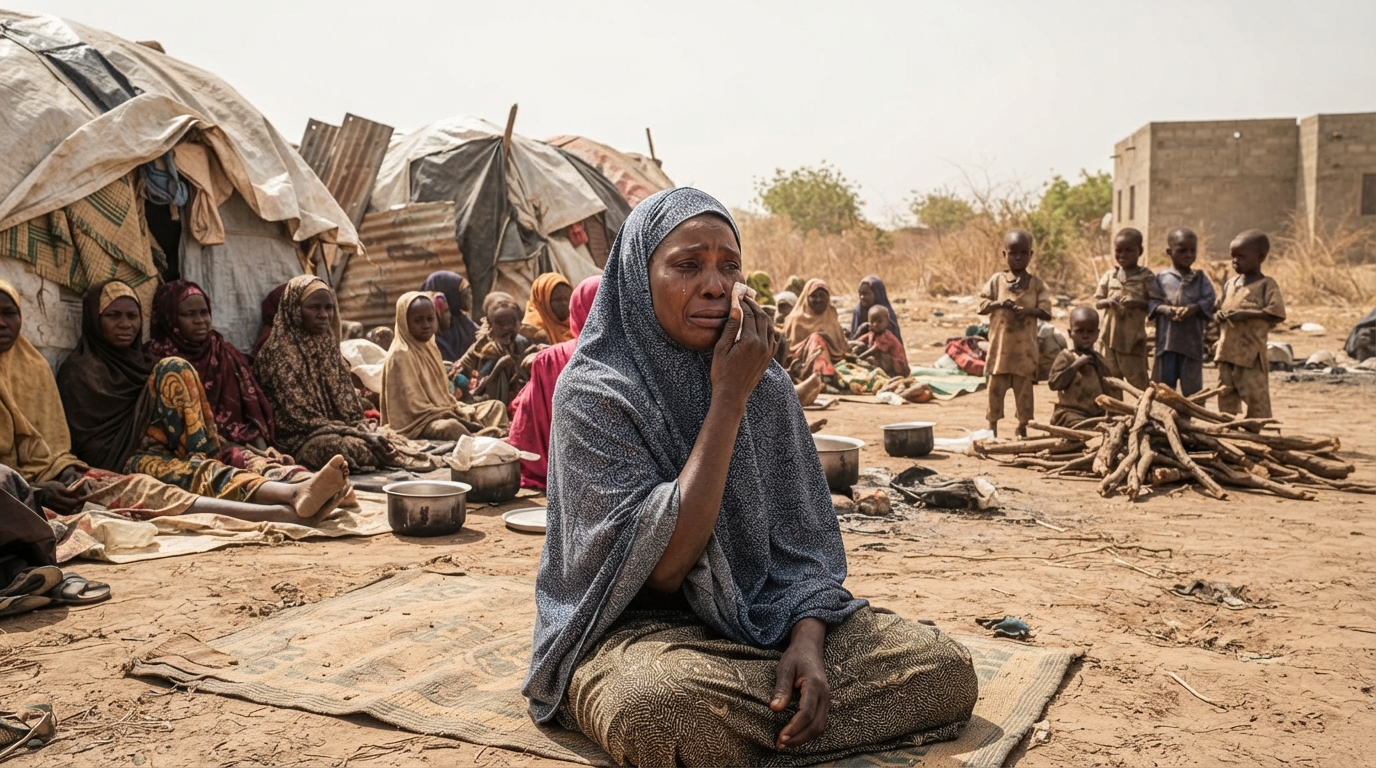
"If you started running, they shot you" — this is the grim reality of Nigeria's escalating kidnapping crisis. Fatima recounts the horrific attack on her village in Zamfara, north-western Nigeria, where bandits killed her husband and six of his siblings. "If you ran into a room, they set the room on fire," she describes, adding, "If you came out and started running, they shot you."
The gunmen, who launched their assault at 2 AM, strategically divided into groups to encircle residents: one at the village entrance, another in the center, and a third at the rear. "They opened fire without a care in the world, shooting indiscriminately," the 55-year-old quietly shared with the BBC World Service. This incident is one of many that have terrorized the predominantly Muslim community, where residents live in constant fear of being abducted for ransom.
Fatima detailed the raids, explaining, "You could have 100 motorcycles, and each one could be carrying three people." In June, approximately 70 people, including children, were killed in her village of Bia Buki. She described how the attackers pursued fleeing villagers, and children were injured falling into ditches. Among the deceased were her husband and six of his seven siblings.
Fatima is one of an estimated 800,000 Nigerians displaced in the country's north-west, with violence being a primary cause, according to the UN. While some attacks are attributed to militant Islamist groups, the majority in this region are carried out by gangs, known locally as bandits. These groups often operate on motorcycles, striking swiftly and escaping before security forces can respond.
Thousands of individuals have joined government-backed vigilante groups to combat these gangs. The BBC spoke with one such vigilante who claimed his armed group had killed numerous bandits. However, the gangs persist in their attacks, indicating a worsening trend of violence and abductions that is now spreading southward.
Fatima currently resides in a makeshift camp in Gusau, where food is scarce and comfortable sleeping arrangements are non-existent. She recalls fleeing into a nearby forest with other villagers when the bandits attacked her home. "The forest became our sanctuary. We ran with our kids, if you couldn't find your child you'd take your neighbour's child." They slept in the forest before moving to the state capital, Gusau, where they "found a little bit of peace."
Now, Fatima lives in an informal camp in Gusau with her seven children, aged between nine and 30. The camp, which she estimates houses over 1,000 people, is characterized by dozens of women sitting in groups on the dusty ground, many wearing brightly colored hijabs. Conditions are harsh, with "no proper place to even lay your head." Food is scarce, and aid is inconsistent. Fatima mentioned two instances where "good Samaritans" provided rice or potatoes. Children are sent to gather firewood to sell for food, but 22 have been kidnapped by bandits, she states.
Gesturing towards a nearby building, Fatima laments, "there you will find 100 or more women… maybe just two or three have had breakfast. When we had peace, we had our own wealth, but now the tables have turned and we have become beggars." Her eyes well up with tears as she cries for a few minutes, wiping her face with her hands.
Despite being 16 miles (25km) from her village, the threat Fatima fled remains. Upon her arrival at the camp, the sound of gunshots kept her awake at night. While things have since quieted, which she attributes to patrols by the army and government-backed vigilantes, the atmosphere remains tense. Military escorts have become increasingly common on the main road to Gusau to protect travelers from bandit attacks.
The bandits are primarily members of the Fulani ethnic group, traditionally pastoralists. Some have abandoned cattle trading for kidnapping and extortion, viewing it as a quicker, easier path to wealth. They target towns, villages, and travelers, abducting people for ransom, stealing valuables, and sometimes killing those who resist. They also extort protection money from communities, demanding large sums of cash from farmers before allowing them access to their fields.
Attacks are now more frequent than ever. In the bandit strongholds of north-west Nigeria, the number of incidents recorded by the international conflict monitoring group Acled increased by 78% in the first half of this year compared to the same period last year. Data from Nigeria's National Human Rights Commission reveals that kidnappings nationwide doubled over the same period. Malik Samuel of Good Governance Africa, a research and advocacy non-profit, notes that "there is no region in northern Nigeria currently that does not experience one form of mass abduction or the other."
Nigeria's struggle with bandits is just one facet of a complex security landscape. In addition to the bandit gangs in the north-west, there is an Islamist insurgency in the north-east, separatist unrest in the south-east, and clashes in central regions primarily driven by disputes over land and water access for grazing and farming, with ethnic and religious factors also contributing to the unrest. Most analysts agree that armed groups have unleashed campaigns of violence affecting all communities, regardless of background or belief.
Kidnap gangs, jihadists, and separatists are wreaking havoc across Nigeria. Schools are a frequent target. The infamous 2014 kidnapping of over 200 schoolgirls from Chibok in the north-east by the Islamist Boko Haram militant group garnered global attention. At the time, the group forced its captives into sexual slavery, domestic servitude, or used them as suicide bombers. However, a range of groups across Nigeria now employ kidnapping for fundraising, focusing on vulnerable targets such as schools, churches, mosques, and remote villages.
Initially, this was largely confined to Boko Haram strongholds in the north-east or bandit zones in the north-west, predominantly Muslim areas. Then, in May of this year, gunmen on motorcycles attacked three schools in Oyo state, south-west Nigeria, a region previously considered relatively safe. Thirty-nine children, the youngest just two years old, were abducted along with seven teachers. One teacher was killed during the raid, and another's murder was filmed and shared online. After 56 days, the remaining 44 hostages were released. The government stated it refused to pay a ransom and that the children were freed after a security forces operation. Three men were sentenced to life in prison for the attacks and confessed to being members of a Boko Haram affiliate. A school attacked in Oyo state in May remained closed for months afterward.
The abduction instilled fear throughout the south-western town of Oriire, leading parents to withdraw their children from school. "There is fear because many residents have run away and are yet to return," says Oba Tajudeen Abioye, the traditional ruler of the area, whose niece was among the kidnapped children. "And for those of us who are left here, we are relying on the security officials, the soldiers" who were sent to protect the community, he adds. Nigeria already has one of the highest numbers of out-of-school children globally, with UNESCO estimating around 19 million.
The multiple, overlapping security challenges have overstretched Nigeria's military and police, hindering their ability to combat the violence. A 2025 UN report indicated that police stations were often underfunded and not fully operational, citing independent sources that accused officers of lacking skills in hostage negotiation and forensic investigation. President Bola Tinubu's administration has allocated the largest defense and security budget in the country's history, increasing it by 10% in December 2025 compared to the previous year. He recently approved the recruitment of 28,000 new soldiers.
Government-backed vigilantes are being deployed to support overstretched police and military forces in the fight against bandits. However, concerns exist regarding their involvement. In 2020, Zamfara banned a large vigilante group due to worries that extrajudicial killings were fueling further violence, according to AFP. While authorities claim the new vigilantes are better trained, Samuel, from Good Governance Africa, describes them as a "time bomb waiting to happen." He questions, "If citizens arm themselves how do you control them at the end of the crisis, how are you able to disarm them?"
One vigilante, who met with the BBC outside his group's headquarters—a single-story concrete building—agreed to speak anonymously during a July visit. Perched on his motorcycle, an AK-47 slung over his shoulder, a scarf covering his face as a makeshift balaclava, and gold and silver skull rings on his fingers, he stated, "We are some of the people the governor hired to protect the community." He explained that they are sometimes informed of bandit locations and "with the help of God we fight them and defeat them." He added, "Let the bandits understand that when they attack a place and kill, they can also be killed." He estimates he has engaged bandits at least 20 times, and calls for his group's assistance are constant. "It's hard to go a week without these reports," he said. "There are regions that became safer… but there are other regions where the same cannot be said." He urged the state governor, whom he supports, to hire and arm more people to confront the bandits. "These people won't be afraid of you unless you have proper weapons to fight them," he asserted.
Fatima also calls for greater action: "These kidnappers are in every nook and cranny. I am not saying the government has failed but even if it is trying, it needs to do more. There are problems and we think with more effort and more security agents, villages will be peaceful." She longs to return home but doubts it will happen, having heard that her village has now been converted into a camp for the gunmen who attacked it. The local bandit leader has become the de facto authority, and families now turn to him to resolve domestic disputes, she says. Another nearby village "is completely empty, not even a chicken lives there… empty villages like that are countless," Fatima states. "Even if you go back to our area, it's just difficulty you will face. There's nothing there, no food… you farm and when you go to harvest, they stop you or kidnap you."