

'I performed on stage to get my first job' - the firms turning recruitment into competitions
Applicants have to pitch their ideas on stage in front of a panel of judges and an audience. But is this exciting or unfair?
‘I performed on stage to get my first job’ - the firms turning recruitment into competitions
Yumi Liberman is on track to get a full-time job with L'Oréal
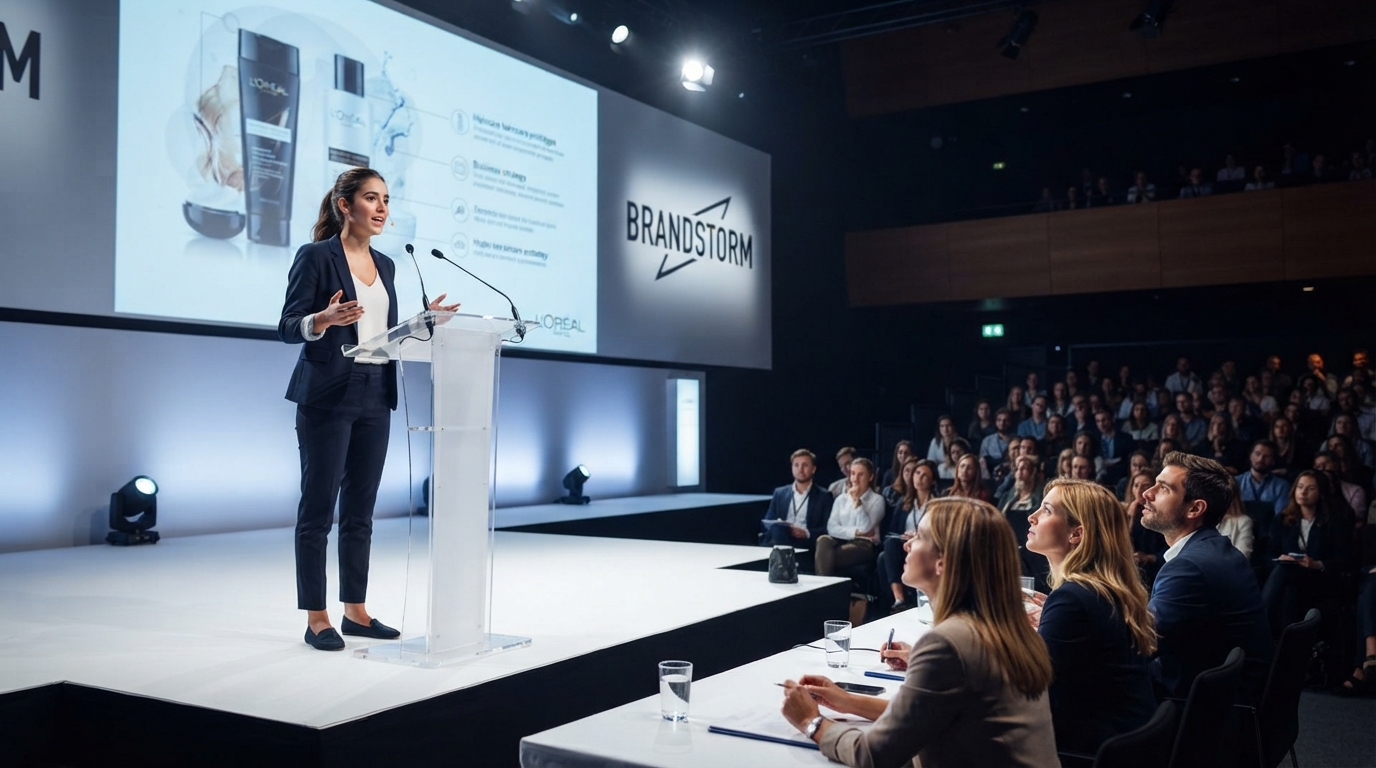
Yumi Liberman found herself on a stage before a panel of judges and an audience of 300, where she had to perform.
But instead of singing, dancing or playing an instrument, she and two friends were in a London auditorium in 2024 pitching a business idea, hoping to land a full-time role with cosmetics giant L'Oreal.
"It reminded me of when I used to do competitive sports growing up and the pressure would get heavy," says Liberman, now 24. "But somehow you just get into flow mode."
She and her friends had reached the UK final of Brandstorm, an international competition organised by the French company in which young adults present their product and business ideas.
Their haircare app proposal won them the UK title, and they advanced to that year's global final in Paris, where they finished third.
Only the members of the team that came first were automatically offered full-time jobs, but Liberman impressed senior company figures enough to win a place on its marketing management traineeship, which leads to a full-time position.
Recruitment turned into X Factor-style contests, with jobs as the reward, creates publicity and excitement for companies. But for the young people taking part, is it thrilling - or unfair?
In the current global economic climate, youth unemployment is above the national average in many countries because companies are hesitant to hire new workers. In the UK, the unemployment rate for young adults is 16.2%.
Competitions such as L'Oreal's can provide hope. But most of the 380,000 people worldwide who applied this year, up 58% from 240,000 in 2025, did not win anything.
L'Oreal told the BBC that Brandstorm works well because it helps the company reach a broader pool of potential recruits, including young people who might never have considered applying for a job there.
Yet while Liberman says she liked the structured competition format, others who have taken part in similar recruitment contests are more critical.
Melissa Alcruz now works in marketing for a US real estate company based in New York City, but she previously did the same job for MTV.
While at MTV, she entered an internal competition for a promotion that she says was called a "bake-off". Candidates had to devise sponsorship and marketing campaigns, then present them to a room of seven people.
"This is intimidating, even for a seasoned professional. I ultimately got the job, but even though I won I disliked the process," says Alcruz.
She says she already had a demanding full-time job at the company and was then "expected to complete several substantial projects" for the competition in her spare time.
Former recruitment consultant Katrina Collier, now an author, speaker and recruiter trainer, worries that competition-based hiring processes that may require candidates to donate large amounts of time for free can amount to "economic discrimination".
"Not everyone can take time, possibly months, to participate in the challenges for the chance to secure one of a limited number of roles," she says. "Does that mean only people from financially strong backgrounds proceed?
"Is that leaving talented applicants who don't have the bank of mum or dad, for example, unable to take part?"
Jamie Kohn, senior director for talent acquisition at research firm Gartner, says competition-based hiring is likely here to stay because employers find it easier to assess candidates than through the traditional interview process.
But she agrees organisations must be careful about how much they ask of jobseekers. "And they should focus on providing feedback… so candidates build their capabilities even if they are not selected."
Psychologist Amanda Potter is concerned that recruitment through competition events tends to favour extroverts, putting quieter personality types at a disadvantage.
"Does this approach encourage all types of people to apply, or would certain types of people avoid these assessment methods?" she says. "This could result in an organisation [ending up] full of ambitious, competitive people who want to win, possibly to the detriment of others."
However, Liberman, who lives with severe dyslexia, says going through a standard recruitment process and related assessments would have been harder for her.
It also meant she avoided any period of unemployment after graduating from university. Instead, she has gone straight into her chosen field, something she cannot say for all of her peers.
"I have a lot of friends coming from extremely reputable backgrounds, extremely educated people who have applied to over 1,000 jobs, and have been jobless."