

Hyrox athlete who soiled herself in race tells BBC she put others at risk but says backlash was traumatic
In her first interview since the incident, Joanna Wietrzyk told the BBC she takes responsibility for it but did not deserve such a severe backlash.
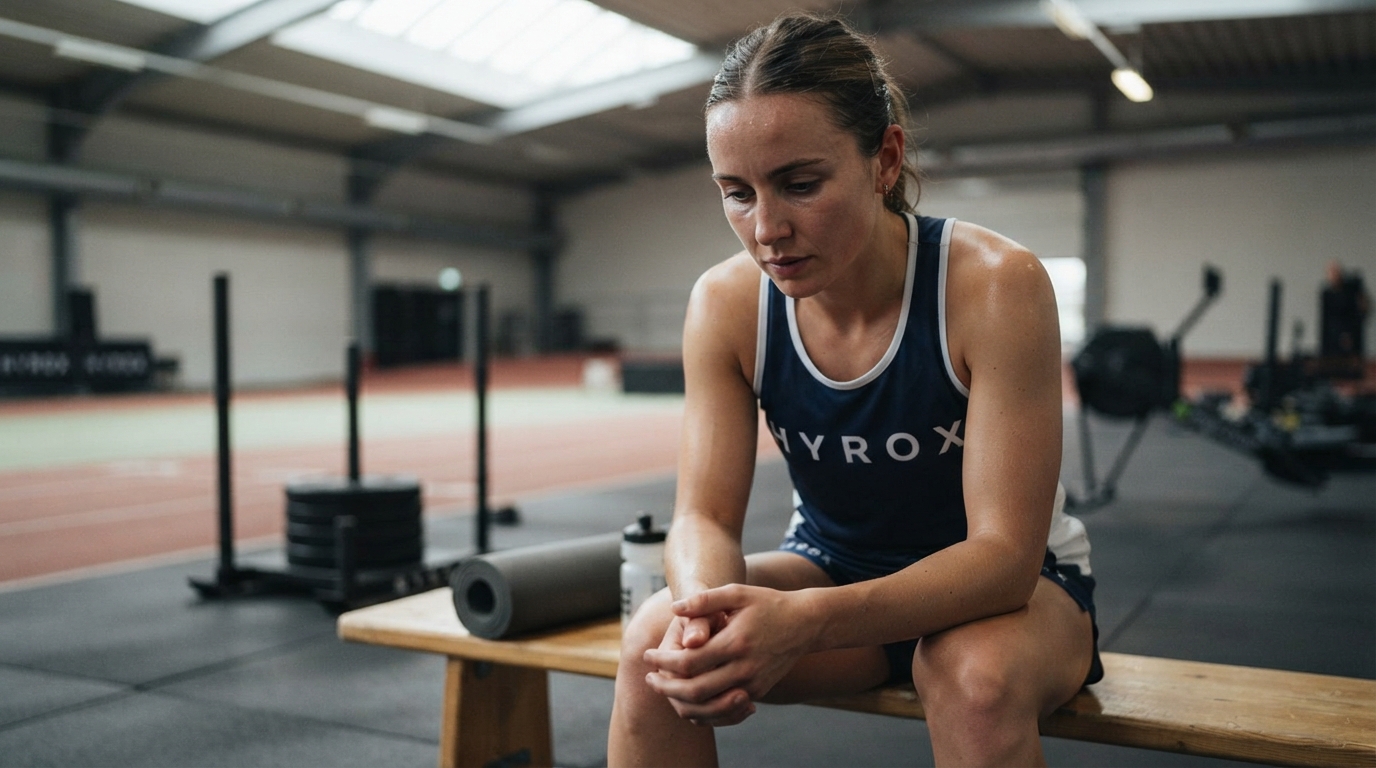
Hyrox competitor who soiled herself during race tells BBC she endangered others but says reaction was traumatic
An Australian athlete has acknowledged that she put other people at risk by carrying on racing after soiling herself during an endurance event.
Speaking exclusively to the BBC before returning to the sport, Joanna Wietrzyk said her drive to win the Hyrox race in Beijing in September may have affected her judgement: "It was my decision to continue racing so I take full responsibility for that."
When asked why she kept going, she said: "I didn't really think about those around me… the decision that I made in hindsight was the wrong decision and I'm truly sorry for everyone that I did affect."
The 24-year-old said the incident and the reaction afterwards were "traumatic". She also said she had thought about quitting the sport, where she holds a world record.
About halfway through her race, Wietrzyk suffered a bout of diarrhoea. Images of faecal matter on parts of her body were then widely shared online.
Asked whether officials should have stopped her, she said no-one encouraged her to do so the time.
Hyrox co-founder Moritz Fürste has apologised, saying it was a mistake not to respond immediately during the race.
New rules have now been brought in giving race directors the authority to remove athletes if their vomit, urine or faeces create a contamination risk or threaten the welfare of themselves or others in a competition that is mainly held indoors with shared equipment.
Hyrox involves competitors alternating between running a kilometre and completing fitness exercises, including a sled push, burpee jumps, indoor rowing and lunges while carrying a sandbag.
The competition has grown rapidly since it was founded in 2017 in Hamburg, northern Germany, and is now staged around the world.
Although she was initially defiant in a now-deleted Instagram post, Wietrzyk apologised in the week after the Beijing event and said she would give up the win and retroactively withdraw from the race.
Due to compete in Hamburg on Friday, she said she was "nervous" about returning and hoped the high-profile incident would not define her.
"I don't want it to become my identity," she said.
In her first interview since Beijing, Wietrzyk said she had had a bacterial infection from food poisoning but had entered the race "feeling fresh, feeling really, really good".
"It was a very sudden experience," she told the BBC.
"It wasn't until about halfway through the race where everything did transpire... In that moment, right then and there, as a very competitive person… and an elite athlete that I am, my only focus is on racing.
"I didn't really think about those around me which, looking back and looking back at the decision that I made, in hindsight, was the wrong decision and I'm truly sorry for everyone that I did affect in that situation."
After the incident, some of Wietrzyk's fellow competitors at September's tournament in Beijing called for an apology from Hyrox.
Hyrox China has since reportedly refunded some competitors their entry fees.
Wietrzyk admitted that: "Obviously I did put other people at risk."
She also said she regretted an early social media post after the race that included the phrases "Go hard or go home" and "a win is a win". She said she had been in "flight or fight mode" while seeking hospital treatment.
"I didn't really account for what the public would have seen that situation as."
When challenged over whether her apology could be viewed as damage control, or as coming too late, she said she had not expected the incident to receive so much attention.
"I needed those days to reflect on it and process it."
Discussing the mindset of elite athletes, she said: "They're so hyper-vigilant on winning and doing the best that they can, putting their training to good use and showcasing their fitness to the world."
After thinking over the past few weeks, she said: "There is more to life… than just racing and just winning."
Hyrox said anyone sending abuse or threats to the athlete would be banned from future events.
Wietrzyk told the BBC it had been a "mentally and emotionally taxing period" and that she had not anticipated the worldwide scrutiny, adding that her family had also received threats.
The backlash, "Was very eye-opening for me to see the effect of social media nowadays especially from someone who's 24, just out there racing.
"Yes, I did make the wrong decision but I don't believe I should have received such backlash and such scrutiny online … At the end of the day I'm only human."
Wietrzyk said she had mostly stayed offline and tried to "isolate herself from the world" for a while but, "I can't do that forever."
"I still have so much more I can achieve in this sport so I think, for me, my mental resilience is the key here where I can inspire others through what I've been through."