

How to get into a South Korean university on a full scholarship: A student from Uzbekistan's experience
Sevinch Alibekova from Samarkand was accepted to several American universities, but none received a full scholarship. She then applied to Korea University in Seoul, and the university offered her a full scholarship for four years of undergraduate study, worth about $40,000. In this article, she explains how she prepared for admission, what helped her secure a grant, and how much it costs to live as a student in South Korea.
Here's a rewritten version of the news story in Russian:
**How to Get a Full Scholarship to Study at a South Korean University: A Student from Uzbekistan's Experience**
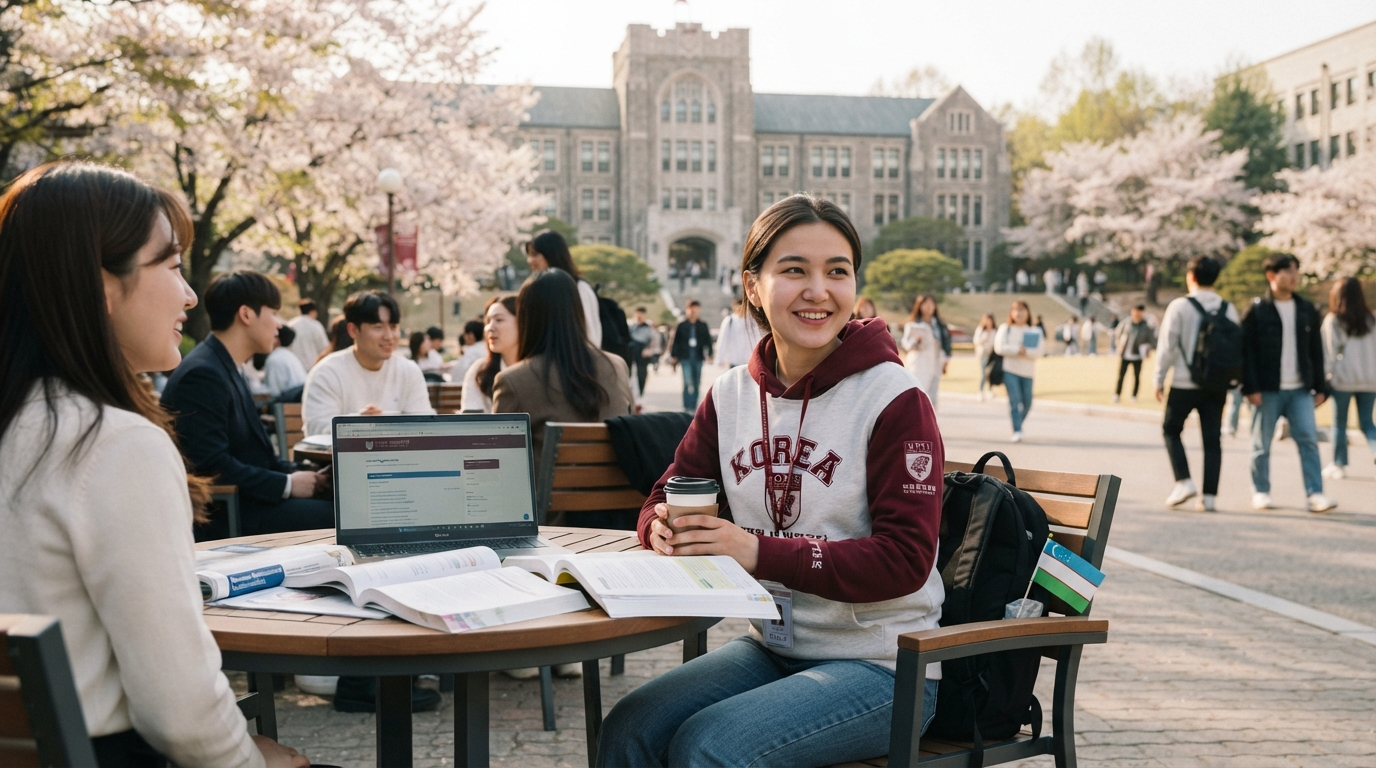
I chose Korea University not only because of the opportunity to receive a full scholarship, but also because of its high academic reputation and the unique Global Open Major program. After graduating from high school, I hadn't yet decided on my future major, and this program allowed me to take my time. During the first year, students study general subjects and the Korean language, and choose a major by the end of their first year. This is how I came to study business administration.
The choice of available majors depends on the language of instruction: in English, there are fewer options, including business administration, international studies, and several engineering and natural sciences. In Korean, the range of majors is much wider, including computer science, psychology, and others. A full list can be found on the program's official website.
Another important factor in my decision was South Korea's reputation as one of the safest countries, especially for women. For my family, this was no less important than the university's academic prestige.
I began preparing for international studies back in the 9th and 10th grades. My parents always placed a strong emphasis on my education, so from childhood, I actively studied English, studied mathematics, graduated from a music school, and attended sports clubs.
When I finally decided to apply to a university abroad, I focused on targeted preparation: I prepared for the IELTS exam, collected the necessary documents, and simultaneously participated in volunteer projects and other extracurricular activities, such as Olympiads, community initiatives, and various events. This later became one of the key strengths of my application.
To apply to Korea University, you must prepare the following documents:
The university does not publish a minimum score for application. However, your language proficiency by the end of your first year determines the program you'll be able to apply to in your second year. There are three possible scenarios:
You should prepare for the language exam well in advance, rather than expecting to catch up on what you missed during your first year.
The most time-consuming part for me was writing my motivation letter. This is where you can showcase yourself not only through your grades and certificates, but also as a person. My motivation letter for Korea University consists of three separate essays, each up to 800 characters long:
If I were to do it all over again, I would focus on one country and avoid applying to multiple universities at once. It's better to have one truly strong application than several weak ones.
All documents must be translated into English, notarized, and sent to South Korea in hard copy. This step takes longer than expected, so it's best to start two to three months before the application deadline.
The application process is as follows: first, you register on oia.korea.ac.kr, complete the online application, and upload your documents. Then, you print out the same documents and send them to the university via international mail.
After sending them, all that was left was to wait. For me, this was the most nerve-wracking stage: the documents were already at the university, and I had no further influence on the outcome.
Even before moving, I had to set aside a separate budget for my application. The expenses weren't limited to the application fee: I also had to pay for the IELTS exam, document translations, notarization, and international shipping to the university.
In total, the preparation and submission of documents alone will cost approximately $400-$650. This doesn't include visa costs, airfare, or initial expenses after moving.
I learned that I had been awarded a full scholarship along with my acceptance letter. It fully covers my tuition at Korea University, so I don't have to pay any tuition.
The grant is not permanent and must be renewed each semester. Requirements include a minimum of 12 credits per semester and a GPA of at least 3.5. If both conditions are not met simultaneously, funding will not be extended. Therefore, it's best to focus on your studies rather than working part-time during the first few years.
Without a full grant, tuition in the business administration program costs approximately 7 million Korean won per semester—approximately $5,000. Therefore, the annual cost is approximately $10,000, not including accommodation, food, and other living expenses.
A full grant at Korea University covers tuition only. Students are responsible for housing, food, transportation, health insurance, and everyday expenses. Therefore, even before moving, I tried to determine my living budget in advance.
If you frequent cafes, travel around the country, and actively spend your free time, your monthly expenses increase to approximately $800, not including accommodation.
When I first arrived in South Korea, I chose to live in a dorm. For my first year, this was the most convenient option: the campus was close by, utilities were included, and I barely had to worry about living expenses.
Currently, my friend and I rent an apartment about a three-minute walk from Korea University's main campus. This option offers more privacy and freedom, but it's more expensive. In addition to the monthly rent, you have to pay utilities, and usually pay a deposit upon move-in.
At Korea University, no one provides a set semester schedule. I choose my own subjects, professors, class times, and the number of credits. The learning format is also different: in addition to lectures, almost every course includes group projects, presentations, and collaborative assignments. Simply attending classes isn't enough—you need to actively participate and work as a team.
International students in South Korea can officially work, but they must obtain permission from the university and immigration authorities and adhere to work hours restrictions.
In practice, finding a job without knowledge of Korean is difficult. English is sufficient for studying, but most student jobs, such as working in cafes, shops, and the service industry, require at least basic Korean.
In the first few years, I would recommend focusing on studying. The grant requires a GPA of at least 3.5 and at least 12 credits per semester, and working shouldn't interfere with that. It's better to get a handle on your studies and your new life first, and then think about earning money.
The campus offers more than just libraries and cafes. During my first week, I learned that there are nap rooms you can use between classes, and separate rooms for watching movies and listening to music. The university is designed so that students can spend the entire day there without feeling the need to travel.
Student life turned out to be much more vibrant than I expected. Every spring, there's a large festival featuring famous Korean artists, and admission is free or almost free for students. A special highlight of the year is the Korea University vs. Yonsei University competition: for a few days, the campus turns into a true celebration, with thousands of students cheering on their teams and singing university songs. I never imagined university competitions could be so large-scale.
The public transportation was especially impressive. Getting around Korea on the subway and buses is very convenient, and bus stops have heaters in the winter and air conditioning in the summer. You notice details like these and are amazed at how well thought out everything is.
If you're just thinking about applying to Korea, here are four tips from personal experience:
1. **Start preparing as early as possible** – the earlier you work on your English, grades, and extracurricular activities, the stronger your application will be.
2. **Learn to cook before you move.** It may sound surprising, but learning to cook for yourself saves money and helps you avoid relying on cafes for the first few months. 3. **Start speaking Korean immediately upon arrival, even if you make mistakes.** I did this, and it helped me adapt, make friends, and feel more confident much faster than if I had waited until I learned the language better.
4. **Applying to Korea is worth it for those who are open to new experiences and willing to embrace a different culture for what it is.** Those who constantly compare everything to home and are unwilling to leave their comfort zone will have a harder time. Korea and Uzbekistan are very different, and that's the main advantage.
I would really like to see more students from Uzbekistan at Korea University. Their number is growing every year, and that's very encouraging. I would especially like to see more Uzbek girls who are striving to get a quality education and develop their skills.