

How Penn State students ran an alleged cocaine ring - until it all fell apart
As initiation, prospective fraternity members were made to package the drugs, say prosecutors.
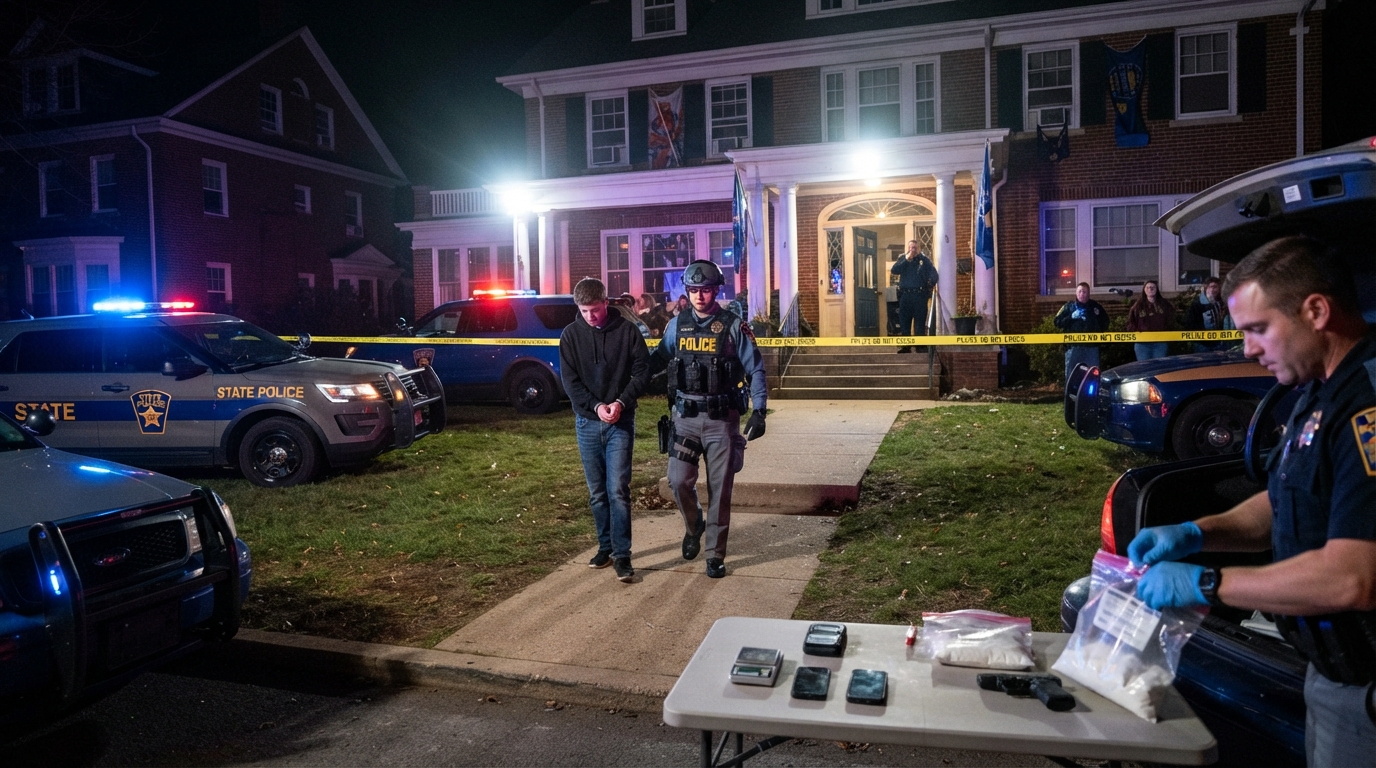
**Penn State Cocaine Ring Uncovered: From "Life Coach" to Alleged Kingpin**
A sophisticated drug operation, allegedly run by Penn State students, has been dismantled, revealing a network of current and former students, many affiliated with fraternities. The alleged ringleader, Agostino Abbatiello, 24, a graduate of a prestigious Catholic all-boys' school, now faces charges that starkly contrast with his high school persona as a "life coach" committed to moral conduct.
Abbatiello, who surrendered to Pennsylvania police, is accused of orchestrating a drug-dealing enterprise involving 13 individuals. Prosecutors allege that instead of traditional hazing rituals, some prospective fraternity members were compelled to process and package cocaine. A lawyer for Abbatiello has not yet commented on the allegations.
Penn State University has expressed its dismay, with Andrea Dowhower, vice-president for student affairs, stating, "Criminal activity, including hazing, such as this has no place at our institution, and we will co-operate with law enforcement in any way we can."
The scheme, as described by prosecutors, bears a resemblance to a Hollywood plot. Suspects allegedly used apps like Snapchat and Venmo, with usernames linked to their actual identities ultimately leading to their capture. One alleged ringleader, upon police raiding his fraternity house, reportedly mistook the officers for pranksters until he was subdued with a stun gun as drugs and a weapon were discovered.
Pennsylvania Attorney General Dave Sunday emphasized the gravity of the situation, stating, "There was nothing junior or childlike about this type of conduct. This was an upper-level trafficking organisation for this region in Pennsylvania."
According to the criminal complaint, members of the Delta Upsilon fraternity were purchasing cocaine from Abbatiello, a member of Sigma Chi. Abbatiello initially sourced drugs from a connection cultivated by Sigma Chi brother Lars Zeepvat. However, when that supply diminished, Abbatiello allegedly found a new, larger source in his New York hometown.
Zeepvat reportedly observed a shift in Abbatiello, noting that he began selling drugs for profit rather than personal use. Zeepvat and another individual subsequently assisted Abbatiello with drug pickups and large-quantity purchases, driving to designated locations to retrieve cocaine and returning it to State College.
In 2023, Mohammed Huraibi and Thomas Robinson, both members of the Delta Upsilon fraternity, allegedly partnered in the cocaine business, making increasingly larger purchases from Abbatiello. By late 2023, "several of the pledges [aspiring members] at the Delta Upsilon fraternity were used to package the drugs into half gram bags for sale," according to the complaint. The attorney general described this as an "indoctrination" into the fraternities for some pledges.
Lawyers for Zeepvat and Huraibi have not responded to requests for comment, and attempts to reach Robinson were unsuccessful.
By the fall of 2024, the drug ring had expanded significantly, with Robinson and Abbatiello allegedly recruiting more individuals for packaging, delivery, and distribution. However, law enforcement was closing in.
A confidential informant reported that a man nicknamed "T-Rob" was selling cocaine from the Delta Upsilon fraternity house and accepting Venmo payments under the username "Tom-Robinson." Authorities quickly identified Robinson as the Penn State student.
Under police direction, a criminal informant made several cocaine purchases from Robinson. In December 2024, police raided Robinson's room at Delta Upsilon. Believing it to be a prank, Robinson reportedly resisted orders and was Tasered. Police discovered 220g of marijuana, pill bottles, drug paraphernalia, a handgun, and ammunition. Robinson then identified Abbatiello as his supplier, leading to the unraveling of the entire operation.
Co-defendant Zeepvat described Abbatiello as the "largest distributor of cocaine at Penn State University." Abbatiello faces numerous felony charges, including multiple counts of illegal drug possession with intent to deliver and conspiracy. He failed to appear for his August 17 arraignment but surrendered the following day. Robinson, Zeepvat, and Huraibi have also been charged with felonies, while most other suspects face misdemeanors.
Penn State University has placed the Delta Upsilon fraternity on interim suspension. Sigma Chi, which operates outside university oversight, has also placed its chapter on interim suspension, with Executive Director Michael Church stating that the alleged conduct was "an egregious violation of our values." Delta Upsilon Executive Director Justin Kirk confirmed that suspects associated with their fraternity have been "expelled, suspended or resigned."
The state attorney general expressed satisfaction with the arrests, stating, "We are pleased to report that the most significant members of this cocaine-trafficking organisation are accounted for, and will have their fair process in court. These are very serious charges and the next steps will be preliminary hearings."