

Hosepipe ban extended in some parts of Republic of Ireland
The hosepipe ban in the Republic of Ireland is being lifted in 13 counties on Wednesday but extended in the rest of the country.
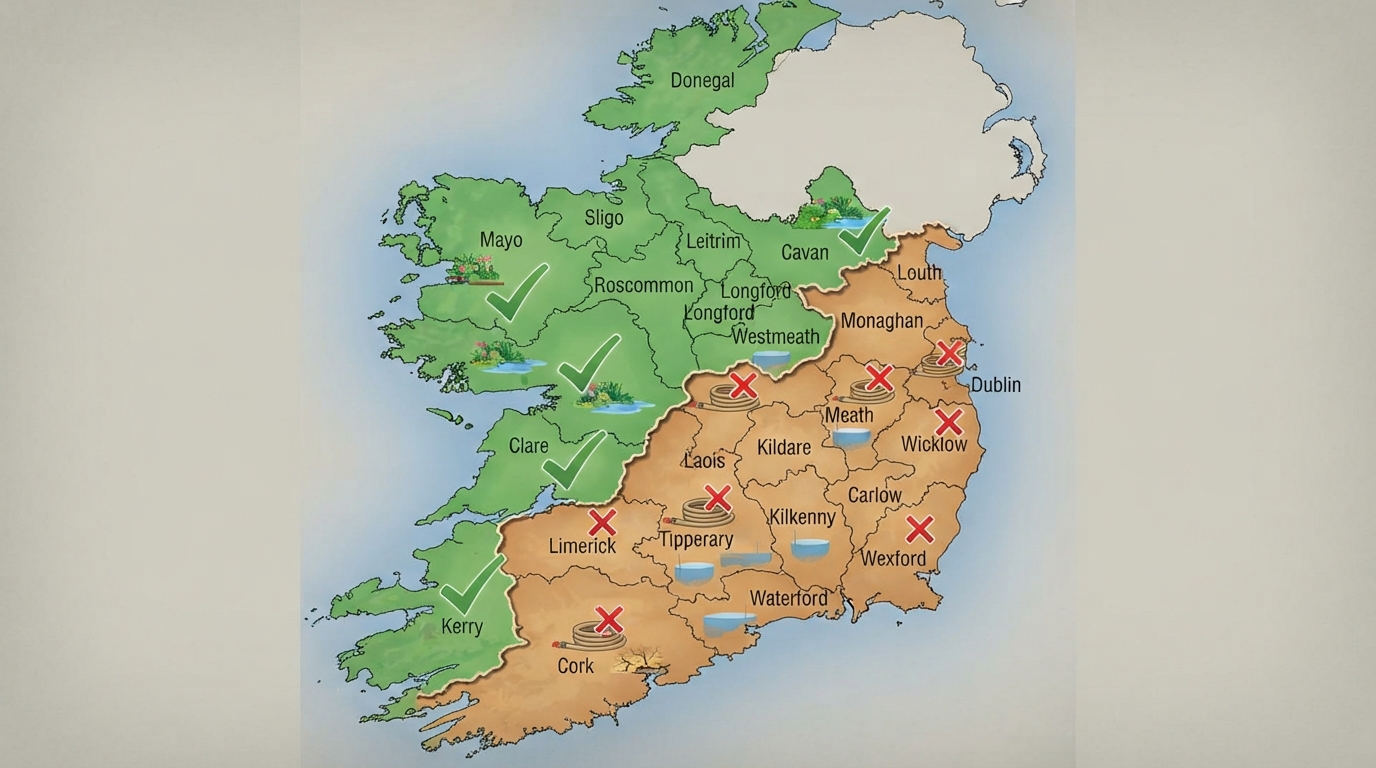
Ireland's national water utility is prolonging a hosepipe ban in 13 counties, including Dublin and Wicklow, through September's end, while simultaneously lifting the restriction in the remaining parts of the country. The initial ban, implemented by Uisce Éireann (formerly Irish Water) on July 24, prohibited using hosepipes for activities such as garden watering, vehicle cleaning, or filling pools and fountains.
The decision to extend the ban in certain eastern and southern counties stems from ongoing pressure on water supplies and the need for water sources in these regions to fully recuperate. Margaret Attridge of Uisce Éireann stated that these areas "will need more time to recover."
Conversely, the ban will be lifted in counties like Donegal and Sligo, effective 23:59 local time on Wednesday, due to "an improvement in the availability of water for supply and increased rainfall." Attridge attributed the ability to lift the ban in much of the country to "the collective efforts of communities to reduce unnecessary water use."
The counties where the ban will be lifted are: Cavan, Clare, Donegal, Galway, Kerry, Leitrim, Longford, Louth, Mayo, Monaghan, Roscommon, Sligo, and Westmeath.
The ban will remain in effect until the end of September in the following counties: Carlow, Cork, Dublin, Kildare, Kilkenny, Laois, Limerick, Meath, Offaly, Tipperary, Waterford, Wexford, and Wicklow.
In the counties still under the ban, the public is urged to continue "using only the water they need and to avoid non-essential use." Attridge emphasized, "Every drop saved will help us protect local supplies and keep water available for essential daily needs."
The original ban was introduced due to high water demand and extended periods of low rainfall, coinciding with Ireland's longest heatwave since 1976.