

Home distillers rejoice as US Supreme Court considers whether to finally legalise moonshine
The Supreme Court will consider in the new year whether the 1868 legislation forbidding home distilling should be overturned.
**Home distillers cheer as US Supreme Court weighs whether moonshine could finally be legalised**
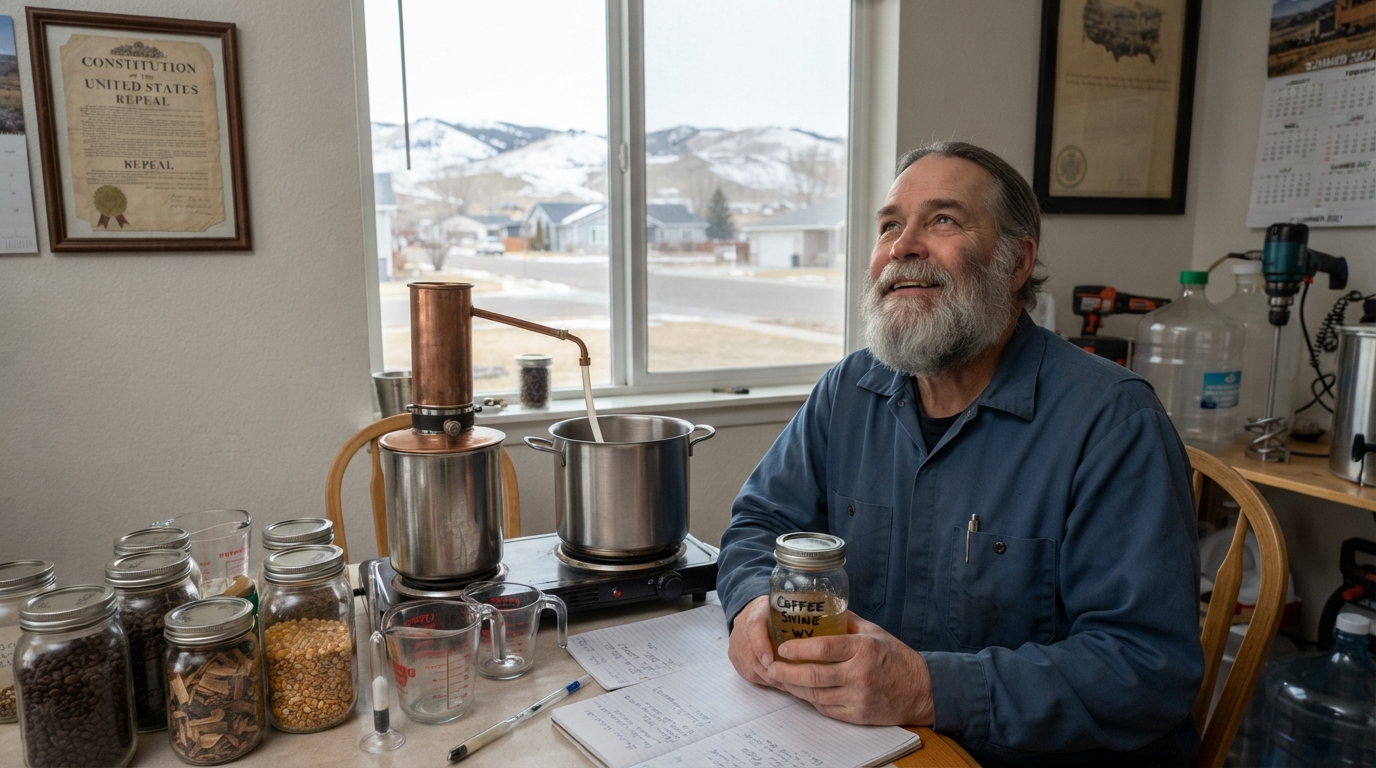
Geno Stecks, 66, of Wyoming, started making homemade moonshine two years ago
Wyoming mechanic and amateur moonshiner Geno Stecks proudly describes the changes he has made to his two-bedroom home to support his hobby of distilling liquor there.
“I turned my dining room into my shining room,” said the bearded 66-year-old, who uses a power drill attached to a bowl to stir part of his recipe.
Two years ago, he began experimenting with recipes for making spirits at home. The hobby has given him new skills and a signature drink to share with friends and neighbours — “coffee-flavoured shine”. It also happens to be illegal under US law.
“You know, keep quiet - don't make commercials or nothing,” Stecks said.
But some home distillers are hoping they may not have to keep their pastime secret much longer. This week, the Supreme Court said it would revisit the 1868 law banning the practice, and hobby distillers are hoping their spirits will soon be treated like beer and wine, both of which are legal to brew at home nationwide.
The plaintiffs in the cases argue that Congress exceeded its authority by restricting distilling for tax reasons during the Reconstruction era. They want the nation’s top justices to agree.
Government lawyers, however, say Congress acted lawfully and that the measure was needed to prevent producers from dodging taxes.
One lower court ruled that the nearly 160-year-old ban was unconstitutional, but in another similar case, a different lower court reached the opposite result. The Supreme Court is due to hear the case early next year and could issue a ruling in the summer of 2027.
At present, distilling alcohol in a private home can bring a penalty of up to five years in prison, a $10,000 (£7,460) fine, or both.
“The particular law in question here is both absurd and unconstitutional,” said lawyer Robert Alt, who represents the plaintiffs. “It's interesting to note that this is a hobby which is as American as apple pie - and certainly a lot older.”
Alt, Stecks and many supporters of the change note that George Washington himself distilled spirits at home. Historian Daniel Pierce told the BBC that home distilling was first made criminal for revenue reasons, requiring anyone producing spirits to pay a tax.
When federal agents started enforcing the law, small farmers who were distilling on the side to earn extra money or barter were left with few choices.
“If you're a large distiller or something, you could afford to [pay the tax], but for most people, it was out of the question,” Pierce said.
When the US introduced Prohibition - the nationwide ban on producing and selling alcohol between 1930 and 1933 - it created a new market for illegal distillers, especially moonshiners, Pierce said.
NASCAR, the racing sport, grew out of the fast, modified cars that bootleggers once used to move illegal liquor and escape the law.
Many kept distilling illegally after Prohibition ended, often handing down family recipes in secret, or at least within close circles, for generations.
Then moonshine and home distilling saw a fresh revival in the early 2000s, he said, helped by reality TV shows like Moonshiners, the internet and popular culture.
“You start to get this pretty dramatic revival…. in terms of home distilling,” Pierce said.
Rick Morris, founder and president of the Hobby Distillers Association, was among the challengers who sued in Texas to change the law. He first entered the drinks business working with soda machines and bottled water, then became a hobbyist home brewer of beer and wine with his wife.
They ran into a frustrating problem when they tried to take the “next step” into distilling.
“It didn't make sense,” he said. “I could make beer, I could make wine, both perfectly legally … and it was frustrating that I couldn't take what I had already legally made and do one more step to it, to start to try to make a bourbon or a brandy.”
For Morris and many other hobbyists, the appeal lies in the mechanics and innovation involved in the process, they say.
“There is a lot of science and details to get straightened out, but there is still a big vein of creativity in the art that goes into it - blending flavours and aromas and all that,” said Ohio challenger John Bream, an aerospace engineer by profession.
He first took up the hobby when his wife gave him a home-brewing kit about 17 years ago. He set up in their kitchen but “made too many messes and got kicked out into the garage”.
“Through homebrewing, I became aware that going to the next level of distilling was illegal … so I stayed away from it,” he said.
But he realised he could be “part of the force for good” by joining legal challenges to the outdated law.
Not everyone supports the change, Courtney Armour, chief legal officer at The Distilled Spirits Council of the US, told the BBC. She is concerned about the difficulties and risks that come with home production.
“The distillation process can be quite dangerous, including risk of explosion, burns, fires, and more,” Armour said. “The spirits industry has a clear focus on safety and process management to mitigate these risks, but even in that careful environment there are still accidents, injuries and even fatalities.”
There are also health risks if alcohol is not made properly.
“In a home-distilling setting, these dangers would not just be limited to the individuals engaging in the production but also their neighbors in the surrounding area,” Armour said.
Although home distilling is still banned federally, states including Missouri and New Hampshire have passed laws allowing certain amounts to be produced at home for personal use.
Attorney Alt said that “alcohol, traditionally, has been an area of state regulation … so this question of state versus federal authority is really at the very heart of this case”.
Alt also said the legal challenge concerns how much oversight federal authorities have over activities at home.
“This circuit court said, look, if the federal government is right on this, there's almost no limits to what they could ban at home in the name of taxation,” he said.
Distillery owner and former Missouri state representative Don Gosen said he helped shape the state’s 1995 law allowing residents to distill 100 gallons of spirits at home per year per person - or 200 gallons per household.
“I've never seen the federal government come and fine anybody for doing it, because it's kind of small potatoes … and so a lot of people, I believe, still do it, kind of behind the scenes like in the old days,” Gosen said.
Over the years, many people have come to him for advice without knowing about the federal law. Some bring him their homemade bottles and ask what he thinks, he said.
“I'll taste it, and it'll be terrible,” Gosen laughed. “And I'll throw on a happy face and say, 'Oh, it's wonderful' - because they made it. They love it.”
Gosen, Morris and others in the industry believe that making home distilling legal would only help it expand.
“Home interest generally turns into a better consumer, a more educated consumer, a more sophisticated consumer, just a consumer that spends more,” Gosen said. “You're going to have people like myself that are going to start opening our doors to home distillers and have classes for them and help them out.”
Back in Wyoming, moonshiner mechanic Stecks agrees that more people would start home distilling if they no longer faced penalties and prison, and he sees only growth and positive outcomes from legalisation.
“That'd just make it better,” he said.