

Hedgehog among four chosen animals to feature on your new banknotes
The decision comes after nearly half a million people cast their votes from a shortlist of 18 creatures.
Hedgehog among four chosen animals to feature on your new banknotes
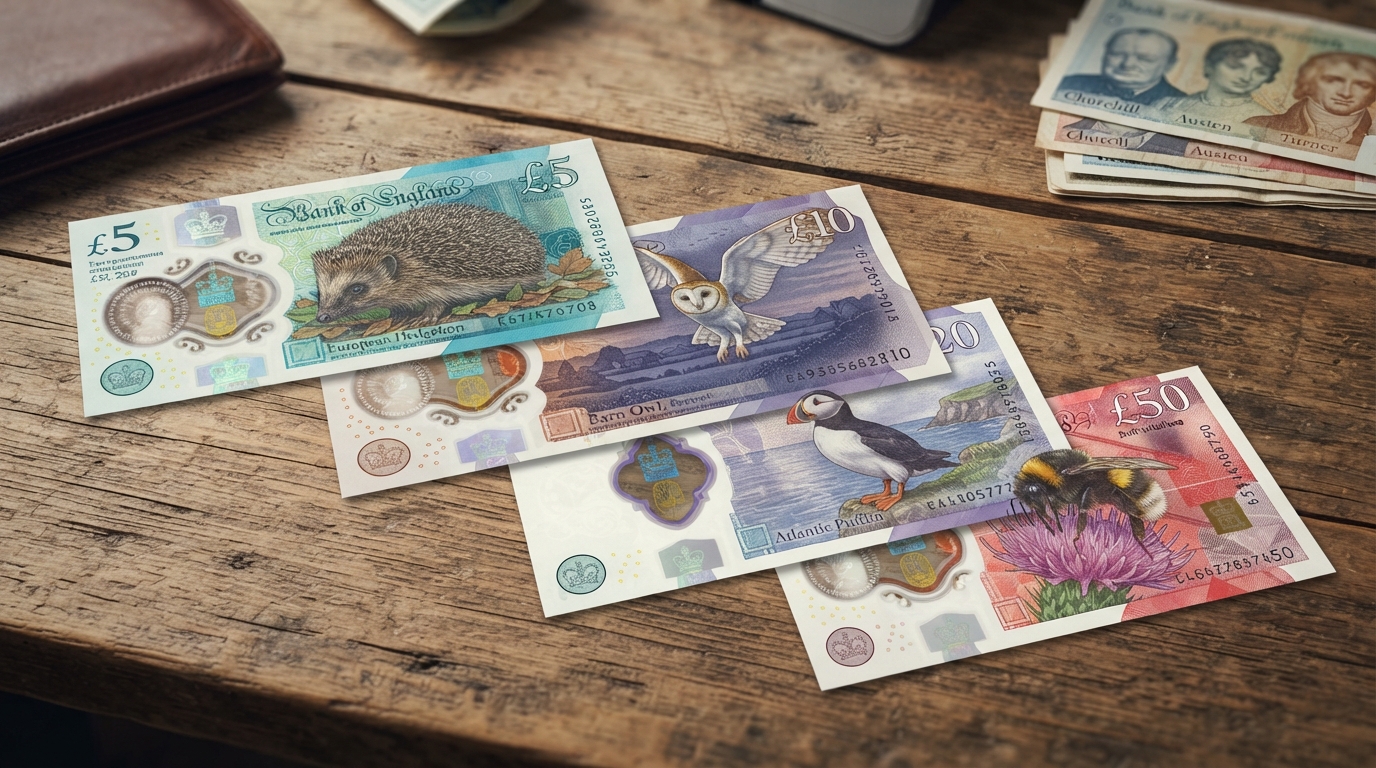
Banknotes are set for a nature-themed redesign, with the Bank of England unveiling the four animals that will appear on our money.
The Atlantic puffin, barn owl, buff-tailed bumblebee and European hedgehog will be featured on the redesigned notes in the years ahead, although no decision has yet been made on which animal will go on which banknote.
The owl, bumblebee and hedgehog came top in public voting in their respective categories, while the puffin was added to honour marine life, the coastline and to add variety to the notes, the Bank said.
Wildlife is taking the place of prominent historical figures, including Sir Winston Churchill, on our cash, a decision that has upset a number of senior politicians.
"We have chosen four distinct and inspiring animals that not only showcase the great variety of wildlife we have in the UK but will also enhance the security of our banknotes," said Victoria Cleland, the Bank's chief cashier.
A panel of wildlife experts created a shortlist of 18 mammals, birds, amphibians insects and fish, which were then opened up to public nominations.
People were asked to choose up to six.
More than 2.5 million votes were cast by 478,531 people, from wildlife fans to primary school classes.
The buff-tailed bumblebee (Bombus terrestris) was the clear favourite, with 360,399 votes, almost 90,000 more than the barn owl (Tyto alba).
The European hedgehog (Erinaceus europaeus) was the most popular in the mammals category.
The red fox, in the mammals category, and the common kingfisher, among the birds, received more nominations than the Atlantic puffin. The puffin (Fratercula arctica) was still chosen because it was the most popular marine animal.
The Bank said its inclusion brought variety to the series, made the denominations easier to tell apart, and offered a chance to celebrate the British coastline.
The puffin and bees also appear on coins, as part of the Royal Mint's redesigned 20p and £1 coins respectively.
Each of the four creatures will be the central image on a £5, £10, £20 or £50 note, which will also include other nature-based elements in their designs, potentially including other shortlisted animals. The monarch will continue to appear on the other side of the notes.
Rhys Phillips, the Bank's incoming chief cashier, who will oversee the rollout of the new series of notes, said designing, testing and printing banknotes could take years.
He said the Bank had to ensure they were high-quality, resilient and accessible. As the designs were still at a very early stage, they would be revealed closer to launch.
"We'll now work to design, test and produce the banknotes, combining the imagery we've announced today with cutting-edge security features and materials science," he said.
Wildlife already features on banknotes in the UK, with mackerel, otters, red squirrels and osprey appearing on notes issued by the Royal Bank of Scotland.
However, this will be the first time since 1970 that the reverse of Bank of England notes will no longer show notable figures from history.
On notes currently in circulation, in ascending order of value, are former Prime Minister Sir Winston Churchill, author Jane Austen, artist JMW Turner and mathematician and wartime codebreaker Alan Turing.
The planned removal of wartime leader Churchill angered Reform leader Nigel Farage and Liberal Democrat leader Sir Ed Davey, while Conservative leader Kemi Badenoch called the move "a silly thing to do".
The Bank said the change was mainly to prevent counterfeiting, so all images would need to be replaced on banknotes over time.