

Headmaster detained after BBC investigation into alleged sexual abuse of students
Former students launched their own investigation, spending years collecting evidence and testimonies from others who say they were abused by the headteacher.
Headmaster detained after BBC investigation into alleged sexual abuse of students
Former headmaster Ahmad Imanuddin Sumar, known to students as Abah, has been accused of sexual abuse
A former headmaster of an Islamic boarding school in Indonesia has been named a suspect in a sexual abuse investigation and taken into police custody after a BBC Eye report.
Ahmad Imanuddin Sumar, known to students as Abah, ran the Abul Barokat boarding school on the island of Lombok.
Police reopened the case after the BBC World Service exposed allegations of sexual abuse against him and showed how former students had collected evidence in an attempt to take the claims to the authorities.
The report triggered public anger and prompted 12 more former students to give statements to police.
At the heart of the BBC Eye investigation were former students Ziadatur Rahmah, known as Zia, and Sukma Rohana Fajar.
They began their own inquiry after Zia told a former classmate, Yusron Azzahidi, that the headteacher had sexually assaulted her when she was 17. Both had been top students at the school.
By the time Zia confided in Yusron, she was studying in Cairo, Egypt, while he was in Jakarta.
Yusron proposed that they gather evidence to back Zia’s allegation. While speaking with former classmates, they reached Sukma, who says Abah tried to rape her at the school.
Yusron put together a seven-page document outlining the allegations, and they handed it to representatives of Nahdlatul Wathan Diniyah Islamiyah (NWDI), the group that operated the school.
Believing the school would stand by them, the students say they were instead pressured to retract their accusations.
In a secretly recorded phone call, Abah begged Yusron to protect him and his reputation.
"Cover the shame of your teacher. Everyone makes mistakes, my child," Abah said.
Abah also reached out to Zia, who secretly recorded their conversation and passed it to the BBC.
In the recording, Abah can be heard apologising, but he pleads with her to stay quiet.
After the BBC investigation, Abah held a news conference in which he denied every allegation. He did not dispute that the voice in the recorded calls was his, but said the recordings were not confessions.
Sukma told the BBC she had been forced to sign a paper saying her claims were false. She later secretly recorded a conversation with Abah’s wife, known to students as Umi. In the recording, Umi tells Sukma that the document was meant to protect "her good name".
The former students eventually renewed their push for justice, with help from lawyer Joko Jumadi, who has handled similar cases.
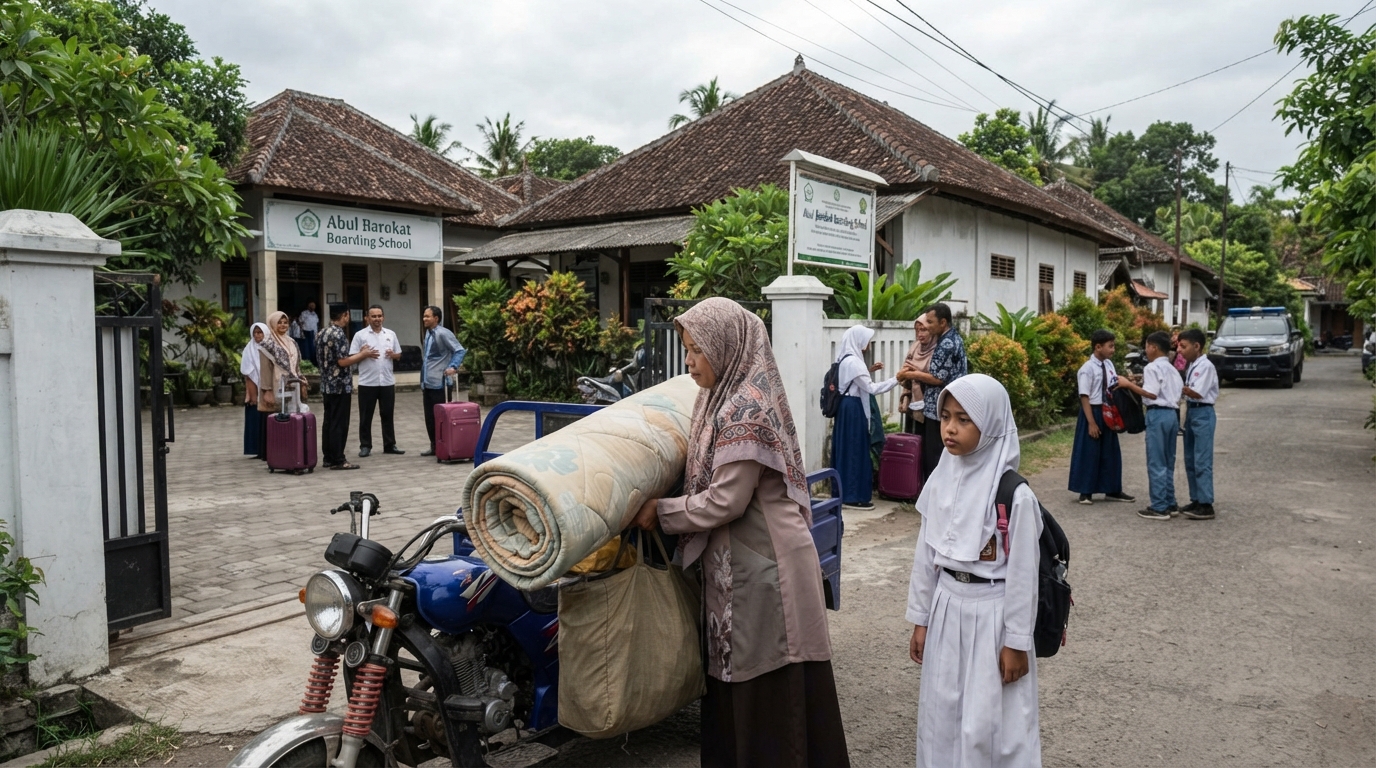
The day after the BBC investigation was published, parents came to the school to pick up their children, with some travelling from other islands.
One mother said she had started crying when she heard the news, thinking of her daughter.
"I'm moving her right now," she said. "I absolutely want my child to leave this school."
Yusron said he and Zia, who recently got married, were overwhelmed by the reaction from former students.
"It was beyond what we expected," he said. "So many people contacted us - on Instagram, WhatsApp. They contacted me and Zia directly, and lots of them were saying, 'I'm a victim too'."
Police questioned Zia and Sukma, along with the 12 other former students who came forward with abuse allegations.
"They thought they were the only ones - and it's been really shocking for them to learn, like I did, that they weren't alone," Zia said.
Sukma said she felt relieved and thankful that the allegations are now being treated seriously.
"It's not about revenge. It's more the acknowledgement that what he did was wrong. I'm waiting for the day when he admits that himself," she told the BBC.
Abah has stepped down from the school and has said he will respect the legal process.
The BBC contacted Abah and his wife during its original investigation, but they did not reply at the time.
NWDI denied trying to conceal the allegations and said it was investigating them internally. It said it had a duty to protect the organisation from being damaged by the alleged actions of individuals.
After the BBC investigation, NWDI pledged to make sure such abuse never happened again and said it would protect the rights of students who came forward.