

Head of the State Assets Agency on how the authorities check whether state assets are being transferred to relatives of officials
When selling large state assets in Uzbekistan, international consultants conduct conflict of interest checks on potential buyers in most cases, head of the State Assets Management Agency (SAMA) Sokhibjon Murodov reported. At the same time, he did not specify how many applicants were disqualified based on the results of such checks.
Head of the State Assets Management Agency on How Authorities Check Whether State Assets Pass to Relatives of Officials
During the privatization of large state enterprises in Uzbekistan, international consultants check potential buyers for conflicts of interest. This was announced by Sohibjon Murodov, head of the State Assets Management Agency (SAMA).
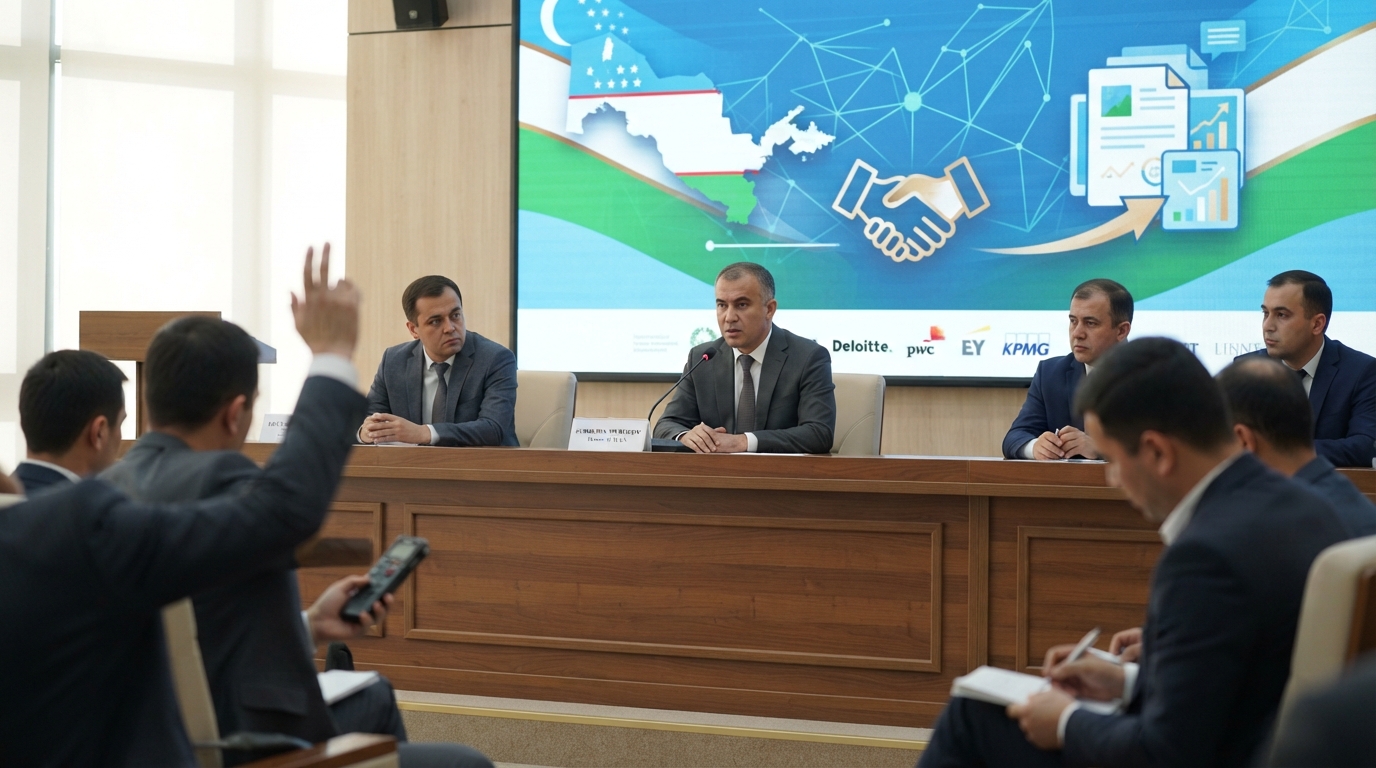
At a press conference on October 8, a journalist asked how the state prevents privatized assets from passing to relatives and close associates of high-ranking officials.
"To prevent conflicts of interest in the sale of large assets, we engage international consultants in most cases. The State Assets Agency acts only as the client. The verification and establishment of ties with interested parties are conducted not by the agency itself, but by an international consultant on a contractual basis," Murodov said.
According to him, experts must determine whether the bidding is taking place in a competitive environment and whether there are circumstances that could lead to an illegal sale of property due to a conflict of interest.
The head of the agency noted that Big Four companies — Deloitte, PwC, EY, and KPMG — are primarily engaged for such work.
At the same time, he emphasized that the Constitution guarantees everyone the right to property. Therefore, the mere fact of being related to a public servant does not imply a ban on purchasing property. What matters is a potential conflict of interest and the influence of interested parties on the outcome of the auction.
Murodov also spoke about the restrictions that apply when selling property through E-auksion.
According to the head of SAMA, the system automatically checks participants by exchanging data with state databases.
During the sale of certain state assets, a check is provided to determine whether the applicant works for the organization on whose balance sheet the property is held. For this purpose, information from the labor relations information system is used.
At the same time, a 2017 decree primarily regulates the sale of property within enforcement proceedings. The privatization of state property is also carried out on the basis of separate legislation.
The Law "On Privatization of State Property," adopted in 2024, provides for procedures based on the principles of openness, equal competition, and the prevention of corruption.
When selling certain large state assets, SAMA requires applicants to disclose information about ultimate beneficiaries. For instance, such a condition was provided for during the privatization of Uzagrosugurta in 2025. Buyers had to provide data on shareholders with a stake of more than 5% and the ultimate owners of the companies.
In addition, the financial capacity of investors, the presence of legal disputes, and compliance with anti-money laundering requirements and international sanction restrictions were evaluated.
Deloitte acted as the financial advisor for the transaction, and PwC acted as the independent appraiser.
Rothschild & Co, KPMG, and Deloitte were engaged to organize the international tender, evaluate the enterprise, and review investors' proposals.
At the same time, it remains unclear from the published conditions how the consultants establish potential ties between these individuals and high-ranking officials and their relatives.
Since December 2024, the Law "On Conflict of Interest" has been in effect in Uzbekistan. It defines a conflict of interest as a situation in which the personal interest of a public servant influences or may influence the proper performance of their official duties.
The law provides for identifying such cases using information on close relatives, ultimate beneficiaries of companies, labor relations, and other data from state registries.
At the same time, the internal control mechanism for conflicts of interest in state bodies is not equivalent to the verification of potential investors by international consultants.
From Murodov's response, it remained unclear precisely what information consultants receive to identify buyers' ties with officials, whether the check applies to all participants in major privatization deals, and how many applicants were disqualified based on its results.