

Harper Lee first edition novel found in Oxfam shop
An original US edition of To Kill a Mockingbird is found in an Oxfam store in west London.
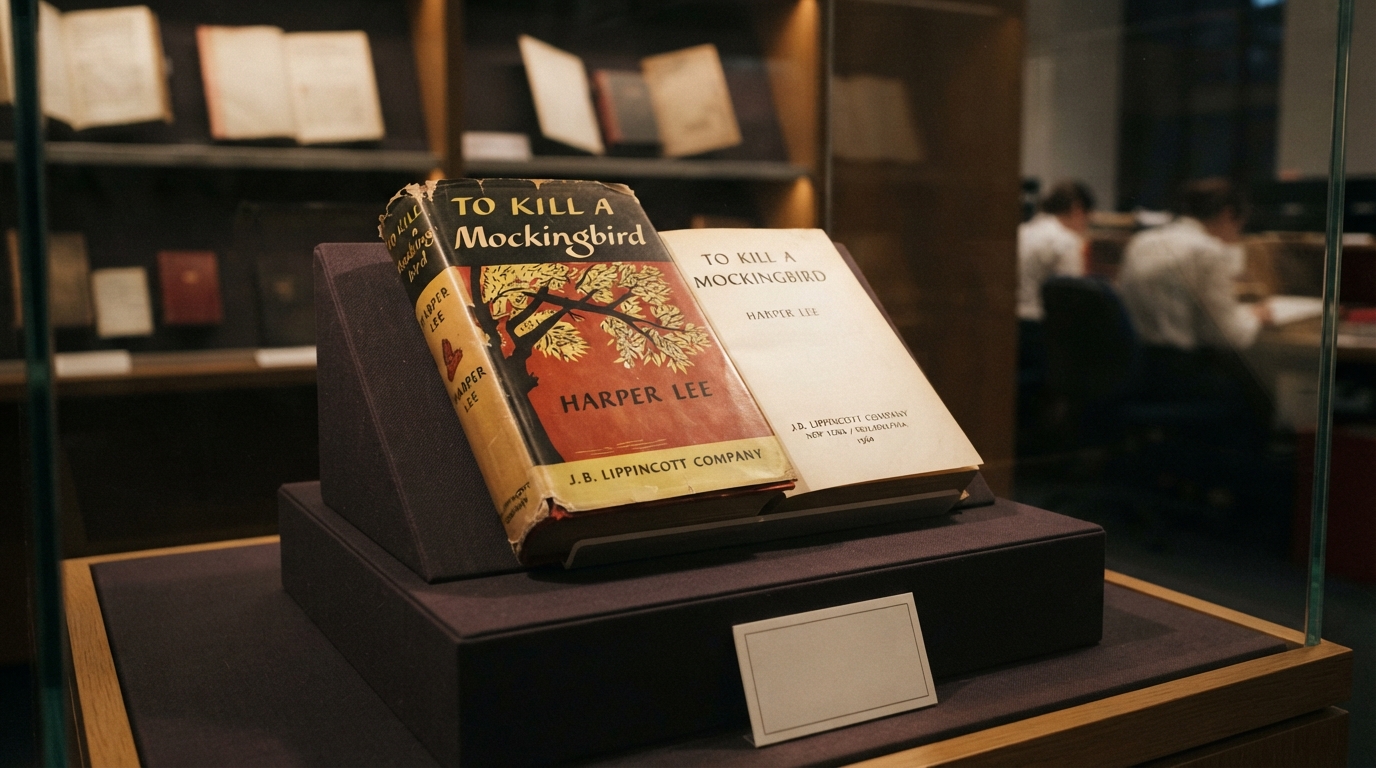
Harper Lee first edition novel discovered in Oxfam shop
The book has since been acquired by the British Library and will join its national collection
A rare first edition of To Kill A Mockingbird has been uncovered among donations given to Oxfam, the charity said.
The copy of Harper Lee’s landmark 1960 novel was found in a box of American books donated to the charity’s bookshop on Portobello Road in west London.
It has since been acquired by the British Library and will join its national collection.
Shop manager Olivia Haysman-Walker, who identified the copy as a first US edition, said the book could easily have been overlooked. “There were lots of books to work through in the donation, but we recognised To Kill A Mockingbird and thought it was worth taking a closer look.”
She added: “We realised quite quickly that we had something really special.
“The dust jacket showed its age, and although it was worn around the edges, the pages inside were in beautiful condition.
“It’s amazing to think that this book has passed through our Oxfam bookshop and into the national collection at the British Library.
“It really has been quite a journey, and it’s a lovely reminder, during Second Hand September, of the kind of treasures that can be hiding among the shelves and donations in our shops.”
Second Hand September is Oxfam’s yearly campaign encouraging people to buy second-hand.
The dust jacket “showed its age” but the pages inside were in “beautiful condition”, Olivia Haysman-Walker said.
Lee’s Pulitzer Prize-winning book follows lawyer Atticus Finch as he defends Tom Robinson, a black man wrongly accused of raping a white woman.
Her tale of racial injustice and childhood innocence, set in Alabama in 1934, has sold more than 40 million copies worldwide and has been translated into 40 languages.
The US novelist, who received the Presidential Medal of Freedom, died in 2016 at the age of 89.