

Guinea-Bissau referendum approves new constitution that expands president's powers
The sweeping reforms come in the wake of last year's coup and ahead of a proposed return to civilian rule.
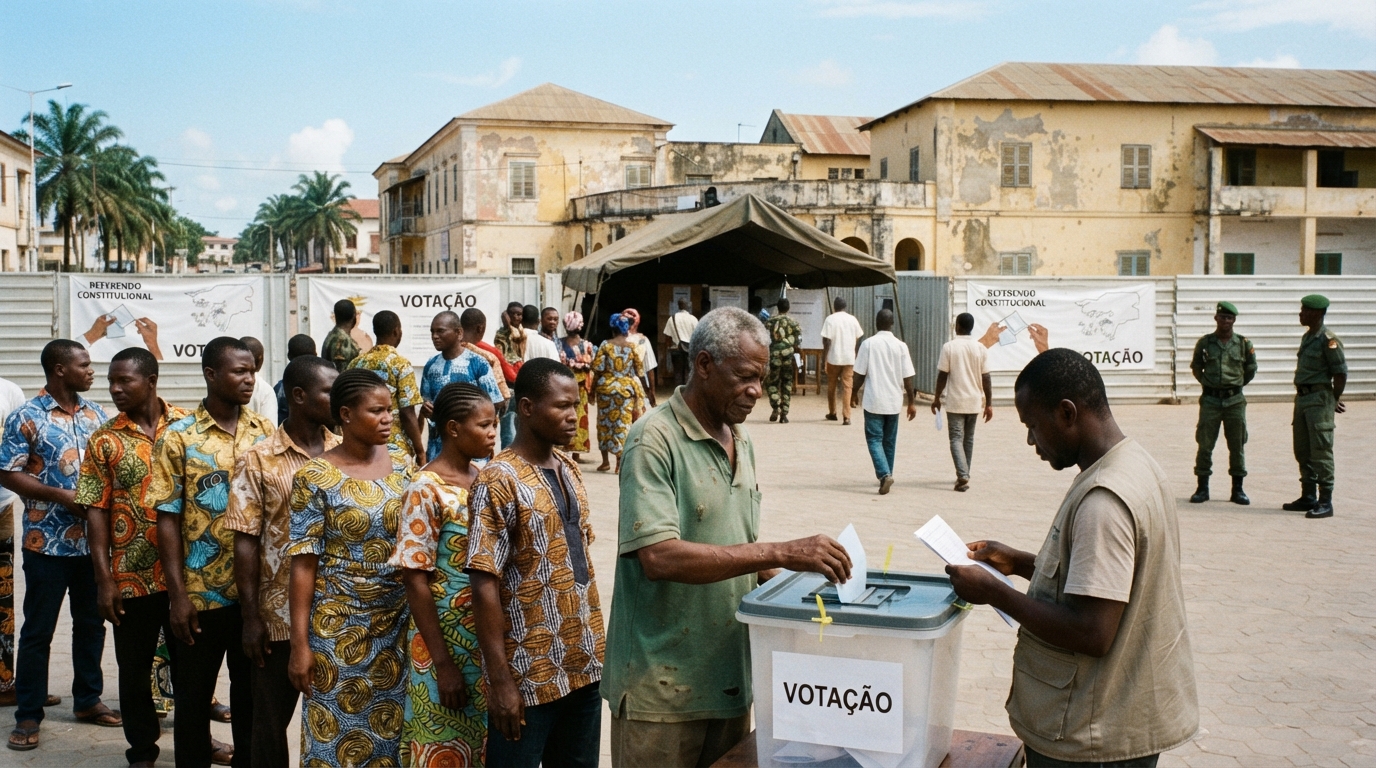
Guinea-Bissau's populace has endorsed a new constitution, significantly augmenting the president's authority, a move initiated by Transitional President Gen Horta N'Tam's military government. This approval comes in anticipation of general elections slated for later this year.
The referendum, orchestrated by the military regime that assumed control of the West African nation last November after a contentious election, saw voters agree to extensive reforms. These changes empower the president to appoint and dismiss the prime minister and cabinet, establish or dissolve ministries, and disband parliament during severe political crises.
The primary opposition party, however, boycotted the vote, asserting that the process lacked sufficient political and institutional safeguards and jeopardized the nation's transition back to democracy. Guinea-Bissau, one of the world's most impoverished nations, has endured at least nine coup attempts and successes since achieving independence from Portugal in 1974. The UN has labeled the country a "narco-state" due to its numerous uninhabited islands along the coastline, which are ideal for drug traffickers.
Provisional results released by the country's electoral commission indicated that 70% of voters supported the changes in Sunday's referendum, while 30% opposed them. Voter turnout was reported at nearly 60%.
The new constitution strengthens the presidency at the expense of the prime minister, altering the balance of power within Guinea-Bissau's semi-presidential system. Previously, the legislature appointed a prime minister from the parliamentary majority, who then formed a cabinet—an arrangement the ruling military authorities claimed contributed to political instability. The current changes grant the president greater governmental authority, though the five-year presidential term and two-term limit remain unchanged. Military authorities have contended that these modifications are essential to resolve recurring disputes between presidents and prime ministers.
Additionally, the new constitution reduces the number of parliamentary seats from 102 to 65 and cuts the number of electoral constituencies from 29 to 12. It also introduces new eligibility criteria for presidential candidates, including a requirement to have resided continuously in Guinea-Bissau for the five years preceding an election.
These changes precede presidential and parliamentary elections scheduled for December, which the military authorities state are intended to restore civilian rule. Nevertheless, the referendum faced strong opposition from the country's main opposition party, the African Party for the Independence of Guinea and Cape Verde (PAIGC), which urged its supporters to boycott the vote. The PAIGC warned that the changes risked concentrating excessive power in the presidency. PAIGC leader Domingos Simões Pereira accused those behind the referendum of attempting to undermine democracy and political freedoms. Some activists informed the BBC that the referendum was merely a formality, claiming that 90% of registered voters did not participate.
The referendum follows another tumultuous period in Guinea-Bissau's politics. The military seized power in November 2025 after a disputed presidential election where both then-President Umaro Sissoco Embaló and opposition candidate Fernando Dias claimed victory. Junta leaders stated they acted to thwart a plot by unnamed politicians, allegedly supported by a "well-known drug baron," to destabilize the country. This takeover added Guinea-Bissau to a growing list of West and Central African nations that have experienced military coups in recent years.
December's elections will now serve as a crucial test of whether the military authorities fulfill their promise to restore civilian rule and how the expanded presidential powers will reshape Guinea-Bissau's fragile political system.