

Growth is shifting to the regions: How the food delivery market is changing in Uzbekistan
Yandex Go has expanded its food delivery service to 16 cities in Uzbekistan, and the number of regional orders has increased by more than 80% over the past year. The local restaurant industry is also growing, with over 3,500 establishments currently connected to the service.
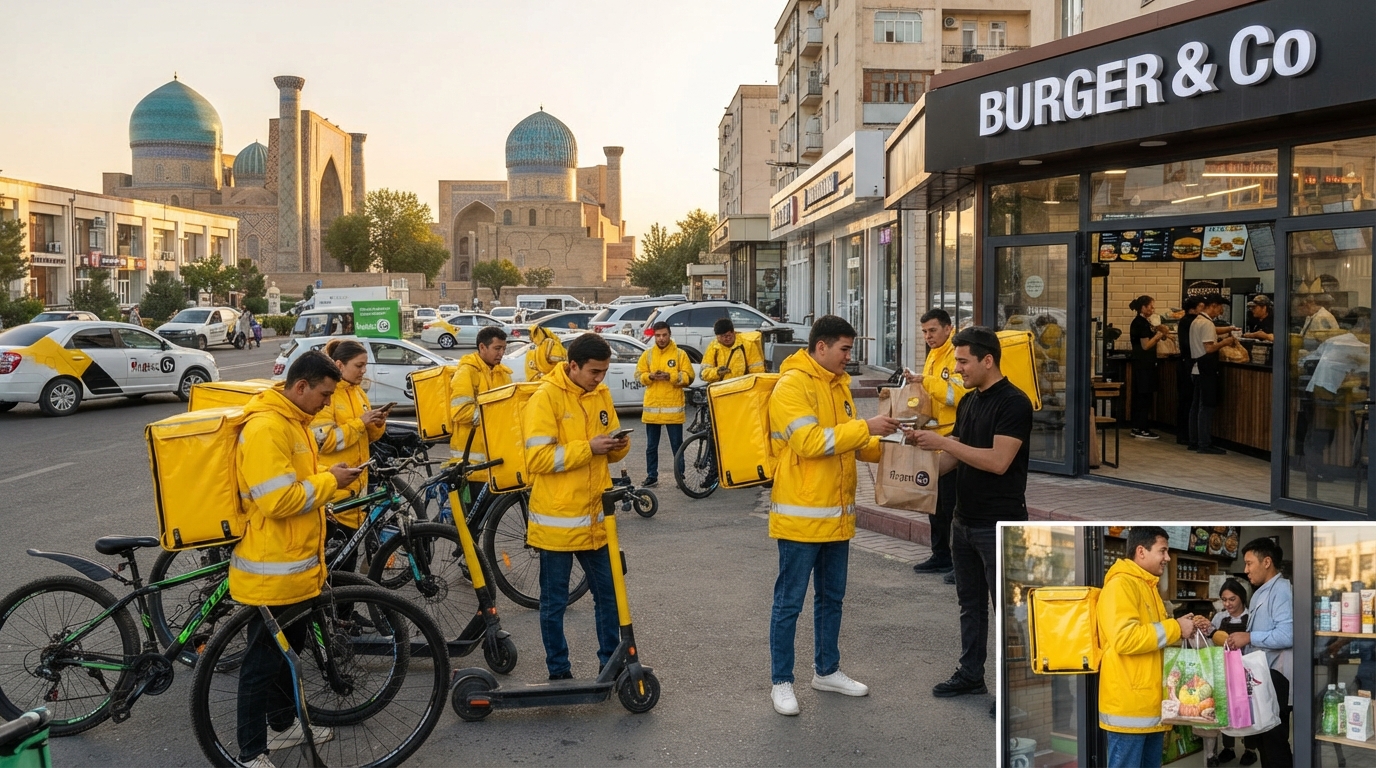
The food delivery market in Uzbekistan is undergoing changes: growth is shifting to the regions.
Several years ago, the delivery market was primarily associated with Tashkent. Today, the regions are becoming the driving force for growth: international chains are opening new locations, local restaurants are expanding, and residents of the regions are increasingly using digital services.
In three years, the Yandex Go food delivery service has expanded its presence to 16 cities in Uzbekistan. Growth rates in the regions are already exceeding those in the capital. Over the past year, the number of orders in the regions has increased by more than 80%. The most dynamic growth is observed in Samarkand, Fergana, Urgench, and Andijan.
"When we launched the service outside of Tashkent, many thought delivery was exclusively for the capital. We spent almost two years testing different models and studying user behavior in the regions. "Today, regions are growing by approximately 80% year-on-year, which confirms that demand has been there for a long time; it simply lacked high-quality infrastructure," notes Mukhammader Ismoilov, Head of Restaurant Operations for the "Eda" service on Yandex Go.
Currently, more than 3,500 restaurants across the country are connected to the service. The fast-food segment remains the main driver, but the company is focusing on developing local restaurants.
According to the service's representatives, successful delivery is not only about logistics but also about having establishments that already enjoy the trust of residents in a given city.
For example, the Samarkand brand BURGER & Co. increased its order turnover by more than 70% over the last year of its partnership with the service. Since then, the brand has begun actively expanding into other regions of Uzbekistan.
"The history of BURGER & Co. clearly demonstrates the potential of regional business." "We give local brands access to a wide audience and a ready-made delivery infrastructure, allowing them to scale significantly faster than previously possible," Yandex Go notes.
In addition to expanding its geographic reach, the service is actively working to improve the efficiency of its partners. Yandex Go's internal analysis showed that reducing order preparation time by just three minutes can increase the number of orders by up to 15%.
"Speed today is no longer just a matter of convenience; it's a matter of user trust. When delivery becomes predictable, people start using the service regularly. For restaurants, kitchen optimization is often the most effective growth tool without additional marketing costs," comments Semyon Aksyonov, Head of the Food service at Yandex Go.
The growth of restaurant and store delivery is accompanied by the development of a partner network of couriers. Today, approximately 1,000 partner couriers fulfill orders daily in 16 cities across the country, with an average of 20 new couriers joining the service every day.
The most developed courier network is in Samarkand, where approximately 300 couriers serve daily.
Partner couriers have access to insurance during order fulfillment, additional bonus programs for activity, and special payments for bicycle and e-bike owners upon reaching set goals.
The expansion of the courier network allows the service to maintain consistent delivery quality even as the number of orders in the regions increases.
Retail is also developing simultaneously. Residents of 11 cities can now order groceries, everyday goods, cosmetics, medicines, and other products through the service. Over the past year, the number of orders in this category has more than doubled.
Additionally, a "Go" section has been launched in Tashkent, Samarkand, Bukhara, Andijan, and Fergana, helping users find restaurants and plan in-person visits.
The company notes that the development of delivery in the regions today goes far beyond a convenient user service.
It is becoming part of the city's economy: it helps restaurants and stores scale their businesses, creates additional employment opportunities, promotes small business development, and provides residents of the regions with access to the same digital services that have become familiar to users in the capital.
Advertising rights.