

Greenland says findings on genocide allegation not final
Experts examined the use of forced contraception on the Inuit community during the 1960s and 70s.
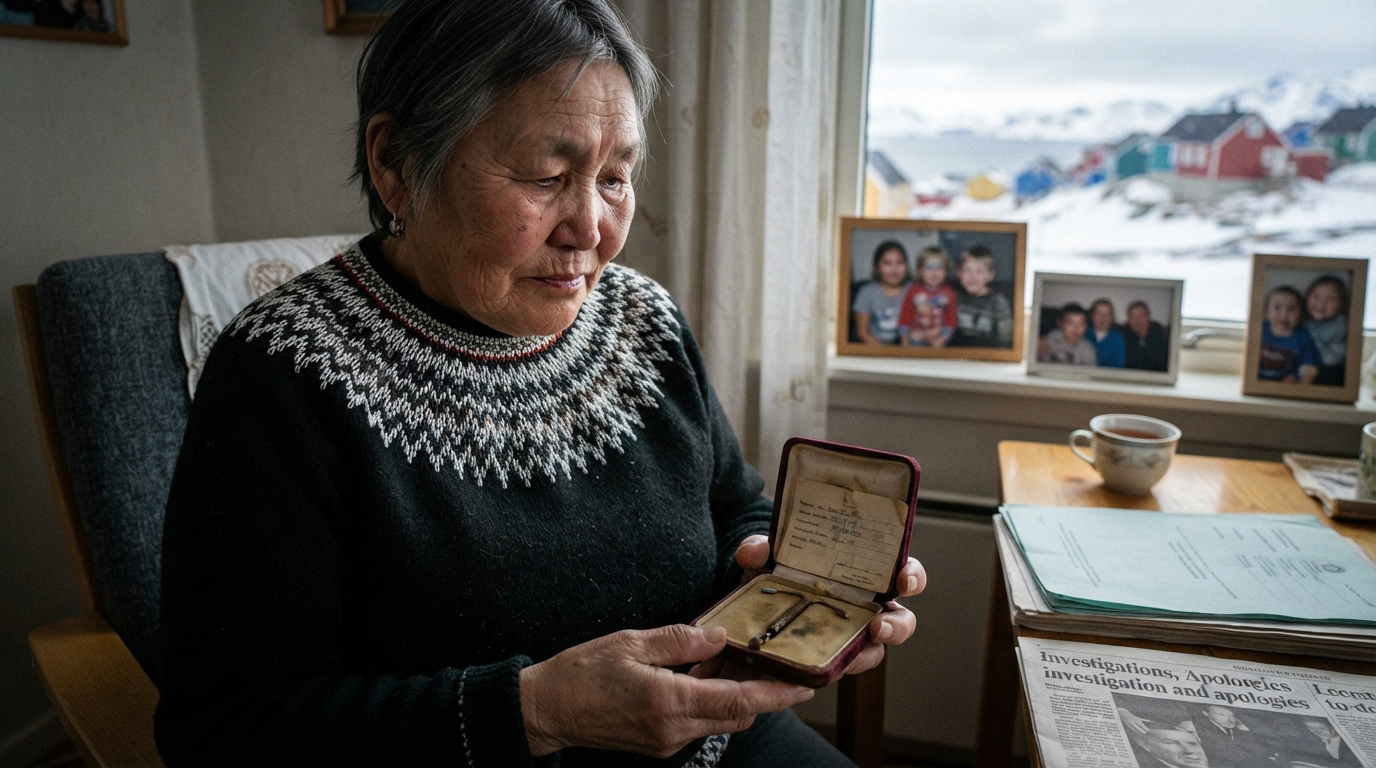
Greenland's Justice Minister, Marianne Paviasen, stated that the government cannot definitively conclude whether a genocide occurred through forced contraception, despite expert examinations of the practice in the 1960s and 70s. "We cannot say, on behalf of the government, whether there was genocide," Paviasen informed reporters, adding, "This is something we can continue to debate."
This announcement followed the release of two reports on Friday, a year after Denmark apologized for the treatment of Inuit women and girls in its autonomous territory. Greenlandic Prime Minister Jens-Frederik Nielsen announced the formation of a "reconciliation commission," while Danish Prime Minister Mette Frederiksen pledged inter-governmental cooperation. Denmark has already enacted a compensation law, offering 300,000 Danish crowns (£34,404; $46,800) to each woman affected by the policy.
National archives indicate that between 1966 and 1970, approximately 4,500 Greenlandic women and girls, some as young as 13, had intra-uterine devices (IUDs) implanted as part of a birth-control program managed by Danish doctors. Many women have recently come forward, claiming these IUDs were inserted without their knowledge or consent. The widespread use of this birth control significantly slowed Greenland's population growth.
Last August, Frederiksen issued an apology to Greenlandic women and their families for "systematic discrimination." In 2024, former Greenlandic Prime Minister Mute B Egede characterized the practice as "genocide."
A panel of four experts was tasked with determining if human rights violations occurred and if these met the definition of genocide. However, the panel fractured, with two members resigning and producing a separate report. The remaining experts, Alaskan lawyer Dalee Sambo Dorough and University of Copenhagen law professor Miriam Cullen, concluded that the rights of Inuit women in Greenland were violated. Yet, they stated they could not conclude that genocide had taken place "on the basis of contraceptive practices alone." They noted that genocidal intent by Denmark remained a "possible inference" that a court might establish, based on evidence outside their report's scope, such as the removal of Inuit children to be raised by Danish families.
The rival report, authored by Jonas Christoffersen, former head of the Danish Institute for Human Rights, and Jensine Nedergaard, a psychologist who worked in Greenland, acknowledged that women were wronged but could not establish the full extent of their mistreatment. They found no evidence that "any authority or health professional at any time had any intention of destroying the Greenlandic population."
Reacting to the reports on Friday, Greenland's justice minister highlighted their stark differences, noting one "says there was no genocide at all" while the other "says there could have been."
Henriette Berthelsen, a woman affected by the forced contraception policy, told AFP before the reports were presented that their conclusions were flawed from the outset due to the absence of Greenlandic Inuit experts. "For me, this is not just about history or politics. It's my body, my life and my right to self-determination," she stated. "And once again, I see that it is others who will investigate and define what was done to me and to other Inuit women."
Inger Platou, 70, recounted to Reuters waking up from what she was told was a minor operation to find an IUD inserted without her consent. "It turns out we were treated like animals," she said. "Without consent, they just wanted to stop women from giving birth or having children. It was a very inhumane act." She added that a doctor later informed her that complications from the coil rendered her unable to become pregnant, leading her to adopt two children from Colombia. "We are very deferential to authority because we are colonial children," she explained.
Responding to the reports on Friday, Frederiksen stated, "We will handle the political process together with the government of Greenland. The most important thing for me is that we find the right path together."
Greenland was a Danish colony until 1953 and achieved home rule in 1979. Copenhagen continued to oversee its healthcare system until 1992. The Inuit, or those of mixed Danish and Inuit heritage, constitute nearly 90% of the island's 56,000 residents.
The birth-control campaign aimed to manage the territory's population, which had significantly increased since the 1950s due to modernization and improved healthcare. This growth, coupled with a rising rate of teenage pregnancies, concerned Danish authorities. By 1970, the campaign was deemed a "success" as fertility rates had sharply declined, continuing to fall for some time thereafter. In the eight years from the campaign's start in 1966 until it leveled off in 1974, Greenland's fertility rate plummeted from seven children per woman to 2.3.