

Government borrowing rises by a fifth to £18bn in August
Borrowing was higher than expected in August as inflation piles pressure on the government ahead of the Budget.
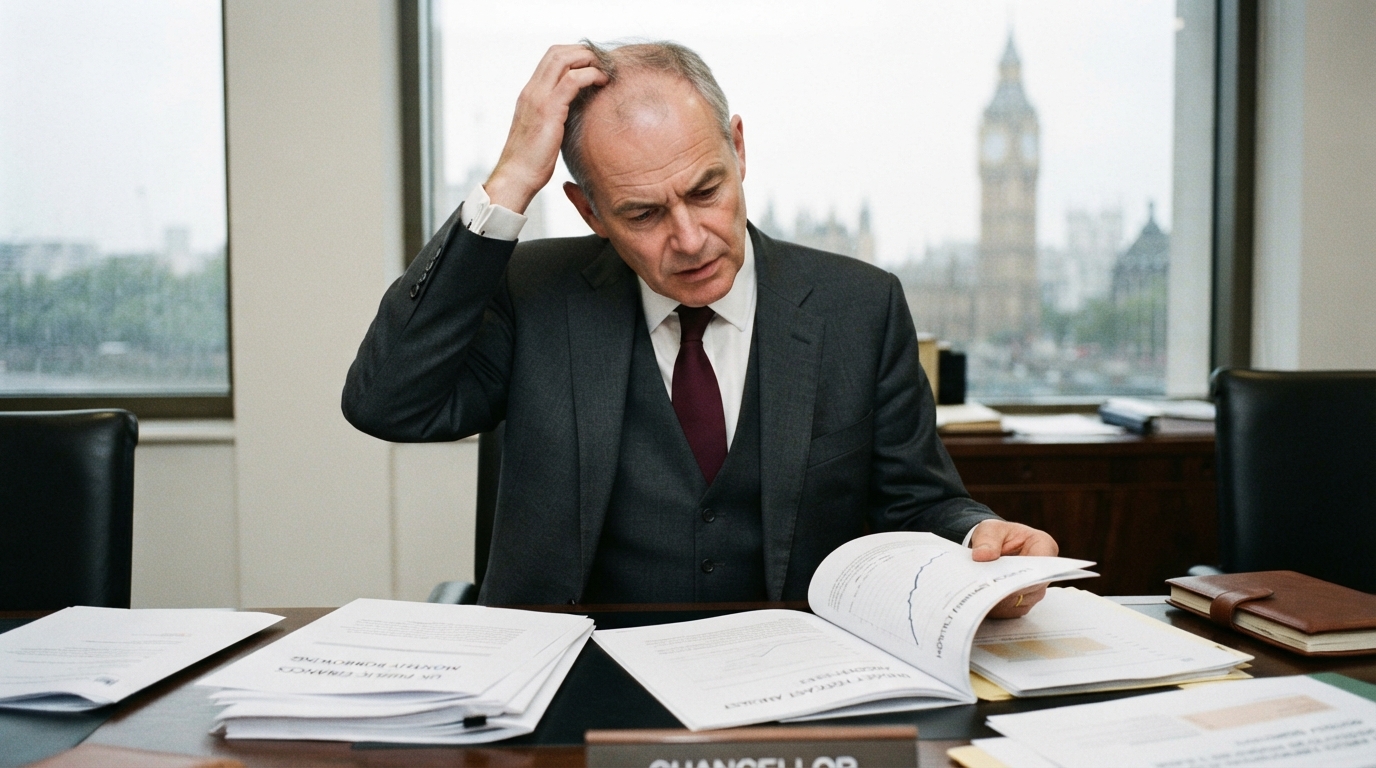
Government borrowing climbed by a fifth to £18bn in August
The government took on more borrowing than anticipated in August, as persistently elevated inflation drove total spending higher.
Borrowing — the gap between tax receipts and government spending — came to £18.3bn in August, nearly a fifth above the same month a year earlier, the Office for National Statistics (ONS) said.
That means the government is borrowing more than official forecasters had predicted, increasing pressure on Chancellor John Healey as he gets ready to present his first Budget on 28 October.
Inflation in the UK rose in August to its highest level in five months, pushed up by higher petrol and diesel prices.
While tax receipts were higher in August than a year earlier, spending on public services, benefits, and other costs increased more as the rate of price rises accelerated.
The interest the government pays on its debt rose to £8.8bn, its highest August figure since records started in 1997.
The Institute for Fiscal Studies (IFS) warned that debt interest spending is "a worryingly large share of overall government spending and has been pushed up" since the last official forecasts from the Office for Budget Responsibility (OBR).
Research economist Nick Ridpath said: "Both higher borrowing costs and higher inflation make life harder for a chancellor who is looking to bring down borrowing and to spend more on government priorities."
Ruth Gregory, deputy chief UK economist at Capital Economics, said it is a "dismal backdrop for the autumn Budget, with the government once again borrowing more than expected".
She said the figures increase the chance that many of Prime Minister Andy Burnham's policy ambitions will be "reined in or delayed to avoid big tax hikes and/or a backlash in the markets".
Gregory also warned that, as the economy weakens, the government is likely to keep borrowing more than expected.
Emma Reynolds, chief secretary to the Treasury, said the UK has "huge potential" for economic growth, but only with "fiscal discipline" from the government.
"At a time when debt interest costs billions of pounds that could otherwise be spent on improving lives, we must always know where the money is coming from to pay for public services," she said.
She added that the government is committed to its fiscal rules "with a buffer against uncertainty".