

Global charity withholds report into its role in Syria's 'disappeared' children
SOS Children's Villages International has acknowledged that more than 140 children were taken to its facilities by Syrian security services.
Global charity withholds report into its role in Syria's 'disappeared' children
A global children's charity has said it will not publish a report it commissioned to examine its role in separating children from their families during Syria's civil war.
SOS Children's Villages International has also not yet paid compensation to Syrian families affected by the government-organised detentions, despite promising to do so in plans seen by the BBC World Service, which has been working with a group of international journalists.
Under former President Bashar al-Assad, Syrian security forces took hundreds of children from their imprisoned parents and instructed SOS and other orphanages to conceal their identities and locations.
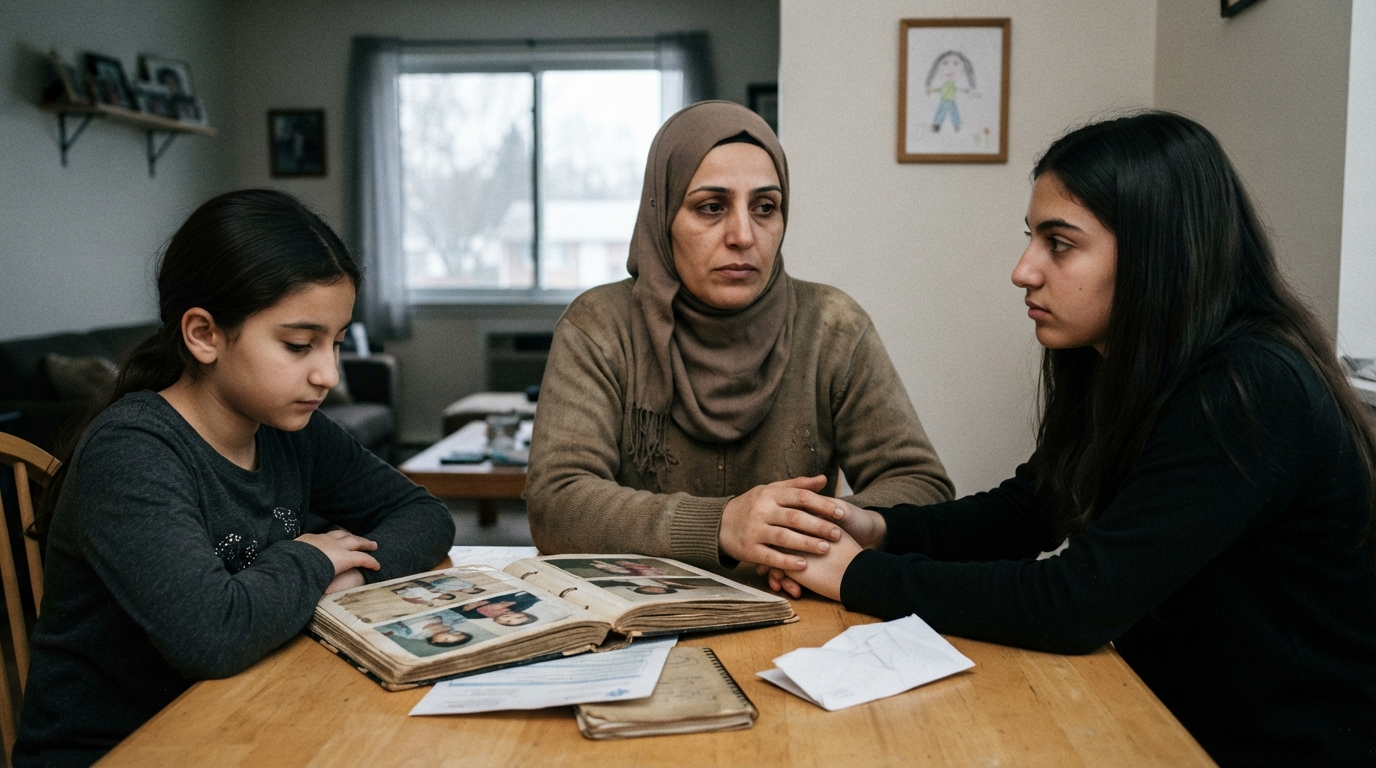
Sisters Layla and Layan Ghbeis were eight and four when they were taken from their mother, Omama, and taken to SOS in 2015. It took three years before they were reunited with their parents in a prisoner exchange.
Layan did not recognise her mother when they met again.
The family later fled to the US as refugees through the UN, but the trauma of those lost years still weighs heavily on them.
"Whether we're together or on our own, we're thinking about what happened to us," Omama told the BBC.
"It had a huge impact on every member of our family."
After Assad's fall in 2024, SOS acknowledged that more than 140 children had been brought to its childcare facilities by Syrian security forces.
The SOS federation, which has associations in more than 130 countries and has received donations and grants from the UN and European governments, commissioned an investigation by the Norwegian law firm Wiersholm into who was responsible.
The report was delivered in December 2025 and the lawyers told the BBC in January that an anonymised version would likely be made public.
But months later, in an email in May seen by the BBC, SOS board chair Domenico Parisi told staff that the investigation had been "compromised" and would not be shared internally or released publicly.
In a recording of an internal meeting obtained by the BBC and a wider group of journalists, Parisi accused unnamed staff of trying to "manipulate" the report to make the organisation "look like we are the villains".
SOS International said that while its review was still under way, it was not able to comment on internal discussions.
A draft copy of the report seen by the BBC said that SOS was not forced to accept the children from security services and that it was the charity's international office in Vienna that had ultimate responsibility for the relevant SOS facilities in Syria.
An SOS spokesperson said its board had taken "independent legal advice" about the report and that a review was continuing. She said the board was "committed to establishing institutional responsibility for the decisions taken".
The choice not to publish a final report has deepened tensions that threaten to split the charity, which was founded in 1949.
Associations in the UK, Norway, Switzerland, Sweden, France and the Netherlands – which contributed significant funds to the organisation's budget – have since chosen to leave the federation and become independent charities.
In December, the directors of the German association, SOS Children's Villages Worldwide, which is the largest single contributor to SOS, voted to leave. But the German supervisory board, which acts as a trustee of the charity, overruled them and dismissed all three directors in February.
SOS Worldwide told the BBC that the directors were fired for "serious breaches of duty." The directors dispute this and are challenging their dismissal in the German courts.
Before they were dismissed, the German directors had set aside a "voluntary compensation" fund for Syrian victims, but so far no money has been distributed, according to a number of leaked documents from multiple sources seen by the BBC.
The SOS spokesperson said the charity has expressed its "willingness" to support those who were affected, but providing assistance depends "on legal and practical conditions that require co-ordination with relevant parties".
The Syrian families we met said they were still waiting to hear from SOS.
"I had hoped SOS would apologise and offer support, to compensate me for the harm they caused by separating me from my family," Omama Ghbeis said.
"No-one at SOS talked to us or gave us anything."