

Girls used Penny Bazaar jobs to support families
Research reveals young women worked at the M&S Penny Bazaar to provide for their households.
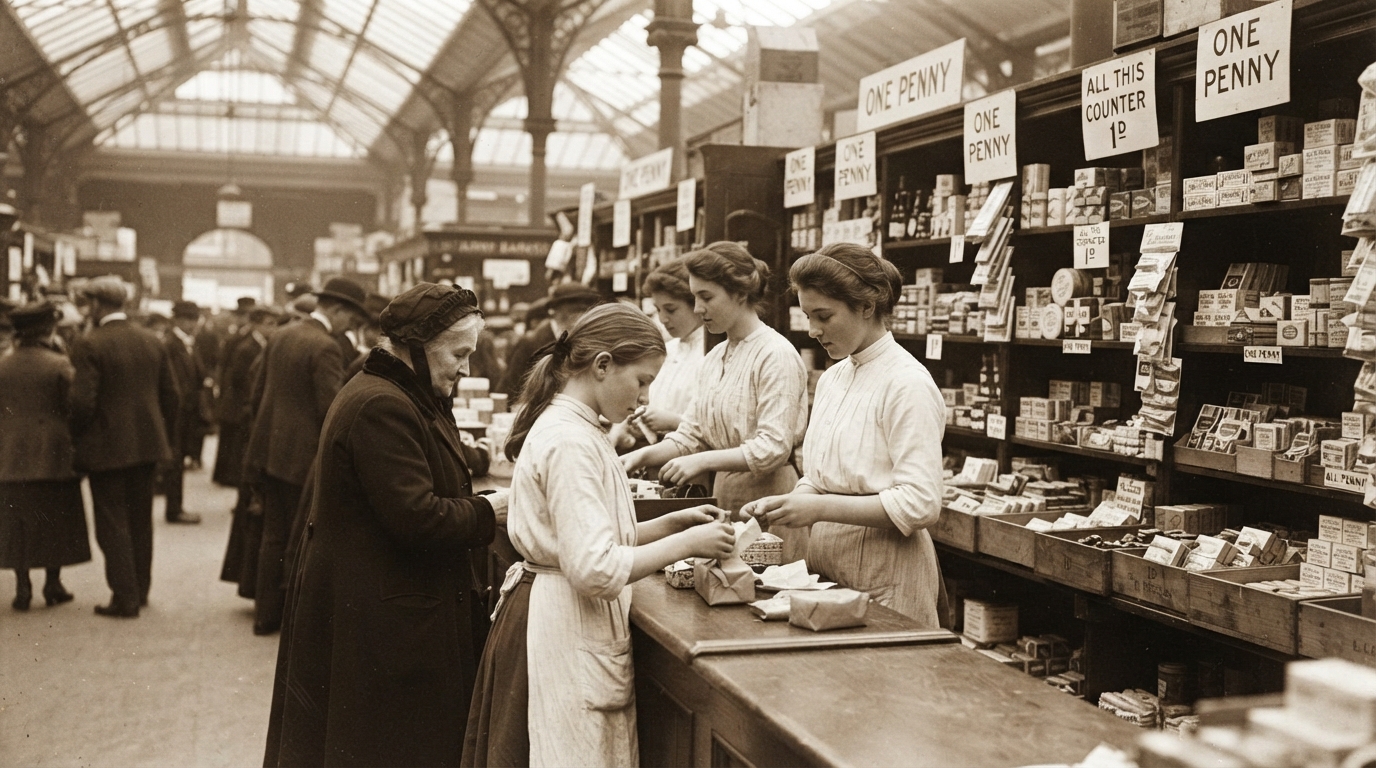
Girls used Penny Bazaar jobs to help support families
Young women employed at the Penny Bazaar in the 1920s were often the main earners in their households.
New research has uncovered the stories of some of the first women to work at the last surviving Marks & Spencer Penny Bazaar.
A family history website found evidence that young working-class women took jobs at the shop in the Grainger Market, Newcastle-upon-Tyne, to help their families and get through hardship in the early 20th Century.
Researchers traced Penny Bazaar workers, at a shop that opened in 1895, using census returns, birth and marriage records, and newspaper archives. They found that some girls as young as 15 were working there to support their families.
A spokesperson for Findmypast said "the biggest influence on our communities comes from ordinary people".
Records show that 15-year-old Jane worked there to support her family after her father passed away
Jane Freeburn was only 15 when she was listed in the 1921 census as a shop assistant there.
After her father died in 1918, Jane became one of the household's main earners, helping to support her widowed mother and the rest of the family.
Researchers also found the story of sisters Margaret and Lily Watson, aged 21 and 16, who were both employed at the Penny Bazaar in 1921.
Following their mother's death and while their father was out of work, the sisters became essential wage earners, helping to support younger siblings at home.
Sisters Margaret and Lily worked at the Penny Bazaar after they lost their mother and their father was out of work
Councillor Burbidge says the new research brings "real opportunity to open people's eyes to the history"
Heritage consultant Sarah Dyer, who is based in the North East, said the shop was a significant employer at a time when employing women "wasn't always done".
"To enable to get them a first step up and provide for their family, it was enormously important," she added.
Newcastle Lib Dem councillor Owen Burbidge said the new research had helped "uncover" the past that has shaped the Grainger Market into what it is today.
"The stories of normal people at times are forgotten about.
"I think this work, and ongoing work that will come following on from this, gives us a real opportunity to open people's eyes to the history," he said.