

German court clears way for Usmanov’s lawsuit against EU Council over sanctions
Germany’s Federal Court of Justice has ruled that the president of the Hamburg Regional Court acted unlawfully by refusing to serve legal documents in Uzbek-Russian billionaire Alisher Usmanov’s lawsuit against the EU Council over statements used to justify sanctions imposed on him in 2022, clearing the way for the proceedings to move forward after nearly three years.
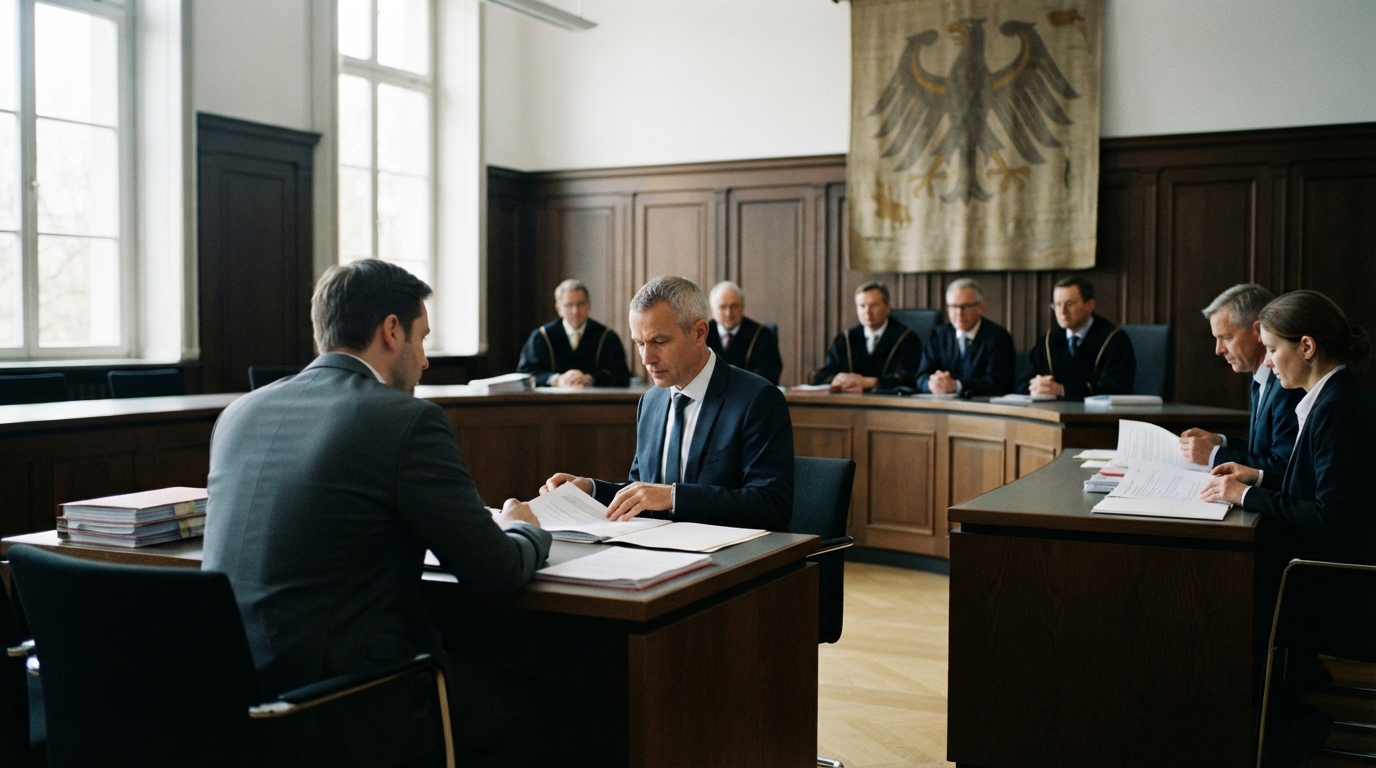
German court opens path for Usmanov’s case against EU Council over sanctions
Germany’s Federal Court of Justice (Bundesgerichtshof, or BGH) has found that the president of the Hamburg Regional Court acted unlawfully when he refused to arrange service of legal papers in a case brought by Uzbek-Russian billionaire Alisher Usmanov against the Council of the European Union, reversing rulings that had stalled the case for almost three years.
In a decision dated October 21, 2026, the BGH overturned both the Hamburg court president’s refusal and an earlier ruling by the Hanseatic Higher Regional Court that had endorsed it, German newspaper Die Welt reported on November 2.
The case centers on remarks published by the EU Council in the Official Journal of the European Union to justify sanctions imposed on Usmanov in 2022. Usmanov says the remarks are false and harmful to his reputation, and he is seeking to stop their further publication, including the disclosure of his personal data.
The case started in December 2023, when Usmanov filed suit at the Hamburg Regional Court. On December 29, 2023, the court ordered that the claim be served on the EU Council in Belgium so the institution could examine the accusations and respond.
But the president of the Hamburg Regional Court, who oversaw the court’s administrative matters, declined to arrange service of the documents even though the independent judge handling the case had issued the order. He made that choice after consulting Germany’s Federal Ministry of Justice, which referred to objections from the Foreign Ministry.
Die Welt said internal government papers showed that the German government opposed serving the lawsuit partly for foreign policy reasons. In correspondence tied to a separate case against Forbes, a Foreign Ministry representative said national courts should not affect or review EU sanctions measures because that would conflict with their supranational character.
The newspaper quoted an official as saying the government had a major foreign policy interest in ensuring the established system was not circumvented.
In its October 21 ruling, the BGH said the Hamburg court president had no power to override the independent judge’s order. It held that the refusal to serve the documents was unlawful and infringed the applicant’s rights. The court also said the recommendation from the Federal Ministry of Justice, agreed with the Foreign Ministry, was not binding.
The ruling means the case can now move forward to formal service on the EU Council.
Joachim Steinhöfel, the Hamburg media lawyer representing Usmanov, said the ruling confirmed that access to justice is a basic right that does not depend on the government’s foreign policy.
"Access to justice is a fundamental right. It does not depend on the current foreign policy course," he said.
Steinhöfel added that the Hamburg court president had effectively acted for the executive branch against a judge in his own court by blocking delivery of the claim, despite lacking legal authority to do so.
"The president of the court is not subordinate to instructions from the Foreign Ministry. Anyone who mixes the judicial and executive branches undermines the independence of the judiciary," he stated.
Background to the sanctions dispute
The EU Council, which represents the governments of EU member states, imposed sanctions on Usmanov in 2022. In explaining the move, the Council cited, among other sources, statements published by U.S. magazine Forbes, which alleged that the billionaire was a "front man for Putin" and handled the Russian president’s business affairs.
Usmanov successfully challenged those allegations in court. In January 2024, the Hamburg Regional Court barred Forbes from repeating them after the magazine failed to prove that Usmanov acted as a front man, identify the expert behind the claims, or support the allegations in court. Forbes later argued that the statements were opinions.
The EU Council later slightly revised its wording but did not withdraw the claim that Usmanov had acted as Putin’s front man.
Usmanov says the continued publication of the allegations in the EU’s official sanctions justification, along with other statements about him, violates his personal rights. His lawsuit seeks to stop the Council from circulating those statements further.
Die Welt also compared the case with Franz Kafka’s novel The Trial, arguing that people placed on EU sanctions lists can struggle to challenge the allegations used against them.
According to the newspaper, EU sanctions can freeze assets in Europe and impose entry and transit bans, restrictions on business dealings, and bans on providing funds or other economic resources. Breaches of the rules on providing resources can carry criminal penalties for third parties.
The report also referred to a 2023 Politico investigation, which found that some EU sanctions decisions relied on what it described as carelessly gathered evidence, including material from Wikipedia, online articles and social media posts.
The newspaper said the BGH ruling could have broader consequences because more than 3,000 people are on the EU sanctions list, and some may face allegations that could be challenged in similar cases before national courts.
It pointed to the case of Swiss publicist and former colonel Jacques Baud, whose assets were frozen and travel restricted on the basis of an allegation that he was a "mouthpiece for pro-Russian propaganda".
Other legal proceedings involving Usmanov
Between 2023 and 2025, dozens of European media outlets, especially German ones, and public figures reportedly admitted they could not substantiate statements they had made about Usmanov and gave written undertakings to stop spreading them.
According to information from his representatives, his lawyers secured 21 court decisions and 109 declarations from media organizations worldwide promising to stop unlawful conduct. His legal team and press office also obtained corrections to more than 3,700 publications in 62 countries.
Among the cases mentioned was the January 2024 ruling against Forbes. Usmanov also prevailed in cases against German newspaper Tagesspiegel, Austrian newspaper Kurier, and German broadcasters RTL and Westdeutscher Rundfunk.
The provided information also describes several investigations by German authorities.
In May 2023, the Frankfurt Regional Court ruled that search warrants used by the Frankfurt Public Prosecutor’s Office and the Federal Criminal Police Office were unlawful and set them aside, saying there was not even an initial suspicion of the alleged offence.
In October 2024, after more than two and a half years of investigation, the Frankfurt Public Prosecutor’s Office ended its probe without filing charges or establishing that a crime had been committed. The decision preserved Usmanov’s presumption of innocence and ruled out reopening the investigation against him on the same suspicions.
In 2025, the Munich II Public Prosecutor’s Office likewise ended an investigation into two suspected breaches of Germany’s Foreign Trade and Payments Act linked to EU sanctions imposed on Usmanov in 2022.
Usmanov removed from EU sanctions list
In September 2026, the EU Council removed Usmanov from its sanctions list. The decision took effect on September 22, 2026. But the allegations used to justify the sanctions remain on EU websites, and the businessman is still seeking their removal through the German court case.
Die Welt said the BGH ruling could matter beyond Usmanov’s case by allowing people affected by EU sanctions to challenge potentially defamatory statements in national courts. Such cases could force the EU Council to prove the allegations it uses to justify sanctions and subject its decision-making to greater scrutiny.
It said sanctions should rest on reliable evidence, especially when they impose major limits on people’s fundamental rights. It also argued that the ruling could push the EU to reassess its sanctions practice and ensure decisions have a sufficient factual and legal basis.
The newspaper acknowledged that sanctions remain an important tool against people involved in illegal arms trading, hacking, espionage and active support for Russia’s war against Ukraine. But it said the authorities imposing them must provide reliable evidence for their decisions.
The newspaper also recalled European Commission President Ursula von der Leyen’s 2022 State of the Union speech, in which she described the conflict as a struggle between authoritarianism and democracy.
"a war on our values and a war on our future," von der Leyen said. "This is about autocracy against democracy."
Die Welt said the same principles should apply to the EU’s justification of sanctions, especially when defending the rule of law and fundamental rights.