

From scooters to shampoo - the people saving hundreds from dumpster diving
The men and women who rummage through commercial bins to take clothes and other items.
From scooters to shampoo - the people saving hundreds from dumpster diving
'I've always looked in bins for clothes'
Darryl Baker was stunned to find heaps of clothing dumped next to the recycling bins outside her local supermarket.
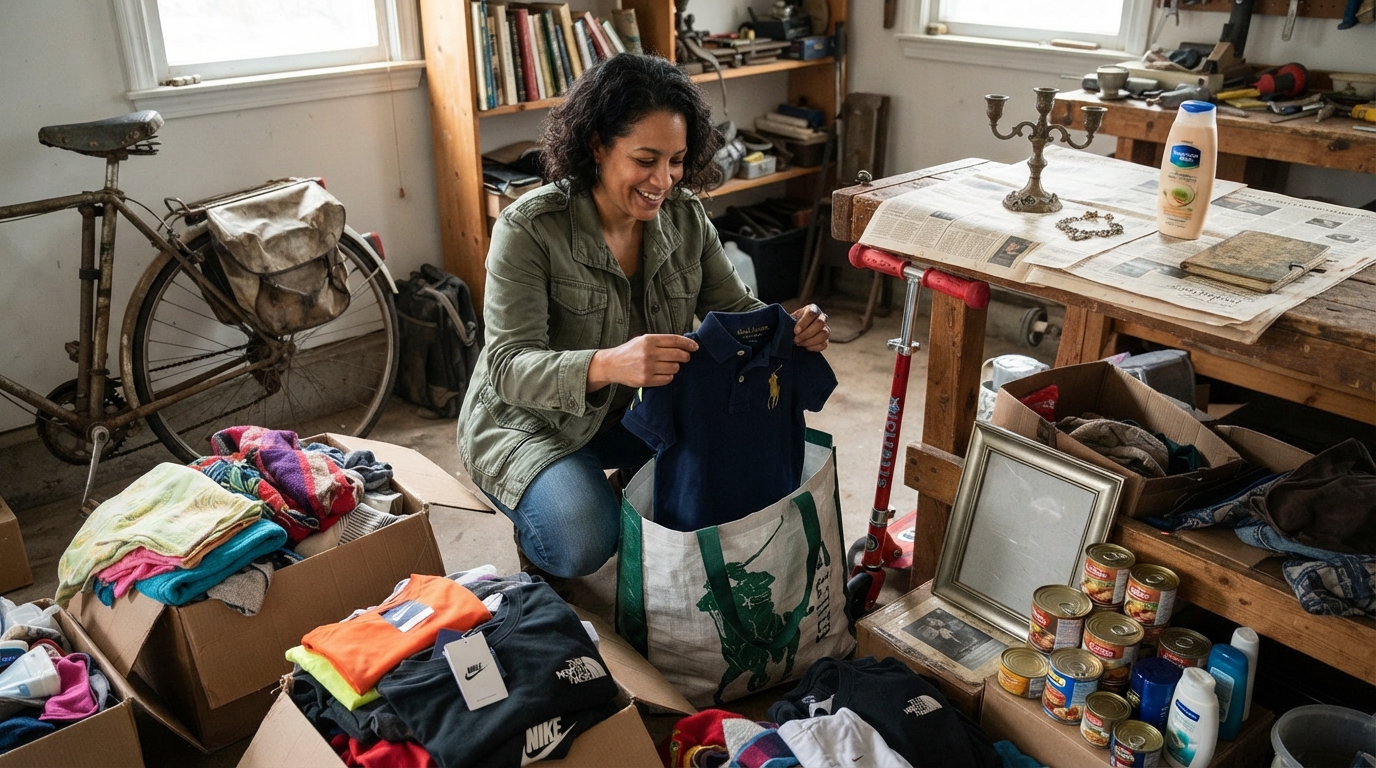
On repeated visits to the dumpsters, she has also come across plenty of other things, including "a perfectly decent" Ikea picture frame and children's scooters.
Always searching for ways to cut costs and horrified by the waste, the thrifty mother-of-two from north London asked supermarket workers whether she could take some of it.
Once she was given the go-ahead, "I got my children entire new wardrobes," says Darryl, 39, adding that she has stuff set aside for years ahead.
Over a six-month period this year, "I have probably saved hundreds of pounds," says the freelance journalist.
Darryl lists the brands she has rescued - Ralph Lauren, Nike and The North Face, among others. "My mind was blown," she says. "This stuff is just strewn all over the floor."
Along with finding clothes for her children and her nephews and nieces, she keeps some for herself. She gives away or sells the rest, including recently making £30 from a men's Barbour jacket.
Darryl has become one of the so-called dumpster divers – people who search through commercial bins for valuables. Their reasons include saving money, donating items to charity and being appalled at how often perfectly usable things are thrown away - or a mix of all three.
Texan Jeff Ferrell has been digging through rubbish for more than 50 years.
"I still dumpster dive every day by bicycle," says the 72-year old, who lives in Fort Worth and has written books on the subject. "I still enjoy it as much, or more, than ever."
Jeff sees himself as "a bit of Robin Hood mixed with anarchist direct action", only searching in wealthier neighbourhoods and handing out many of the things he finds.
"Almost everything in our home is scrounged, and I never buy, for example, soap or toiletries or medical supplies, or shoes and clothes and tools and garden supplies," he says.
Jeff hunts for discarded metal to sell at a scrapyard, which, he says, brings in about $150 (£110) every two weeks. His wife sells his other finds, such as "an antique or piece of jewellery", on eBay.
By saving money and selling the more valuable items, he estimates his finds are worth "tens of thousands of dollars a year".
Although dumpster diving may once have been seen as taboo, many people now openly do it and share it online.
Millie Diamond, a London-based stylist, posts TikTok videos of herself rummaging through bins. But she has a very specific goal - to uncover fabrics and clothing she can salvage and turn into new pieces, some of which she then sells.
She estimates that one dress she found was worth £600.
"I'm a bit of a magpie. I like collecting things off the street or anywhere that there's a freebie. If I see something that catches my eye, then I'll grab it."
Millie, 36, started bin diving after noticing some fabrics thrown away by a business that had closed. "I literally clambered into the bin. It turned out it was loads of vintage clothes."
For Charlotte Bayford in Essex, timing is everything. Her best finds come when students at Essex University go home for the summer and throw away anything they don't want to carry with them.
That includes half-used toiletries. "I haven't bought shampoo for eight years," says the 44-year-old sales assistant. "I'd say that has saved me some money."
Like other dumpster divers, Charlotte donates many of her finds to charity. But she has also filled her home with salvaged items, and sells some valuable pieces on.
Food is fair game too, as long as it is still sealed. "I've found tins of Heinz baked beans, perfectly fine. I'm quite happy to eat those," Charlotte says.
But is taking items from bins and keeping them legal?
Jeff, who is professor emeritus of sociology at Texas Christian University, says many US cities have outlawed the practice, including New York, Cleveland and Wichita.
"Dumpster diving is considered illegal [in such places] because that which is thrown away now belongs to the city... or to the private company that provided trash services," he explains. Any dumpster diver also risks trespass charges.
In Fort Worth, where Jeff lives, items can only be taken from bins if they are on public land.
In the UK, Sunjay Versani of Duncan Lewis Solicitors says it depends on the situation.
"In many cases involving genuinely discarded goods, prosecution is unlikely," he says.
"But there is no general rule that something is free to take simply because it has been put in a skip or bin. If in doubt, the safest approach is to ask the owner or business for permission."