

Frances hits Shein and Temu with fast fashion fees
The levy on "ultra-fast fashion" items could reach almost €20 per garment by 2030.
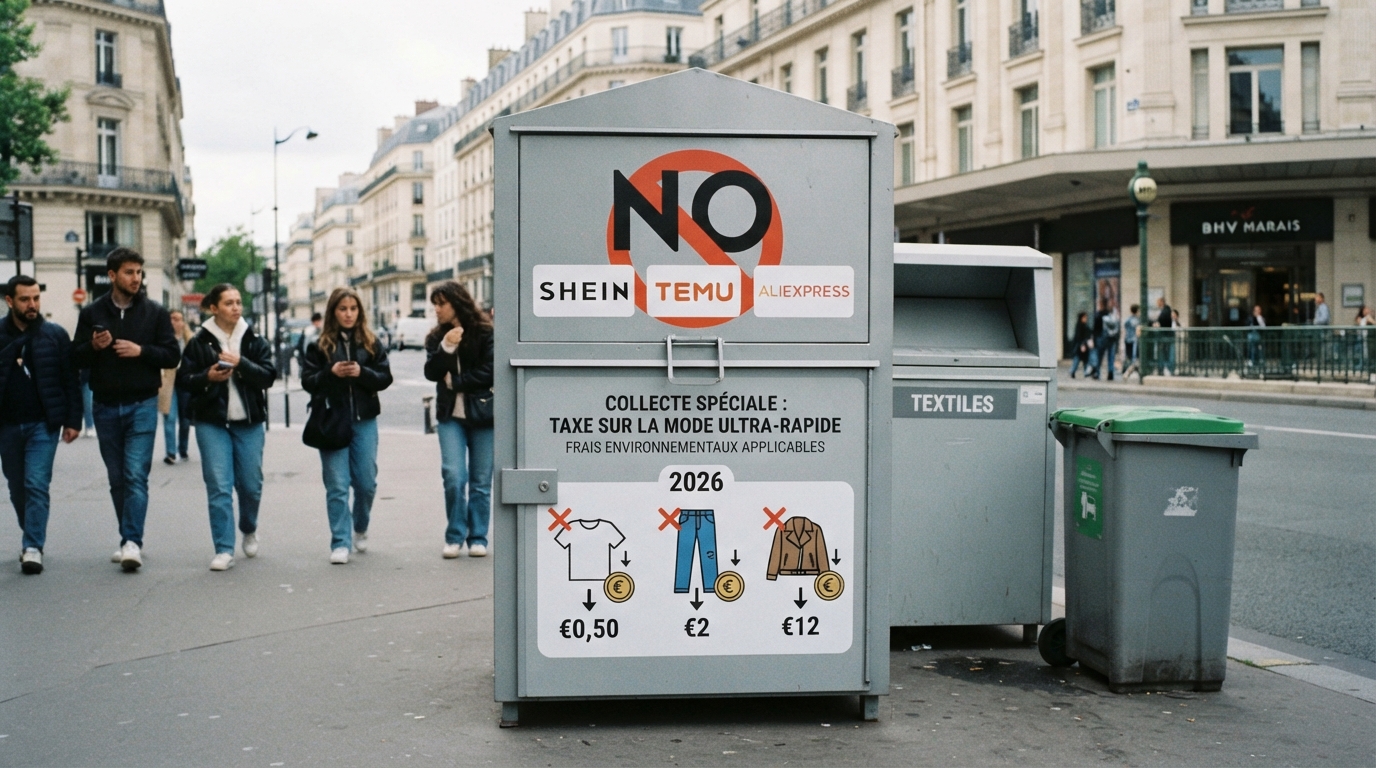
France has begun implementing charges on fast fashion items, with the aim of curbing the sale of inexpensive clothing from e-commerce platforms. These fees could escalate to nearly €20 per garment by 2030.
The new levy, which became effective on Tuesday, stems from a law passed in June designed to regulate "ultra-fast fashion" companies like Shein, Temu, and AliExpress. French officials have criticized these e-commerce giants, known for their high volume of cheap apparel, for fueling the rise of ultra-fast fashion.
China's commerce ministry has labeled the French law as discriminatory and a trade barrier, suggesting it might violate World Trade Organization (WTO) principles.
French minister Mathieu Lefevre highlighted the "well known" detrimental effects of ultra-fast fashion on both the environment and the economy. In July, Lefevre's office clarified that the levy would not apply to retailers such as H&M or Zara, leading some to believe the measure appeared to favor European companies.
Under the new legislation, ultra-fast fashion will be defined by two criteria: the quantity of clothing introduced to the market and the cost of repairing garments relative to their initial purchase price. The per-item fee will be determined on a sliding scale based on how each product scores against these standards.
For 2026, the charges will range from a €0.50 (£0.43) levy on underwear, to €2 (£1.71) for T-shirts, €9 (£7.71) for jeans, and €12 (£10.28) for a jacket. By 2030, this levy could reach up to €19.50 (£16.71/$22.60) per item, though it will not exceed 50% of the product's pre-tax price.
These fees are being introduced after Shein, a fast fashion retailer founded in China and headquartered in Singapore, achieved a valuation of $26.2bn (£19.3bn) on its first day of public trading on the Hong Kong stock market. The company was once estimated to be worth nearly $100bn but has since faced intense competition, trade tensions, and scrutiny regarding the ethics of its supply chain.
Shein opened its first physical store in 2025, located on the sixth floor of the Paris department store BHV.
The BBC has reached out to Shein, Temu, and AliExpress for comment. Shein previously informed the BBC that legislation targeting ultra-fast fashion would "worsen the purchasing power of French consumers, at a time when they are already feeling the impact of the cost-of-living crisis."
Temu, a Chinese-owned e-commerce company, has also drawn criticism from politicians in both the UK and the US. A spokesperson for Temu previously told the BBC that the brand "acknowledges the important environmental concerns addressed by the proposed French legislation," and asserted that it does not operate as a fast fashion company because it functions as a marketplace and does not manufacture its own products.