

Fourteen go on trial over deadliest Channel small boats disaster
At least 30 men, women and children drowned when their dinghy capsized on 24 November 2021.
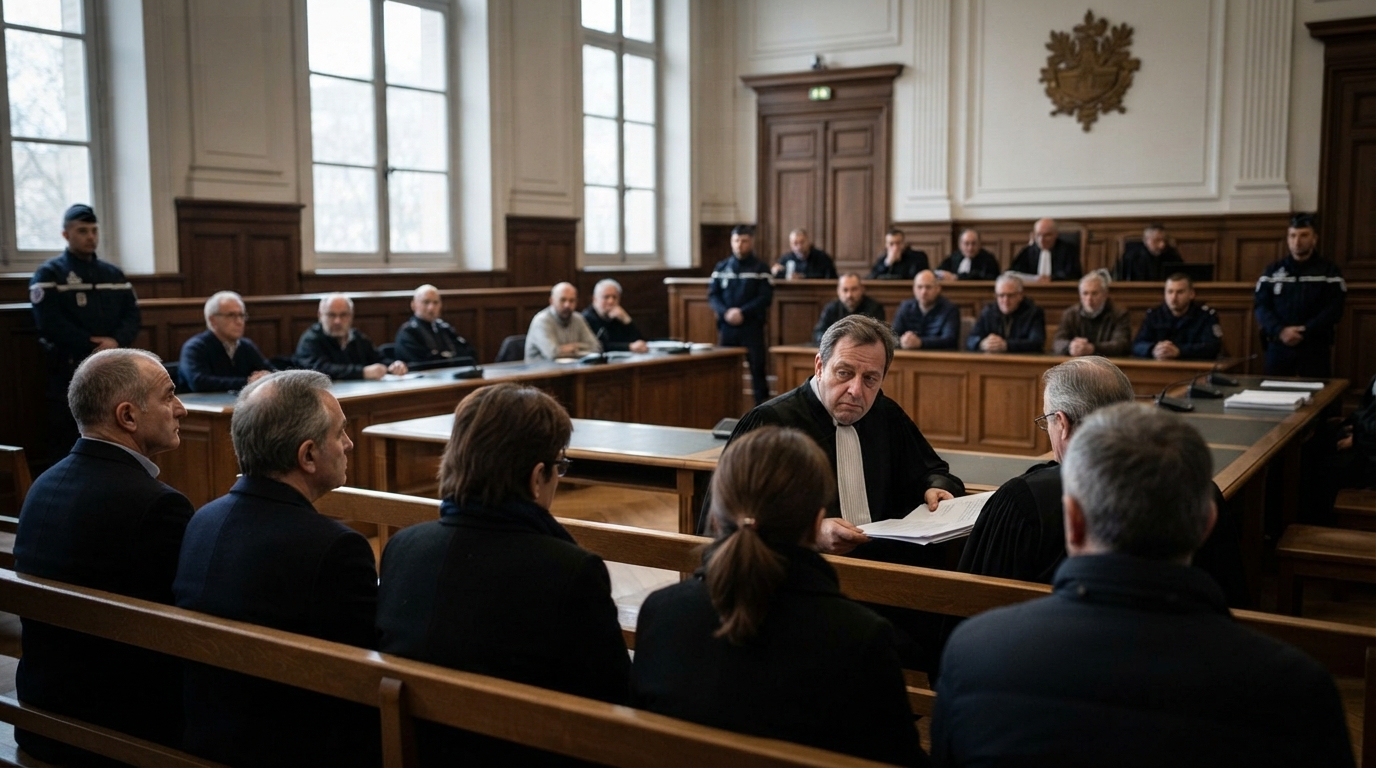
Fourteen suspected people smugglers have begun trial in Paris over their alleged role in the deadliest small boats disaster ever in the English Channel.
In November 2021, at least 30 men, women and children died when their motorised dinghy deflated and began taking on water midway between France and the UK.
The 14 defendants, mostly Afghan nationals, are charged with manslaughter and aiding illegal immigration as part of an organised criminal group.
Most deny the accusations. Two of the 14, said to be the leaders of the operation, are still at large and are being tried in absentia.
The boat departed the French coast on the evening of 23 November 2021, but got into trouble in the middle of the Channel.
One after another, those on board went into the water in an attempt to reduce the weight, but they succumbed to the cold and drowned. Only two men survived.
The charge sheet says the defendants helped launch "a small boat of poor quality, unfit to navigate at sea, overloaded and equipped with inadequate life-jackets".
After the boat sank, 27 bodies were recovered and four more people were confirmed missing.
Many of those who died were Iraqi Kurds, while others were from Somalia, Ethiopia, Egypt and Afghanistan. The youngest named victim was seven years old.
Some relatives travelled to Paris for the opening of the trial, which is expected to last three weeks.
"Once again [the smugglers displayed] total cynicism. Migrants are not sailors," said Emmanuel Daoud, a lawyer representing many of the families.
"The smugglers know perfectly well what they are doing. They take the deliberate, conscious risk of sending migrants to their deaths."
The defendants are accused of helping organise the doomed trip by housing and transporting the migrants, providing the boat they used, and handling the money they paid.
But many say they were migrants themselves and that, if they were involved at all, it was only under the orders of the real organisers.
The disaster prompted investigations on both sides of the Channel, with questions raised over the failure of British and French boats to rescue those who died despite repeated calls from the failing dinghy.
In France, seven military personnel — staff at a maritime rescue centre and aboard a navy boat — are under judicial investigation over a possible charge of failing to assist persons in danger.
A judge will decide whether they should face trial.
A UK inquiry found that HM Coastguard in Dover had limited capacity because of chronic staff shortages, while a surveillance aircraft was not deployed because of poor weather conditions.
It also found that there was a widespread belief that migrants calling from small boats exaggerated their distress, meaning the coastguard underestimated the emergency.