

Forty Iranian sailors rescued off Sri Lanka coast after medical emergencies
The sailors received medical treatment before being flown back to Iran, Sri Lanka authorities said.
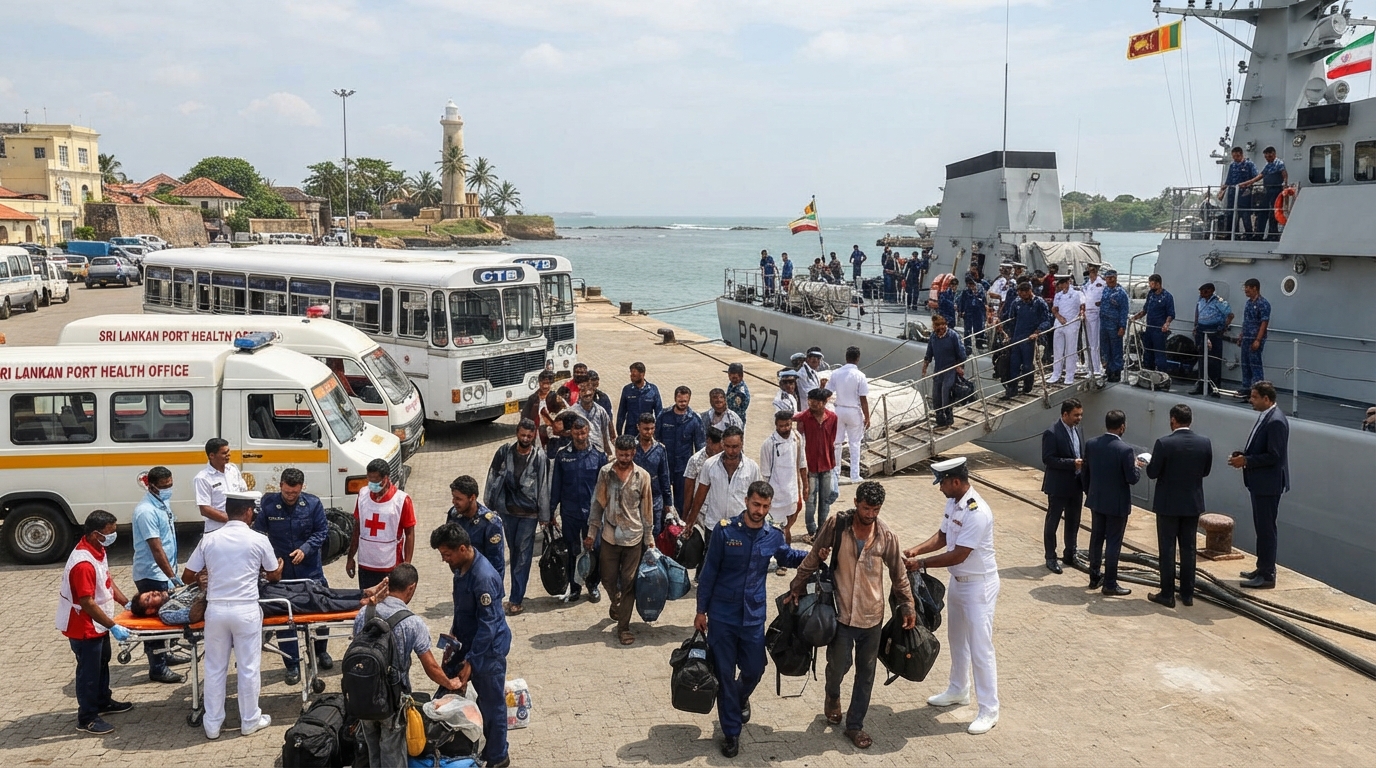
Forty Iranian sailors rescued off Sri Lanka coast after medical emergencies
Sri Lanka’s foreign ministry says it coordinated efforts to treat and repatriate 40 Iranian sailors who were suffering from unspecified medical emergencies in international waters off the island’s southeastern coast.
Ministry spokesperson Thushara Rodrigo told BBC Sinhala that on Saturday they received a distress call from Iranian ships arriving at Sri Lanka’s Galle Harbour “regarding an urgent medical need”.
He said the rescue operation was arranged by the Iranian Embassy in Colombo.
Iranian ships have been stuck at sea because of a US naval blockade. Sri Lanka says it remains neutral in the conflict, but it has at times assisted Iranian sailors, saying it is bound by international law.
A BBC Sinhala report last month said there were 21 Iranian vessels in international waters near Sri Lanka.
Rodrigo said the 40 rescued sailors were serving on different ships, although Sri Lankan authorities do not know how many ships they were on.
He added that the sailors were brought ashore and taken to Colombo for medical treatment before being flown back to Iran on Saturday night.
Several agencies took part in the operation, including local shipping companies, he said.
Rodrigo said Sri Lanka was required under international law and humanitarian grounds to provide the necessary facilities in medical emergencies.
“This does not mean that we will provide assistance to those ships,” he said. “It is generally an internationally accepted tradition to respond to a distress call after receiving it.”
“We have dealt with such cases before. This is a normal process that continues to be implemented.”
The conflict involving Iran began when the US and Israel launched broad strikes on the country in February. Iran retaliated by attacking Israel, US bases and allied states in the Gulf, and effectively shut the Strait of Hormuz, a vital international trade route.
Attacks from both sides have continued as negotiations have stalled.
Sri Lanka has tried to stay neutral in the conflict, rejecting military access requests from both the US and Iran and urging both sides to focus on dialogue.
It has also offered help to Iranian ships caught up in the conflict on what it says are humanitarian grounds.
In March, Sri Lankan authorities said they responded to a distress call from the Iranian ship Iris Dena, which sank off its coast after a US torpedo attack.
More than 80 crew members were killed in the attack, and injured survivors were taken to a hospital in Galle Harbour.
The next day, Sri Lankan authorities allowed another Iranian naval vessel to dock at one of its ports, with President Anura Kumara Dissanayake saying they would “never hesitate to protect humanity”.
Sri Lankan authorities said earlier this month that they had no immediate plans to send aid to 19 Iranian ships near its coasts that had reported shortages of food, water and fuel. The authorities said they had to prioritise national interests, the Associated Press reported.