

Forget OPEC, China now sets oil prices — The Economist
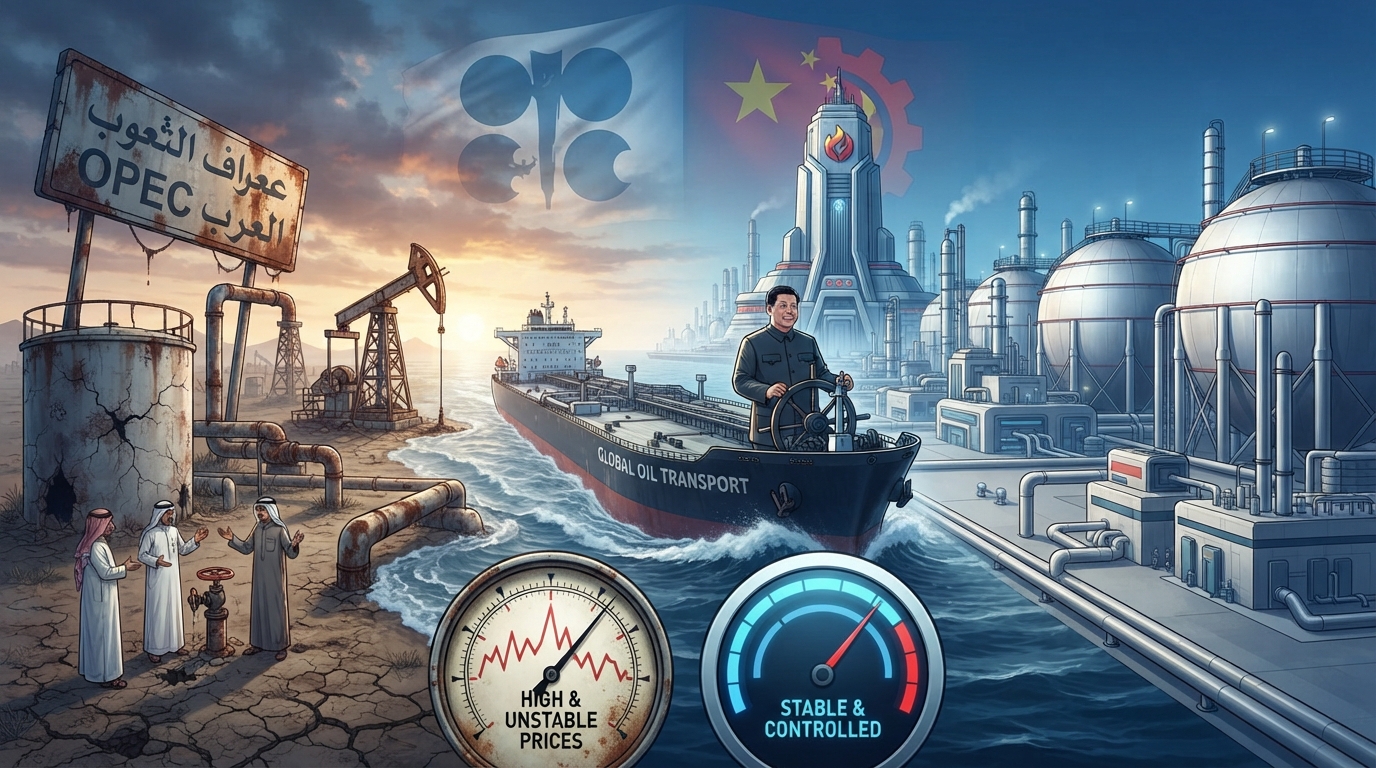
**OPEC era is over, China sets oil prices — The Economist**
The conflict that erupted after the US and Israeli attacks on Iran has caused unprecedented problems in oil supplies. Analysts predicted that this situation could have more serious consequences than the global financial crisis of 2008. However, the expected negative scenario did not materialize. Although oil prices rose, they did not reach $ 150 per barrel.
The instability in the market was associated with Iran's closure of the Strait of Hormuz and the protracted negotiations with the US on a ceasefire. But the timely actions of several key players have mitigated the situation. For example, Abu Dhabi and Riyadh have begun transporting oil through pipelines that bypass the strait. Washington and Tokyo have released about 2 million barrels of emergency oil reserves to the market every day. However, another crucial decision was made in another center - Beijing.
**China's actions behind the scenes**
The world's second largest economy halved its crude oil imports from February to June, to 5.5 million barrels per day. According to experts, this allowed it to reduce the price of Brent crude (the benchmark for oil on the world market) by $ 30.
A similar situation was observed during the COVID-19 pandemic. However, then China reduced its imports of black gold due to falling demand. This time, however, the country's economy did not experience a crisis: China's gross domestic product continued to grow. According to The Economist, this means that China, as the world's largest oil importer, can influence prices on both domestic and foreign markets with little cost.
Thus, it became clear that the country can influence prices on the black gold market, just like OPEC and its allies. Given that OPEC has been setting global oil production quotas for decades, China’s ability to do so without such leverage may seem limited.
But the organization’s position is waning. The withdrawal of one of its major players, the United Arab Emirates, the war-torn Gulf oil giants, and other factors are further strengthening China’s position. “China is the new OPEC,” the head of one of the oil trading companies put it succinctly.
**How does China control the oil market?**
OPEC has been trying to keep prices high for four decades through production quotas. Importing countries, on the other hand, have not had the opportunity to reduce prices by limiting demand. Because buyers are much more dispersed than sellers. Domestic energy demand is shaped by the individual decisions of millions of people, companies, and organizations. China is an exception.
Beijing, with its large state-owned economy, can centrally manage energy demand. While OPEC+ requires the approval of 21 countries to make a decision, China does so centrally by a group of countries. The final decision rests with only one person, Xi Jinping.
China currently has three levers of influence on the oil market. The first is its oil reserves. The country bought 200 million barrels of oil at low prices in the 12 months leading up to 2026, taking advantage of the high supply on the market. China's oil reserves were already about 1 billion barrels before that. Traders estimate that this policy could have boosted prices by $10-20 in the run-up to the Iran war.
According to estimates by the data company Vortexa, China's oil reserves had fallen by 70 million barrels by July of this year. But that doesn't include reserves in floating storage facilities and underground storage facilities. If you include them, the country has used about 150 million barrels of its reserves. In other words, about 1.5 million barrels of black gold were released from the reservoirs to the market every day.
But it is worth noting that the bulk of this is not strategic, but commercial reserves. That is, these are the reserves of major oil companies that they keep for profit. But such reservoirs are not left empty for long. Argus Media's Tom Reed said that oil refiners usually have to replenish the reserves they have used up within a month. But since such companies are state-owned, the state can dispose of them whenever it wants.
Vortexa analyst Emma Lee said that Beijing could continue this policy for another four months. After that, the government is seriously considering stopping the process, fearing that reserves will fall to a critical level.
**The second tool is to restrict exports**
China is the world's second-largest oil refining country. It usually buys crude oil and supplies its neighbors with large volumes of finished oil products. But in March, the government instructed the country's refineries to stop signing new export contracts and cancel most of the previous ones. As a result, from February to April of this year, China's exports of refined petroleum products almost halved, falling to 430,000 barrels per day.
This includes highly refined aviation fuel. Its exports amounted to 180,000 barrels per day. This, in turn, allowed Chinese refineries to save 1.2-1.8 million barrels of crude oil per day. At the same time, by reducing the volume of fuel sold abroad, it has become possible to better meet the needs of the domestic market.
In addition, refineries have begun to supply some products that they usually produce for export to the domestic market. For example, naphtha and liquefied petroleum gas (LPG), which are used in the petrochemical industry, as well as fuel oil. However, since the profits from exports are higher than those from domestic sales, such a policy reduces the profits of oil refiners.
**The third tool is to reduce domestic demand**
However, large reserves and export restrictions alone cannot fully explain the huge decline in Chinese imports. The fact is that Beijing has also used a third tool: reducing domestic demand.
In June, Chinese refineries processed 2.7 million barrels of crude oil per day less than a year ago. Gasoline production fell by 14%, and diesel and jet fuel production fell by 21%.
At the same time, domestic market analysis has shown a sharp decline in fuel consumption for cars. This is due to the fact that the population began to use public transport more actively due to higher prices, as well as the popularity of electric cars. Local authorities, in turn, have sharply reduced demand for diesel fuel by reducing some infrastructure work.
According to the International Energy Agency, Ciaran Healy, in the first two months of the war, China consumed 10 percent less gasoline and kerosene than in the same period last year.
**Petrochemical industry also adapting**
The country with the world's largest petrochemical industry is also adapting to supply constraints in other ways. Last year, Chinese petrochemical plants processed naphtha and liquefied petroleum gas (LPG) imported mainly from the Persian Gulf into polymers. Materials made from this raw material, such as synthetic rubber, nylon and polyester, are being purchased by China's giant industrial factories.
But as the supply of raw materials from the Persian Gulf dwindles and the government prioritizes fuel over petrochemicals, companies are finding alternative ways to produce some polymers. For example, they are expanding the use of coal and ethane instead of oil.
**Can the Chinese economy withstand this?**
Analysts believe that the impact of such restrictions on the Chinese economy can be managed for now. This is especially helped by the renewable energy sources that the state has supported for years. That is, wind and solar power plants, electric cars and others have made China's energy system much more flexible.
In addition, due to years of competition, a huge stock of polymers and products made from them has formed in China, which have not been sold. It is these "cushion" stocks that have helped prevent a sharp drop in supply.
China's GDP grew by 4.3% in the second quarter. Although this is the lowest figure since the fourth quarter of 2022, its main reason is not related to the oil shortage. The slowdown in economic growth is more affected by the decline in investment and the consequences of the crisis in the real estate market.
In addition, Beijing can still use strategic oil reserves. According to Michal Meydan, an analyst at the Oxford Institute for Energy Studies, China has so far used only commercial reserves, and has hardly touched strategic reserves.
**Can China become the “new OPEC”?**
While Beijing's reserves of crude oil, fuels and polymers are larger than analysts think, they are not unlimited. Unlike OPEC, China is not a major producer of black gold. It can keep oil imports low for a few months, but it can’t keep them low for years.
But the Iran war has shown an important point: China can stabilize the world oil market almost single-handedly for a few months. With its huge economy, it can lower prices when it wants, and raise them when it needs to. OPEC, the oil cartel, is increasingly losing such opportunities, as its internal conflicts are increasingly eroding.