

Foods with the highest amount of vitamin D: what should you eat more of in autumn?
Foods richest in vitamin D: what should you eat more of in autumn?
Autumn is a season when our internal battery inevitably begins to lose its charge. We naturally crave fattier foods and warmth, but we often overlook vitamin D, which is the main regulator of our mood and immunity.
Calling vitamin D simply a "vitamin" is biochemically incorrect. It is a steroid prohormone, and its receptors are found in almost all tissues of the body — from brain cells to insulin receptors. Its primary function is no longer limited to just preventing rickets. It regulates the functioning of the immune system by suppressing excessive inflammatory reactions, participates in the synthesis of serotonin (protecting us from seasonal depression), and ensures calcium transport.
Which foods are rich in vitamin D?
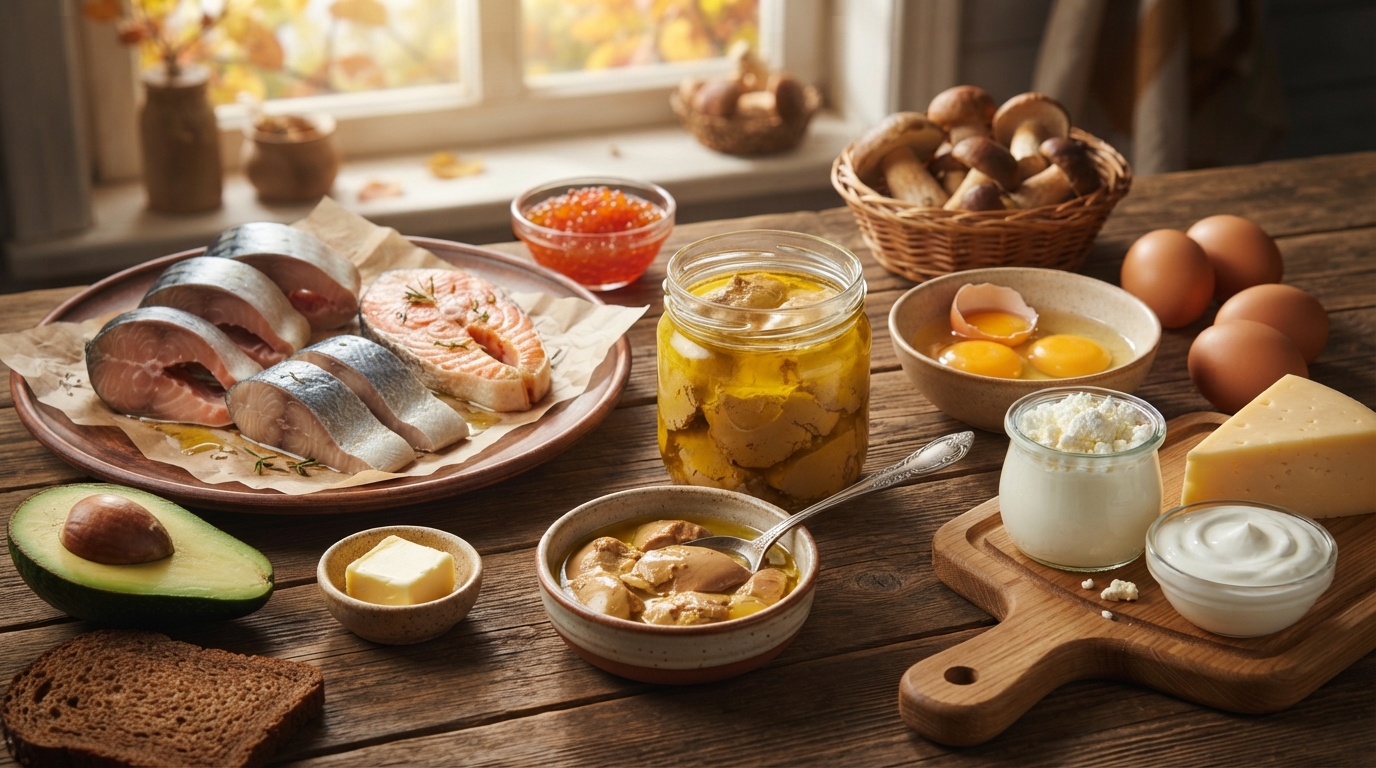
Cod liver is the absolute leader in this regard — one tablespoon of this product contains about 400-500 IU of vitamin D, and it also provides a large dose of vitamin A and omega-3.
In second place are wild fatty fish from northern seas. Every 100 grams of wild mackerel, herring, or wild salmon contains about 250-400 IU of vitamin D. However, it is important to understand the difference between wild fish and farmed fish. Salmon raised on compound feed in artificial ponds contains significantly fewer healthy fats. In addition, the method of preparation also matters: frying breaks down some of the vitamin D and oxidizes valuable fats. Baking in parchment or steaming is most preferable.
Egg yolk is often called an accessible source, but relying on it as a primary source is a mistake. The amount of the vitamin also depends on how the chicken was raised. Poultry kept indoors at poultry farms produces eggs with a minimal amount of cholecalciferol. Eggs from free-range farm chickens are richer in it, but to get a therapeutic dose from eggs alone, one would have to eat dozens of eggs every day, which would put a heavy strain on the lipid profile.
As for dairy products — cottage cheese, sour cream, cheese — they serve as an excellent transport vehicle because the vitamin is fat-soluble. Fat-free dairy products are completely devoid of this benefit. Unless the manufacturer has deliberately fortified them artificially, they naturally contain very small amounts of the vitamin.
Caviar (red, black, or pike caviar) also contains vitamin D, but due to its high cost and high salt content, it is better not to consume it in large quantities.
Mushrooms are the only plant source that produces ergocalciferol (vitamin D2). However, cholecalciferol (D3) found in fish increases its level in the blood much more effectively.
Is this enough in autumn?
The preventive dose for adults is at least 600-800 IU, while the therapeutic dose for deficiency is 5000 IU and above. This means that a portion of fish provides at most one-third of the norm. A tablespoon of cod liver provides the full norm, but it is too heavy to consume every day.
It is impossible for modern city dwellers to meet their needs solely through food products during the period from September to May. According to research, without additional vitamins, eight out of ten people experience a deficiency.
Mistakes in taking supplements
1. Uncontrolled intake "for immunity"
Vitamin D has the property of accumulating in adipose tissue. An overdose (a level above 150 ng/ml) leads to hypercalcemia — an increase in calcium levels in the blood. Calcium accumulates in blood vessels, kidneys, and lungs, causing calcinosis and organ damage. Therefore, never prescribe therapeutic doses to yourself without checking the level of 25(OH)D in your blood. According to analyses, its most optimal level for health is currently considered to be 50-70 ng/ml.
2. Ignoring cofactors
Vitamin D is responsible for the absorption of calcium in the gut, but it cannot control where the calcium goes next. Without a sufficient amount of magnesium and vitamin K2, calcium goes not to the bones, but to atherosclerotic plaques, making blood vessels fragile. Magnesium is needed to activate the vitamin inside cells. Too many people take high doses of cholecalciferol, but its level in the blood rises slowly because all the magnesium in the body is spent on processing stress and carbohydrates. As a result, the supplement circulates in the blood as useless cargo.
3. Wrong timing and minerals
Calcium, iron, and zinc use the same transport pathways in the gut. If you drink a drop of vitamin D with your morning coffee with milk, or take it at the same time as dairy products or an iron-rich breakfast, its effectiveness is halved.
Vitamin D should be taken in the morning during a breakfast containing healthy fats (avocado, butter, fish), while magnesium and other minerals should be taken in the evening, separate from everything else.
4. Fear of fats
Many people follow a strict diet and are afraid to take vitamin D with fatty foods. But this is a fat-soluble substance. Drinking one oily drop with a slice of black bread spread with butter or an avocado increases its bioavailability several times compared to taking it on an empty stomach.
5. High doses all at once
In thyroid diseases (for example, Hashimoto's thyroiditis), the immune system is hyper-reactive. Starting to take vitamin D in high doses all at once can cause a flare-up of the disease. Here, the principle of gradualness and antibody control is important.
What is a smart intake strategy?
First of all, diagnostics. Give blood for 25(OH)D, magnesium, calcium, and ferritin. If the indicator is below 30 ng/ml, consult a doctor. If it is between 30 and 50, add maintenance doses for adults (usually up to 2000-4000 IU). In your diet, consume fatty fish twice a week, and add egg yolks and high-quality butter to your ration.