

Following a massive border breach in Ceuta, migrants began to be resettled in temporary centers.
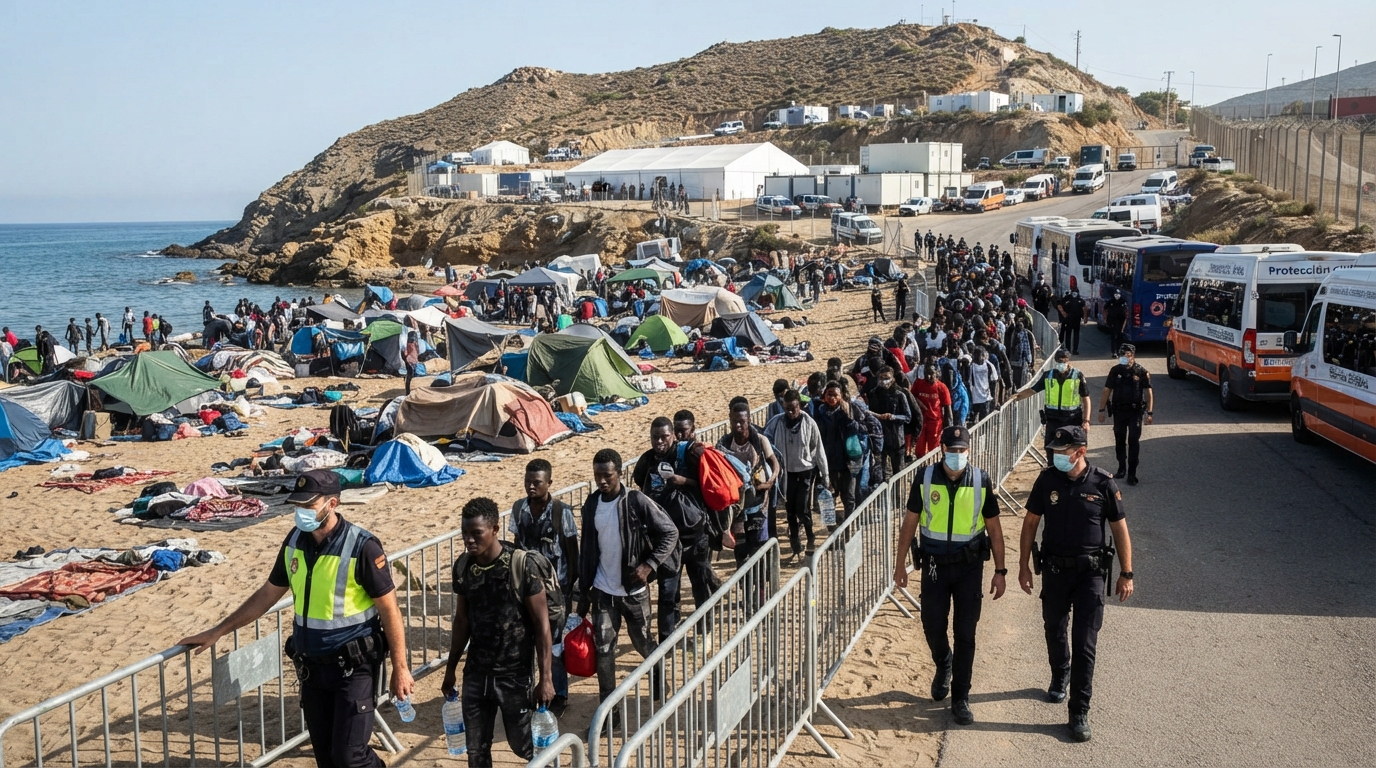
Following a massive border crossing in Ceuta, migrants have begun moving to temporary centers.
Authorities in the Spanish enclave of Ceuta have begun moving migrants from an informal camp on El Trampolin beach to temporary accommodation centers. Approximately 1,700 people are planned to be moved in the first phase, while more than 3,500 migrants remain on the coast.
The operation began on the morning of August 20. Police are escorting people to prepared temporary centers, where they will be registered and identified.
The migrants have been divided into two groups based on their region of origin. Those from sub-Saharan Africa are being sent to the Loma Margarita center, while those from North Africa are being sent to the Loma Colmenar area, located near the Tarajal border crossing. Authorities say this separation is necessary to prevent potential conflicts, as several fights have occurred in the camp in recent weeks.
The transfer of migrants is taking place amid dire conditions they have endured for nearly a month since the mass border crossing on July 30 and 31. According to various estimates, between 40,000 and 80,000 people attempted to reach Ceuta at the time, but most subsequently returned to Morocco.
The temporary centers will initially accommodate approximately 1,800 people. Spanish authorities promise to increase their capacity, but have not yet announced where the remaining migrants who are not accommodated in the new centers will be accommodated.
The crisis has already drawn criticism from the Spanish opposition. Representatives of the Popular Party accuse the government of inaction and believe that the authorities are attempting to solve the problem with temporary tent camps.
Following the mass border crossing in Ceuta, approximately 1,000 minor migrants have been left without their parents and are under the protection of Spanish authorities. The overcrowded accommodation centers are unable to cope with the influx, forcing some children and adults to spend the night on the streets and beaches. Spain has already allocated 25 million euros to help minors remaining in the enclave.